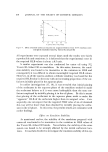
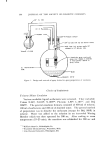
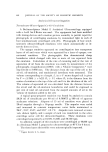
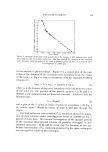
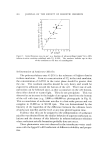
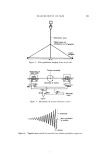
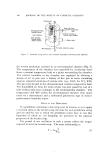
EMULSION STABILITY 395 Vold and Groot (6) have hypothesized that the rate of oil separation is a measure of the rate of coalescence between the deformed drops in the cream and the bulk oil phase. They state that, in general, the greater coalescence occurs just below the bulk oil-emulsion interface since water separating the dispersed oil is thinnest there. This work considers the preparation, characterization, and ultra- centrifugal analysis of stable emulsions with high oil/water ratios and the evaluation of their creaming and oil separation. The ultracentrifuga- tion of emulsions will be tested for adherence to the Svedberg equation. EXPERIMENTAL Preparation of Emulsions A preparative method was desired to obtain reproducible fine e_mul- sions with the narrowest particle size distribution. Stable emulsions of 1:1 toluene-in-water were difficult to prepare with the Waring Blendor* without high concentrations (5-15%) of all classes of surfactants. These were necessary to prevent immediate separation of an oil phase. Also, the high temperatures (40øC) produced yielded an appreciable loss of toluene when blending was continued for more than 5 min. These emulsions were unsuitable for the study of coalescence rates in the analytical ultracentrifuge as they required as long as 3 days at 60,000 rpm before oil separation could be seen. The surfactants precipitated at the particle interfaces in the tightly packed creams formed by ultracentrifugation. This artificially stable gel of oil trapped in a solid matrix was observed on microscopic examination. The optimum method of preparation was a modification of the method of Nawab and Mason (21) and Wachtel and La Met (22). A typical procedure was to prepare analytically a solution of surfactant in toluene and to filter through a 0.45-• Millipore filter. The toluene surfactant solution (250 ml) was sprayed on the large surface of 250 ml of filtered water in a 5-1. round-bottom flask. The flask was equipped with a magnetic stirrer and the sprayer operated by nitrogen pressure (10 cm of Hg above atmospheric pressure) using an insecticide spray nozzle. The contents of the flask were stirred by a magnet (Fig. 1). The resultant emulsion was prepared in 3,000 sec and then filtered through a 3-/• Millipore filter to remove large particles. * E. H. Sargent and Co., Kensington, Md.

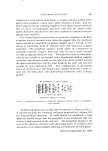
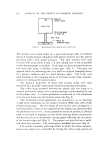
396 JOURNAL OF q'HE SOCIETY OF COSMETIC CHEMISTS I/4" Cu tube t Air or N 2 • Rubber corks Toluene + G-2151 Pressure exhaust $/4" Cu tube with top and bottom sealed. I 20 Luer-Lok syringe needle (6") soldered to I/4" delivery tube. 5 L. Round flask. Insecticide spray nozzle with screw cap- Needle is soldered in fixed position relative to spray orifice. MaGnetic stirrer Figure 1. Design and controls of spray device for spray preparatiot• o[ emulsions Choice of Surfactants Toluene/Water Emulsion Various available liquid surfactants were screened. They included: Triton N-54©, N-101©, N-128©• Pluronic L-92 ©, L-103*•* and Bri] 30SP©*. The general emulsion formula consisted of 450 ml of toluene, 100 ml of surfactant, and 450 ml of distilled water. The general method of preparation was to dissolve the surfactant (except for Bri] 30SP) in toluene. Water was added to the solution in an ice-cooled Waring Blendor which was then operated for 300 sec. After cooling to room temperature (15-25 min), the emulsion was reblended for 300 sec and Rohm & Haas Co., Philadelphia, Pa. Wyandotte Chemicals Corp., Wyandotte, Mich. Atlas Chemical Industries, Wihnington, Del.
Purchased for the exclusive use of nofirst nolast (unknown)
From: SCC Media Library & Resource Center (library.scconline.org)