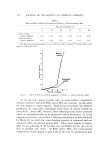
EMULSION STABILITY 397 cooled. If the emulsion had not broken, it was filtered through 5.3-, 1.2-, and 0.8-t• Millipore filters if possible. The 'Uriton N-54, N-101, and Brij 30SP emulsions broke immediately. Plttnmic 14-92 and Triton 128 produced fine W/O emulsions which passed through an 0.8-v filter but creamed rapidly. Oil separation was observed for the latter after 3,000 sec at 59,000 rpm in the ultracentri- fuge. Pluronic L-103 produced a thick emulsion that passed through a 5-v Millipore filter with considerable difficulty but no visible creaming or oil separation was observed. A 9• surfactant emulsion was found to be a water-in-oil emulsion. Polyoxyethylene sorbitan fatty acids were eliminated from considera- tion since they were colored and visible absorption photomerry was used to measure oil separation rates in the analytical ultracentrifuge. Co- polymers of the solid polyoxyethylenes and polyoxypropylenes formed stable toluene-in-water emulsions which were extremely viscous and unfilterable. The commercially available polyoxyethylene alkyl ethenes which were examined do not produce stable emulsions of toluene-in- water. High molecular weight polyoxyethylene aryl ethenes which pro- duced satisfactory emulsions of toluene-in-water had a noticeable yellow oil layer after centrifugation which interfered with coalescence rate studies. In addition, the compounds have a UV absorption spectrum which might possibly interfere with the polyoxyethylene assay. The polyoxyethylene stearates produced stable emulsions at low concentrations. Although solids, they met all the requirements as a surfactant for this system and possessed sut•icient solubility in toluene so that there was no precipitation of solid emulsifier in the centrifuged creams at low concentrations. The Allas G-2151©* Polyoxyethylene-30-Stearate (mol wt ca. 1,600) was chosen as a suitable surfactant. It is oil- and water-soluble and has a low critical micelle concentration (cmc). Tetradecane / |Fater Emulsion Tetradecane (mol wt 198.4, bp 252.50, Eastman Practical) was chosen to provide an alternative emulsion with a nonvolatile, pure, and economically available hydrocarbon. The following sets of surfactants were considered: * Alias Chemical Industries, Wilmington, Del.

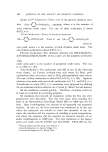
398 JOURNAL OF THE SOCIETY OF COSMETIC CHEMISTS Igepal Co.©* Surfactants--These were of the general chemical struc- ture, CoH•9---•O(CH2CH20)n-• CHzCHzOH, where n is the number o[ total ethylene oxide units. The cmc of these surfactants is about 0.01% w/v. Triton Sur[acta•ts--Those of chemical structure CsHi7---•(0CH2CH2)x0H (Triton X) and CgH1o••(0CH2CH2)x (Triton N) were used, where x is the number of total ethylene oxide units. The cmc of these surfactants is about 0.01% w/v. PIuronic Surlactants--The chemical structure was HO(CH2H20),z- (CH-CH2o(CHeCHeO)cOH, where a and c are the numbers of ethylene I CHa oxide units and b is the number of propylene oxide units. The cmc is ca. 2.0% w/v (23). Atlas SurJ:actants-The surfactants used fall in one of the following three classes: (a) Tweens, sorbitan fatty acid esters (b) Myrj, poly- oxyalkylene fatty acid esters and (c) Brij, polyoxyalkylene fatty ethers. The cmc of these surfactants is about 0.01 to 0.1% w/v (24). Aqueous solutions were made with each of the surfactants at 4, 2, 1, and 0.5% w/v. Tetradecane in water (25% v/v) emulsions were prepared by shaking the oil surfactant solution mixture on a Vortex Jr. Mixer* for one minute. All the emulsions creamed quickly. Therefore, creaming could not be used as a criterion for screening purposes. All emulsions that showed oil separation within the first day after preparation were discarded. The rest were spun, after standing five days, in an International Centrifuge Model SBr* at 3,000 rpm for 0.5 hour. After centrifugation, the amount of oil separated was measured visually. In each set, the best emulsion was considered to be the one where the surfactant was soluble in water but insoluble in the oil where the emulsion did not separate oil standing at room temperature and where the emulsion did not separate an excessive amount of oil under centrifugation at 3,000 rpm. The best emulsions in the Igepal series were made with IG-CO-610 and IG-CO-630. TR-X-100 was the * General Aniline and Film Corp., New York, N.Y. * Scientific Industries, Inc., Queens Village, N. Y. • International Equipment Co., Boston, Mass.
Purchased for the exclusive use of nofirst nolast (unknown)
From: SCC Media Library & Resource Center (library.scconline.org)