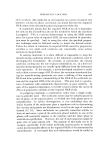
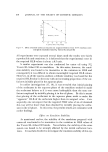
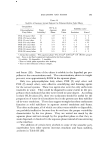
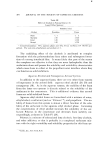
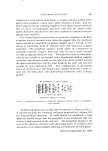
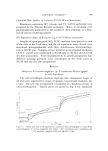
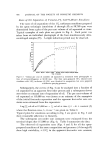
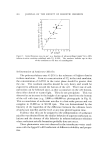
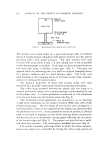
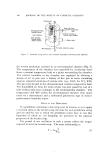
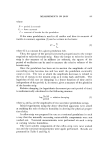
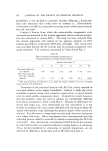
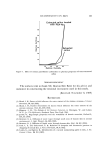
424 JOURNAL OF TIlE SOCIETY OF COSMETIC CHEMISTS humidities, it was decided to ascertain whether diffusing a humectant back into extracted skin could serve to resoften it. 2-Pyrrolidone- 5-carboxylic acid (PCA), a naturally occurring water-soluble humectant in skin (8), was used. A strip of keratin h'om which the water-soluble components were extracted was mounted in the torsion apparatus and its torsional proper- ties were measured at various RH's. The strip was then removed from the torsion apparatus and soaked in an aqueous solution of 10% sodium pyrrolidone carboxylate (PCA-Na) overnight. The excess solu- tion was then blotted off the keratin and its torsional properties were again measured. The restilts are presented in Table II and Fig. 7. Table II Effect of Sodium Pyrrolidone Carboxylate on Physical Properties of Water-Extracted Skin Relative Humidity, 0 11 32 57 75 85 Extracted callus rela- tive softness• 1.00 1.06 1.25 2.01 6.56 22.5 After treatment with PCA-Na. Relative sot•ness• 1.32 1.32 1.48 3.48 16.9 68.8 • The data have been normalized so as to make the relative softness (P=) of the extracted callus equal to 1.00 at 0% Rlt. Treatment of the extracted keratin with PCA-Na clearly resulted in increased softness at the higher humidities. Indeed, it made the curve resemble in general shape what would be expected for a strip of keratin with its water-soluble components intact. It should be noted, however, that the absolute values for relative softness are considerably different from those presented in Table I and Fig. 6. Because of differences be- tween skin strips (e.g., exact dimensions are not controlled), it is not feasible to compare the exact values obtained with one strip to those ob- tained with another strip (although the general shapes of the curves are similar). For this reason, comparisons are only made between treatments on a single skin strip. Other experiments have demonstrated that this sol'tening process could be reversed by merely re-extracting the PCA-Na with water. Also, altering the concentration of PCA-Na in the solution in which the keratin was soaked resulted in varying degrees of softening. Thus, keratin hardened by extracting its natural humectants can be softened by diffusing' a humectant such as PCA-Na back into it.

MEASUREMENTS ON SKIN 425 Extracted callus treated with PCA-N 60 5O • 3o xtracted allus 2O 10 20 40 60 80 Relative Hurnidi{y Figure 7. Effect of sodium pyrrolidone carboxylate on physical properties of water-extracted callus ACKNOWLEDGMENT The authors wish to thank Mr. Marion Den Beste for his advice and assistance in constructing the torsional instrument used in this study. (Received November 6, 1969) REFERENCES (1) Blank, I. H., Factors which influence the water content o[ the stratum comeurn, J. Invest. Dermatol., 18, 433 (1952). (2) Blank, I. H., Further observations on factors which influence the water content of the stratum corneum, Ibid., 21, 259 (1953). (3) Kligman, A.M., The Biology o[ the Stratum Corneum, in Montagna, W., and Lobitz, W. C., Jr., The Epidermis, Academic Press, New York, 1964. (4) Jacobi, O., Hygroscopic properties and the wettability of keratin materials, Kolloid-Z., 114, 88 (1949). (5) Beuttner, K. J., Diffusion of water vapor through small areas of human skin in normal environment, ]. Appl. Physiol., 14, 269 (1959). (6) Beuttner, K. J., Diffusion of liquid water through human skin, Ibid., 14, 261 (1959). (7) Gaul, L. E., and Underwood, G. B., Relations of dewpoint and barometric pressure to chapping of normal skin, ]. Invest. Dermatol., 19, 9 (1952). (8) Laden, K., and Spitzer, R., Identification of a natural moisturizing agent in skin, ]. Soc. Cosmet. Chem., 18, 351 (1967).
Purchased for the exclusive use of nofirst nolast (unknown)
From: SCC Media Library & Resource Center (library.scconline.org)