EMULSION STABILITY 415 (17) Lcderer, E. L., Measure of the separation of emulsions (demulsification), Kolloid Z., 71, 61 (1935). (18) Spinco Ultracentrifuge Technical Manual, Model E, Spinco Div. Beckman Instrument Co., Inc., Fullerton, Calif., Oct., 1953. (19) Svedberg, T., and Pederson, K. O., The Ultracentri[uge, Clarendon Press, N.Y., N.Y., 1940. (20) Nielson, L. E., Wall, R., and Adams, G., Coalescence of liquid drops at oil-water inter- faces, J. Colloid Sci., 13, 441 (1958). (21) Nawab, M. A., and Mason, S. G., The preparation of uniform emulsions by electrical dispersion, Ibid., 13, 179 (1958). (22) Wachtel, R. E., and La Mer, V. K., The preparation and size distribution of some monodisperse emulsions, Ibid., 17, 531 (1962). (23) Saski, W., and Shah, S. G., Availability of drugs in the presence of surhce-active agents, I. Critical micelie concentrations of some oxyethylene oxypropylene polymers, ]. Pharm. Sci., 54, 71 (1965). (24) Ross, S., and Oliver, J.P., A new method for the determination of critical micelie con- centrations of un-ionized association colloids in aqueous or in non-aqueous solution, J. Phys. Chem., 63, 1671 (1959). (25) Garrett, E. R., and Cazali, R., Automatic sequence and photo control system for simul- taneous ultracentrifugation in the analytical ultracentrifuge, Rev. Sci. Instrum., 38, 1463 (1967). (26) Higuchi, T., Some physical chemical aspects of suspension formulation, ]. Amer. Pharm. Ass., Sci. Ed., 47, 657 (1958).

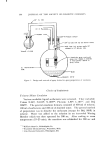
J. Soc. Cosmet. Chem., 21,417-425 (May 27, 1970) Torsional Measurements on Skin* KARL LADEN, Ph.D.,* and ROBERT MORROW, M.S.* Synopsis--An apparatus is described for measuring the STIFFNESS and ELASTICITY of thin strips of SKIN. Physical properties of skin in TORSION show decreases in sliffness with increased humidity of the ambient environment. The elasticity of the strips under- went a minimum between 50-80% relative humidity. Extraction of naturally occurring humectant was demonstrated to increase the physical stiffness of CALI•US and the addition of a humectant such as SODIUM PYRROLIDONE CARBOXYLATE to the skin was shown to increase softness. INTRODUCTION Softness and elasticity of the stratum corneum arc two important physical properties that contribute to the normal function of the skin. Previous investigations (1-4) have reported in a qualitative way the role of water and natural moisturizing agents in maintaining the softness and flexilibity of stratum corneum. In an effort to obtain more precise data, an instrument was constructed to measure in a quantitative manncr the changes in skin softness and elasticity with varying treatments and changes in relative humidity. EXPERIMENTAL Large untreated plantar calluses were vapor hydrated by holding at 100% RH. The hydrated specimens were sectioned horizontally on a t•reezing stage microtome to 50 t• avoiding any contact with liquid water. These sections were, depending on the nature of the experiment, either left untreated or extensively extracted with diethyl ether and water. Study conducted at the Toni Co., Division of the Gillelte Co., Chicago, Ill. Gillette Research Institute, Inc., 1413 Research Blvd., Rockville, Md. 20850. Ben May Labs, University of Chicago, Chicago, Ill. 417
Purchased for the exclusive use of nofirst nolast (unknown)
From: SCC Media Library & Resource Center (library.scconline.org)