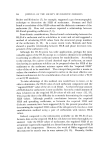
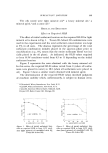
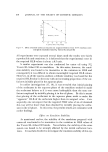
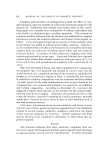
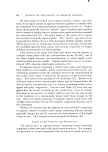
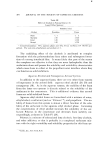
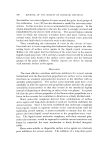
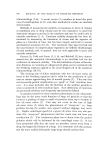
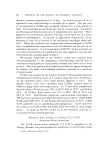
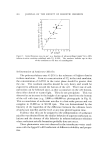
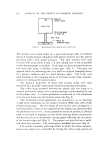
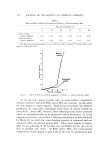
370 JOURNAL OF THE SOCIETY OF COSMETIC CHEMISTS MINERAL SPIRIT t I • I 0 20 40 60 80 I00 % SURFACTANTS IN AQ PHASE Figure 3. Effect of initial surfactant location on required HLB to form O/W emulsion (min- eral spirit emulsified with 3% Tween 80-Arlacel 80) All experiments were repeated several times until the results were fairly reproducible and consistent it is believed that the experimental error in the required HLB values is about __0.5 unit. A similar experiment was also conducted for castor oil using 3% Tween 80-Arlacel 80 as emulsifiers. In this series, however, the emul- sion stability was found to be insensitive to the variation in HLB and consequently it was difficult to obtain meaningful required HLB values. However, in all the systems studied, a definite tendency was found for the required HLB value to decrease with an increasing proportion of the sur- factants initially placed in the aqueous phase. In earlier investigations (17, 18), it was revealed that initial placing of the surfactant in the aqueous phase of the emulsion tended to make the surfactant behave as if it were more hydrophilic than the same sur- factant employed by initially placing it in the oil phase. By this is meant that placing of the surfactant in the aqueous phase tends to make the "apparent" HLB of the surfactant higher than its assigned value. Con- sequently, one can expect that the required HLB value of an oil obtained this way will be lower than that obtained by initially placing the surfac- rant in the oil phase. In this sense, the present results are consistent with earlier findings. Effect on Emulsion Stability As mentioned earlier, the stability of the emulsions prepared with castor oil was found to be insensitive to the variation in HLB values of the Tween 80-Arlacel 80 blends. Nevertheless, the stability of the same system was found to be strongly affected by the initial surfactant loca- tions. It was then decided to investigate the emulsion stability of this sys-

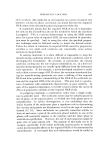
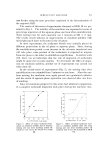
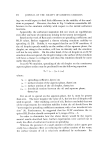
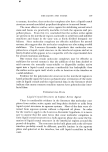
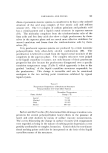
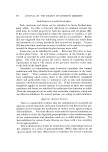
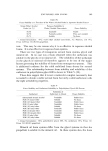
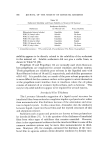
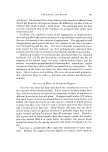
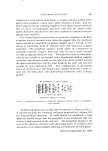
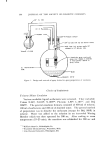
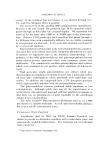
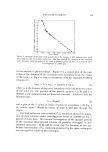
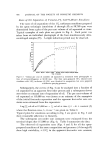
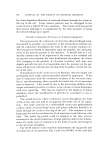
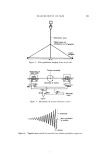
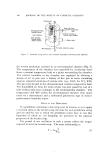
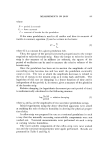
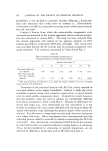
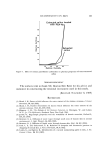
SURFACTANT LOCATION 371 tem further using the same procedure employed in the determination of the required HLB. The results of this series of experiments obtained at HLB 10 are pre- sented in Fig. 4. The stability of the emulsion was expressed in terms of percentage separation of the aqueous phase one hour after emulsification. Total mixing time for each emulsion was 3 minutes at 564 ----+ 2 rpm. The results clearly indicate an improvement in emulsion stability with initial placing of more surfactants in the oil phase. In these experiments, the surfactant blends were initially placed in different proportions in the oil phase or aqueous phase. Since, during the emulsification period, a vast increase in the oil-water interfacial area will take place, some portion of the surfactants is expected to migrate from one phase to the other to establish an equilibrium. In earlier work (19), there was an indication that the rate of migration of surfactants might be quite slow in some systems. To determine the effect of migra- tion on emulsion stability, another set of experiments was carried out with castor oil. In the second series of experiments (Fig. 5), the mixing time after emulsification was extended from 3 minutes to one hour. After the one- hour mixing, the emulsions were again poured into graduated cylinders and the extent of aqueous phase separation was observed after one hour of standing. Since all emulsions prepared in this series had identical composition, if a complete surfactant migration took place during the one-hour mix- • 40 • •o • 2ø I / 3 MIN. MIXING o 0 20 40 60 80 100 % SURFACTANTS IN AQ PHASE Figure 4. Effect of initial surfactant loca- cation on emulsion stability after $ minutes mixing and one hour standing (castor oil stabilized with Tween 80-Arlacel 80 at HLB 80 I I I I 7'0 _ • 60 I HR M I uJ 50 u• ,• 4O , 20 I 0 / 0 20 410 610 •gure •. Effect o[ initial surfactant loca- tion on emulsion stability alter one hour mixing and one hour standing (castor oil stab]ized with Tween 80-Ar]acel 80 at HLB 10)
Purchased for the exclusive use of nofirst nolast (unknown)
From: SCC Media Library & Resource Center (library.scconline.org)