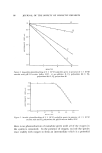
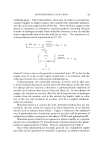
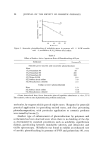
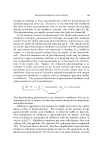
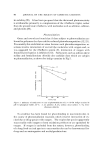
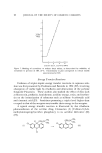
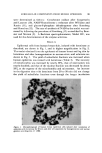
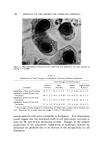
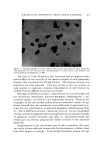
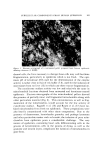
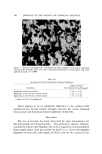
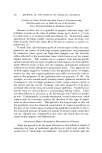
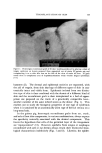
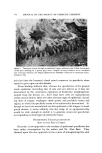
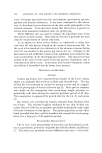
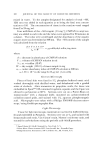
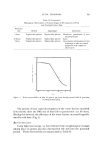
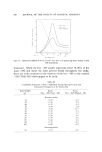
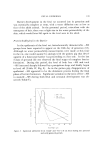
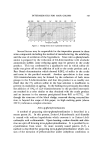
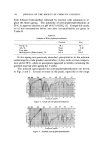
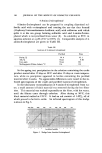
92 .JOURNAL OF THE SOCIETY OF COSMETIC CHEMISTS TOTAL 5 FREE 4 I I I I i 2_ 3 4 SODIUM DECYL SULFATE (%W/V) Figure 7. Binding of menadione to sodium decyl sulfate, as determined by solubility of menadione in presence of SDS, 25øC. Discontinuity in plot corresponds to critical micelie concentration for SDS Energy Transfer Reactions Evidence of triplet-triplet energy transfer reactions in aqueous solu- tion was first presented by Posthuma and Betends in 1961 (22), involving absorption of visible light by riboflavin and destruction of the polyene fungicide Pimaricin. These authors also studied the effect of dyes such as fluorescein, proflavin, lumichrome, acridine orange, eosin, and erythro- sin on the isomerization of substrates such as stilbene 4-carboxylic acid and cinnamic acid (23). Sensitizers possessing a triplet level higher than or equal to that of the acceptor may transfer their energy to the acceptor. A typical energy transfer reaction is illustrated by the riboflavin photooxidation of the acridan drug, Clomacran (I) [2-chloro-9-(3-di- methylaminopropyl)acridan phosphate], to its acridine derivative (II) •CH• (C. H•)•N cH• C1 (CH2)aN. C1 ••C (I) , (II) I H (24).

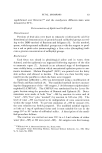
PHOTOCHEMICAL REACTIONS Riboflavin absorbs visible light, and in aqueous solution a triplet-triplet energy transfer reaction occurs in which the ribofiavin excited state is quenched and the Clomacran triplet which is formed undergoes photo- oxidation with no destruction of the ribofiavin. In the absence of oxy- gen the acridine (II) is the principal product (24). In the presence of air another major product, apparently an acridone, is formed upon inter- action of an excited Clomacran species with oxygen. In aerobic systems containing miceliar sodium dodecyl sulfate, however, the principal prod- uct formed is the acridine derivative, providing a further illustration that, as previously proposed for ribofiavin, interaction of oxygen with ex- cited species bound to macromolecules is inhibited. This is a particu- larly interesting example because it illustrates that the mere presence of a rather inert miceliar surfactant results in a different pathway for de- composition of the drug Clomacran. The very real possibility exists that the presence of a surface active agent in a formulation might result in abnormal decomposition products of a component of the formulation which might have unknown toxicity, since such products might never have been encountered in stability and toxicity studies conducted in ab- sence of the surfactant. SUMMARY Dye or drug components of cosmetic or pharmaceutical formulations may exhibit both ground state and photoexcited state interactions with polymers or surface active agents commonly included in such formula- tions. Many dyes and drugs which so interact with macromolecules and are subject to photoreduction exhibit decreased light stability. Compo- nents which bind to macromolecules and which undergo photooxidation reactions involving reaction of oxygen with photoexcited dye or drug species are generally more stable to light in presence of the macromole- cules. Cognizance must also be taken of the possibility that the presence of polymers or surfactants may introduce new reaction pathways, result- ing in the presence of photoproducts different from those encountered in absence of the macromolecules. (Received June 18, 1970) REFERENCES (1) Lewin, N., Photochemistry in cosmetics, J. Soc. Cosmet. Chem., 20, 761 (1969). (2) Kostenbauder, H. B., DeLuca, P. P., and Kowarski, C. R., Photobinding and photoreac- tivity of riboflavin in the presence of macromolecules, .l. Pharm. Sci., 54, 1243 (1965).
Purchased for the exclusive use of nofirst nolast (unknown)
From: SCC Media Library & Resource Center (library.scconline.org)