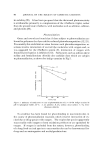
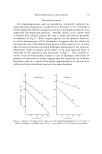
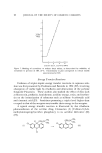
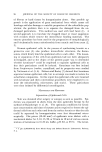
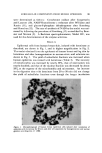
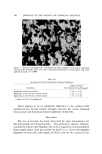
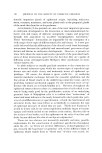
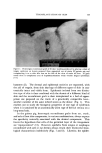
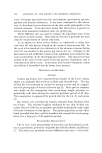
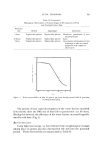
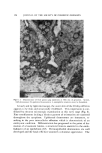
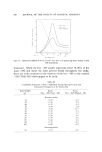
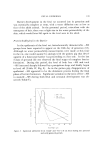
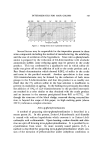
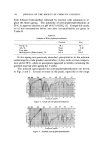
90 JOURNAL OF THE SOCIETY OF COSMETIC CHEMISTS in stability (20). It has been proposed that the decreased photoreactivity is attributable primarily to complexation of the riboflavin triplet, rather than the ground state riboflavin, with molecules such as adenthe, caffeine, and phenols (20). Photooxidation Oster and coworkers found that if dyes subject to photooxidation are bound to polymers the dyes exhibit reduced photodecomposition (12, 21). Presumably this stabilization arises because such photodecomposition re- actions involve interaction of excited dye molecules with oxygen and, as was suggested for the ribofiavin system (2), interaction of oxygen with bound excited species is inhibited (12). Surfactants such as sodium decyl sulfate and benzalkonium chloride also stabilize dyes which are subject to photooxidation, as shown for indigo carmine in Fig 5. ø'4••C 0.40 0.55 50 6 90 120 MINUTES Figure 5. Influence of surfactants on rate of photooxidation of 2 X 10-SM indigo carmine in pH 7.4 phosphate buffer, 25øC. A, no additive B, 2% sodium decyl sulfate C, 5% benz- alkonium chloride No evidence has been found for photobinding to macro•nolecules in the course of photooxidation reactions which involve interaction of ex- cited dye or drug species with oxygen. The triplet dye species apparently react readily with oxygen to form oxidation products or are quenched by oxygen. If oxygen is excluded from the system, however, photobinding of a long-lived excited species to macromolecules can be demonstrated for drugs such as aminopyrine and methylprednisolone.

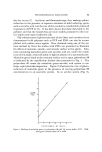
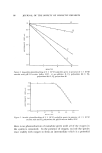
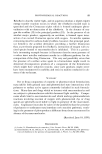
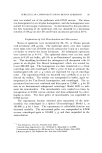
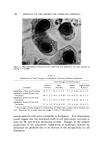
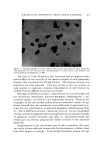
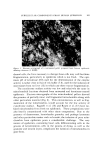
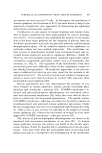
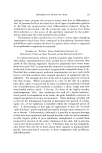
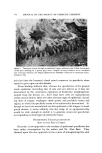
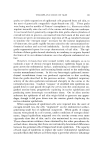
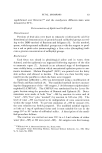
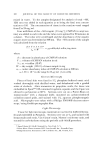
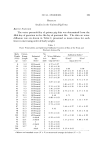
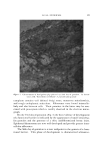
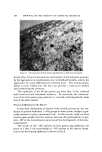
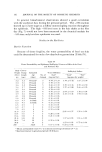
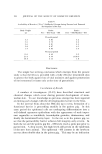
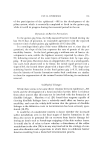
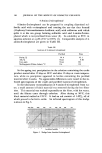
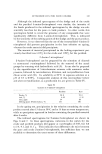
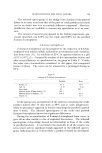
PHOTOCHEMICAL REACTIONS 91 Photodimerization For naphthoquinones such as menadione, ultraviolet radiation in- duces photodecomposition, as indicated by decrease in UV absorbance, which apparently involves formation of dimers and higher polymers as an important decomposition pathway. Miceliar surface active agents such as sodium decyl sulfate increase the rate at which this process proceeds, as indicated in Fig. 6. With reagents specific for the quirtone function, as well as measurement of UV absorbance, it appears that the surfactant increases the rate of the dimerization process, rather than the rate of other photochemical reactions involving hydrogen abstraction by the quinone. Menadione binds to sodium decyl sulfate in the dark (ground state) as indicated by the solubility data presented in Fig. 7. The marked in- crease in rate of dimerization relative to rate of hydrogen abstraction in presence of sodium decyl sulfate suggests that the enhanced rate of dimer formation may be a result of increased approximation of excited state and ground state menadione species in the miceIlar phase. 1.0 0.9 O.B 0.7 0.6 ANAEROBIC I.O 0.9 0.8 0,7 0.6 I 0 20 30 4 0 SECONDS AEROBIC 0 I I I I I0 20 30 40 SECONDS Figure 6. Influence of sodium. decyl sulfate on late of photodecomposition ooe 4.5 to 5.8 X 10-*M menadione in distilled water, 25øC. A, no additive B, 2% sodium decyl sulfate
Purchased for the exclusive use of nofirst nolast (unknown)
From: SCC Media Library & Resource Center (library.scconline.org)