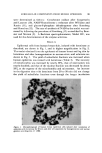
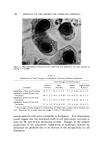
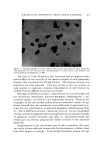
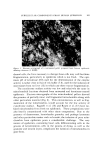
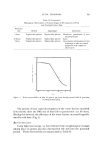
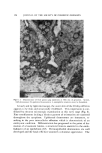
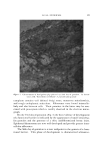
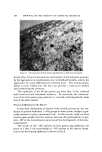
96 JOURNAL OF THE SOCIETY OF COSMETIC CHEMISTS of fibrous or hard tissues by homgenization alone. One possible ap- proach is the application of great mechanical force which causes cell breakage and also damages a variable proportion of the subcellular pop- ulation the problem then is to separate the damaged from the un- damaged particulates. This method was used with beef heart (1). A second approach is to incubate the chopped tissue or tissue suspension with enzymes which remove the intercellular binding materials. The enzyme procedure has been used for the preparation of morphologically and biochemically intact mitochondria from muscle and from yeast (2, 3). Human epidermal cells, in the process of synthesizing keratin as a protective coat (4), also produce intercellular structures, the desmo- somes, which firmly bind the epidermal cells to each other. The loosen- ing or separation of the cells from epidermis had not been adequately investigated, and so the object of the present paper was to determine whether keratinase* could be employed to separate epidermal cells so that their particulates could be isolated. Keratinase was first isolated from Streptomyces fradiae, crystallized, and its properties were studied by Nickerson et al. (5, 6). Dobson and Bosley (7) showed that keratinase separates human epidermal cells, but no attempt was made to isolate the subcellular components. In this report the epidermal cells were loosened with keratinase and then conventional procedures were employed to re- lease the mitochondria, microsomes, and nuclei. These particulates were then isolated by differential centrifugation. MATERIALS AND METHODS Separation of Epidermal Cells Skin was obtained after surgery or autopsy as soon as possible. Epi- dermis was separated in sheets from the skin (generally breast) by the method of Baumberger et al. (8). The optimum conditions for kerati- nase concentration and time of enzyme action required to loosen the epi- dermal cells from each other and from the surface keratin so that the cells could be separated by homogenization were first determined micro- scopically. Flat pieces (50-60 mm 2) of epidermis were shaken with a mechanical shaker for 5, 10, 15, 20, or 30 min in 10 ml of various concen- trations of keratinase in 0.1M tris buffer, pH 8.0, at 25øC. The kerati- * A gift (L583556-0-52) from Merck Sharp and Dohme Rcsearch Laboratories, Rahway, N.J.

SUBCELLULAR COMPONENTS FROM HUMAN EPIDERMIS 97 nase was washed out of the epidermis with 0.25M sucrose. The tissue was homogenized in an all-glass homogenizer, and the homogenates were stained for microscopic examination. As determined by this procedure, the best loosening of the epidermal cells was obtained in a keratinase solution of 150 t•g/ml after 20- and 25-min incubation periods at 25øC. Preparation of Cell Mitochondria and Microsomes Sheets of epidermis were incubated for 20-, 25-, or 30-min periods with keratinase (150 t•g/ml). The epidermal sheets were then washed three times with 5 ml of 0.25M sucrose solution for 3 min in a mechani- cal shaker to remove the excess keratinase. All subsequent operations were carried out at 0-4øC. The epidermal sheets were cut into small pieces in 0.1M tris buffer, pH 8.0, in an Omnimixer* operating for 90 sec. This shredding facilitated the subsequent cell disruption with 10 passes in an all-glass Ten Broeck homogenizer* which was rotated be- tween 800-900 rpm. The homogenate was then transferred to a 15-ml centrifuge tube and centrifuged at 900 X g for 15 min to sediment the nondisrupted cells (all X g values are expressed for tip of centrifuge tube). The supernatant fluid was decanted very carefully so as not to disturb the residue. The residue was resuspended in buffer, again ho- mogenized in the Ten Broeck homogenizer, and centrifuged. The su- pernatant fractions were combined and then spun at 13,000 X g for 20 min in an International refrigerated centrifuge,* Model B-20, to sedi- ment the mitochondria. The mitochondria were washed two times by resuspension in 0.25M sucrose solution and then sedimented by centri- fuging as above. The final pellet of mitochondria was suspended in 0.25M sucrose. The supernatant fraction obtained after separation of the mito- chondria was centrifuged in a Spinco Ultracentrifuge,õ Model L, at 105,000 X g for 1 hour. The supernatant or cell-soluble fraction was decanted carefully. The microsomal pellet was resuspended in 0.25M sucrose, centrifuged again at 105,000 X g, and then suspended in the same solution. * Ivan Sorvall, Inc., Pearl St., Norwalk, Conn. 02054. ? Scientific Glass Apparatus Co., Inc., 735 Broad St., Bloomfield, N.J. 07003. • International Equipment Co., 300 Second Ave., Needham Heights, Mass. 02194. õ Beckman Spinco, 1117 California Ave., Palo Alto, Calif. 94304.
Purchased for the exclusive use of nofirst nolast (unknown)
From: SCC Media Library & Resource Center (library.scconline.org)