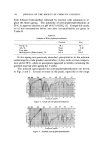
98 .JOURNAL OF THE SOCIETY OF COSMETIC CHEMISTS Isolation o[ Nuclei Human epidermis was treated with keratinase as previously described. The tissue was then homogenized for 90 sec in an Omnimixer with 0.25M sucrose containing 1% citric acid. This was followed by ho- mogenization (with an all-glass homogenizer) in the same way as given above. The resultant homogenate was then layered over 0.44M sucrose which was layered over 0.88M sucrose, both containing 1% citric acid. This triple-layered material was centrifuged at 50 X g for 15 min in an International refrigerated centrifuge,* Model PR-1, which was acceler- ated and decelerated slowly in order to avoid mixing of the layers. The three layers were separated, centrifuged at 900 X g for 10 min, and the pellets were examined microscopically. The top layer contained some nuclei and small pieces of keratin, the middle layer contained mostly free nuclei and a few cells, and the bottom layer had large pieces of keratin and some clumps of cells. Nuclei obtained from the top and middle zones of the above fractionation were resuspended in 0.25M sucrose in 1% citric acid, and again layered over 0.44M sucrose which was layered over 0.88M sucrose, both containing 1% citric acid. This mixture was centrifuged at 50 X g for 25 min and then examined microscopically. The middle layer contained essentially pure nuclei. This nuclear-rich fraction was washed three times with 0.25M sucrose containing 0.0009M CaC1.., (9), and finally suspended in about twice its volume of the sucrose- CaCI_• solution. The total nitrogen content of the epidermal homogenates and the various cell fractions was determined by a micro-Kjeldahl method. Enzyme Assay o/ the Epidermal Fractions The marker enzymes were: cytochrome oxidase for mitochondria reduced nicotinamide adenine dinucleotide phosphate (NADPH)-cyto- chrome c reductase and glucose-6-phosphate dehydrogenase for micro- somes and nicotinamide adenine dinucleotide (NAD)-pyrophosphory- lase for the nuclei, in both keratinase-treated and untreated samples of epidermis. The activity of these marker enzymes was used to determine whether keratinase induced sufficient loosening of the epidermal cells so that homogenization increased the relative amount of particulates, and to ascertain whether keratinase had any deleterious effect on the ac- tivity of these enzymes. The activities of the various marker enzymes * International Equipment Co., 300 Second Ave., Needham Heights, Mass. 02194.

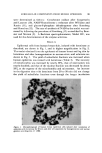
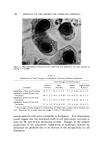
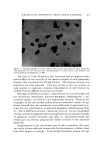
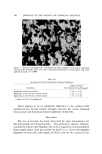
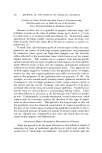
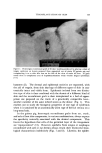
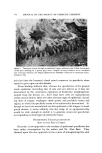
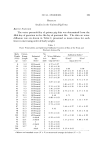
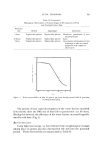
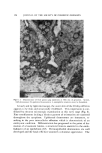
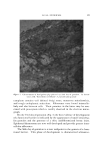
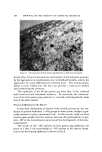
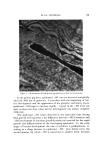
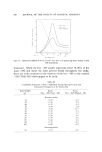
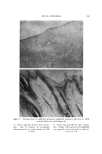
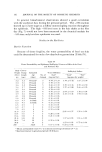
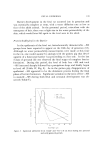
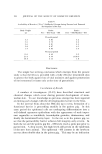
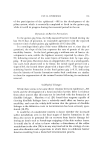
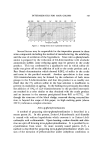
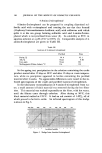
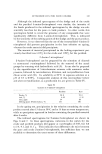
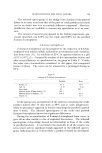
SUBCELLULAR COMPONENTS FROM HUMAN EPIDERMIS 99 were determined as follows: Cytochrome oxidase after Cooperstein and Lazarow (10), NADPH-cytochrome c reductase after Williams and Kamin (11), and glucose-6-phosphate dehydrogenase after Kornberg and Horecker (12). The rate of synthesis of NAD by the nuclei was esti- mated by following the procedure of Kornberg (13) as modified by Bran- ster and Morton (9). A Beckman spectrophotometer, Model DU, was used for the determination of the enzyme activities. RESULTS Epidermal cells from human breast skin, isolated with keratinase as described, are shown in Fig. 1, and in higher magnification in Fig. 2. The nuclei obtained from the epidermis of human breast and leg skin by keratinase and after homogenization in sucrose-citric acid solutions are shown in Fig. 3. The yield of subcellular fractions was increased when human epidermis was treated with keratinase (Table I). The recovery of mitochondria was increased by nearly 50%, that of microsomes was nearly doubled, and that of the nuclear fraction was decreased by about 20% at the expense of the mitochondria and microsomes. An increase in the digestion time with keratinase from 20 to 30 min did not change the yield of subcellular fractions even though the longer incubation :?•'•" • ' . "'-•., •'¾ '...:'2: • • . ' • '• • ':.. ' •.. .z. . •:• .: ' •:• . '2'•.. ".• '•.'.: • • .. :t ":'? * / ".? .. d' - 7-. ..... ' : ': :i:. : ' .. • '-g .:. •.•..?' • .¾ .. .. • . • • •-• .. .• •. . ..... :i •,.. '¾ .' • •.•-. -• •"• ' .•' .: 2•- • .•'.: .... * •- .' -.'.. , - • .: -• .4•....-• -:-. . •...:--• .i: •** •.':. •-...?- .... . c..: •...-. •} : . .• ..: •: • - - . . • .... r•X]-. .... • ...... Figure 1. Microphotograph of human breast epidcmal cells isolated after incubation of epidermis with keratina• for 20 rain and after cell separation by homogenization and sucrose •adient centrifugation (X 1,5•)
Purchased for the exclusive use of nofirst nolast (unknown)
From: SCC Media Library & Resource Center (library.scconline.org)