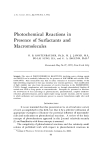
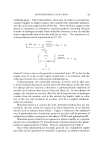
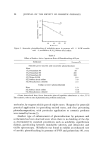
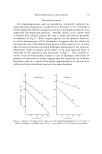
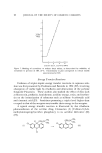
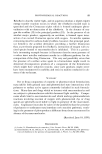
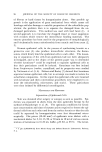
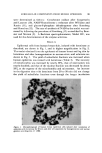
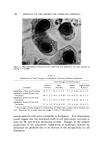
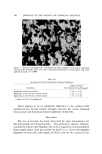
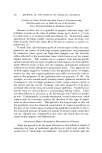
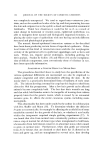
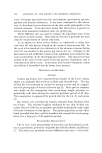
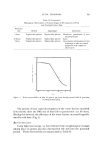
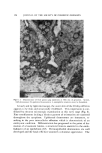
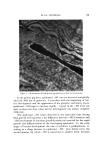
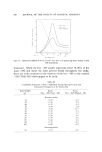
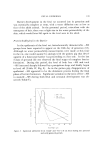
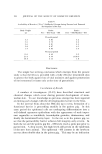
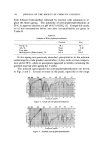
100 JOURNAL OF THE SOCIETY OF COSMETIC CHEMISTS ? , "3 ..... d..•.?'•:•' -• . v •,•-,•....a•..- • • •. . . • - • •7 •.".•? ............ ß .•. ----•-•,•' ..• ...... .... " •'{• '5•.• :k•' •' ß " •-'."}•:'•". ...... ..•,: .. ,• .......... .... -•6•.•&•x•i•x,?:,•, •.•.:... .... • ,.,•9 .kk• , Figure 2. Microphotograph of human breast epidermal cells i•lated in the same manner as for Fig. 1 (X 15,000) Table I Distribution of Total Nitrogen in Subcellular Fractions of Human Epidermis a Total Nitrogen in Cell Fractions Nuclear Mito- Micro- Supernatant Condition Fraction chondria somes Fraction Epidermis, without any keratinase Epidermis, treated 20 rain with keratinase Epidermis, treated 25 rain with keratinase Epidermis, treated 30 rain with keratinase 56 q- 3 14.3 q- 5.4 5.5 4- 0.50 24 q- 3.2 48 q- 1.2 20.3 q- 0.58 9.9 4- 0.75 22 q- 1.2 46 4- 1.4 20.4 4- 0.46 10.0 4- 0.23 22 4- 1.6 47 q- 1.0 21.0 q- 0.81 9.3 q- 0.44 21 q- 1.3 - Percentages of total nitrogen in cell fractions are based upon original tissue nitrogen con- tent. Results are the average mean percentage q- S.D. of 5 experiments. period made the cells more susceptible to disruption. This observation would suggest that the maximum yield of cell particulates occurred at both the 20- and 25-min incubation periods. Changes in the relative proportions of the subcellular components of epidermis induced by keratinase are probably due to an increase in the susceptibility to cell disruption.

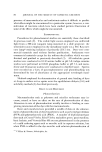
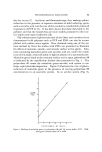
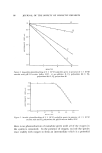
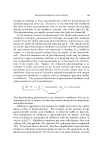
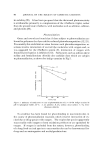
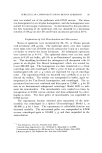
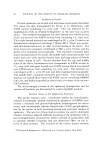
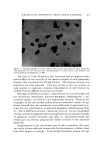
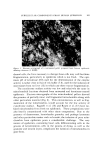
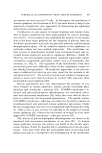
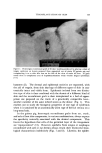
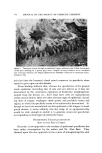
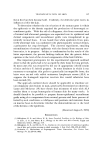
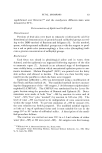
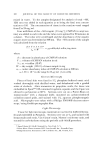
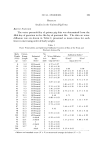
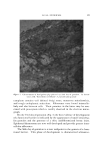
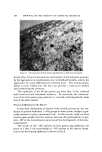
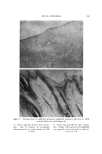
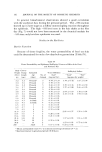
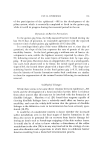
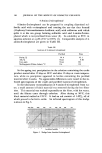
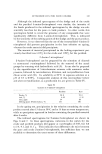
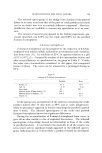
SUBCELLULAR COMPONENTS FROM HUMAN EPIDERMIS 101 Figure 3. Microphotograph of nuclei isolated frmn human leg epidermis after incubation with keratinase for 20 min and after homogeniza, tion in sucrose-citric acid solution and sucrose gradient centrifugation (X 600) The data in Table II indicate that keratinase had no apparent dele- terious effect on the activities of the marker enzymes of each particulate fraction after incubation for 20 and 30 min. The enzyme recovery was somewhat less than expected. This may be due to the low activity of each enzyme in epidermis, making contmnination of one fraction by another fraction difficult to measure accurately. Although NADPH-cytochrome c reductase activity was associated with the microsomal membranes, glucose-6-phosphate dehydrogenase, a mi- crosrenal enzyme, was found in the supernatant fraction. Electron mi- crographs of the microsomal pellets from an untreated sample of epi- dermis showed that the membranes were sufficiently fragmented to ac- count for the solubilization of glucose-6-phosphate dehydrogenase (Fig. 4). The NADPH-cytochrmne c reductase, however, was not solubilized. Another section through the microsomal pellet from an untreated sample of epidermis showed ribosomes only (Fig. 5). Keratinase-treated epi- dermis gave microsomal preparations similar to those of the untreated epidermis. Fragmentation of the microsomes may be due to autolysis (14), since one rarely obtains sufficient human skin for fractionation within a short time after surgery or autopsy. Even though keratinase loosens the epi-
Purchased for the exclusive use of nofirst nolast (unknown)
From: SCC Media Library & Resource Center (library.scconline.org)