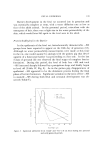
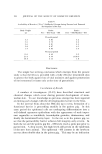
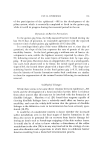
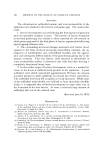
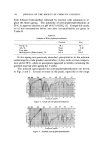
84 JOURNAL OF THE SOCIETY OF COSMETIC CHEMISTS presence o[ macromolecules and surfactants makes it difficult to predict what effects might be encountered in a particular system however, a con- sideration o[ reactions which have been studied permits illustration o[ some of the effects which might be encountered. EXPERIMENTAL Procedures for photochemical studies are essentially those described in previous work (2). The visible light source employed was unfiltered light from a 300-watt tungsten lamp mounted in a slide projector the ultraviolet source employed in the menadione study was a Pen Ray mer- cury lamp • emitting radiation of primarily 253.7 nm. Dyes were com- mercial materials used without further purification. Suroeactants were commercial materials except for the sodium decyl suloeate which was syn- thesized and purified as previously described (3). All malachite green studies were conducted in 0.1M acetate buffer at pH 5.0, indigo carmine studies were performed in 0.05M phosphate buffer at pH 7.4, and mena- dione and Clomacran studies were conducted in distilled water. Spectra were recorded on a Cary 15 spectrophotometer and photobleaching was determined by loss of absorbance at the appropriate wavelength maxi- mum. Methods employed for determination of ground state binding of dyes or drugs to surface active agents were the equilibrium dialysis (4-6) and solubility methods (4) described previously. RESULTS AND DISCUSSION Photoreduction Macromolecules such as polymers and miceliar surfactants may in- crease, retard, or have no effect on the rate of photoreduction of dyes. Alteration in rate of photoreduction usually involves a binding or com- plexing interaction of the dye with the macromolecule. Oster and coworkers have provided a wealth of data on the enhance- ment of photoreduction of dyes by polymers such as polyvinylpyrrolidone (PVP) and polymethacrylic acid (PMA). A number of triphenylmethane dyes such as Crystal Violet, Ethyl Violet, malachite green, pararosaniline, basic fuchsin, and Victoria Blue 4R are not photoreduced in the presence of a mild reducing agent such as ascorbic acid in aqueous solution, but when PMA is added to the dye-ascorbic acid solution photoreduction of Arthur H. Thomas, Philadclphia, Pa.

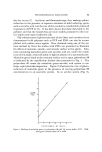
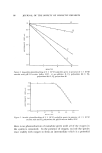
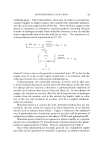
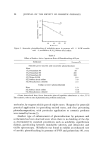
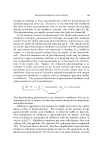
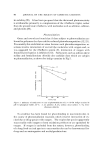
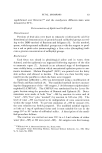
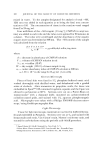
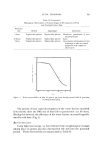
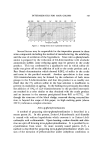
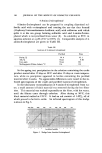
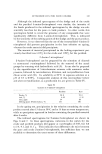
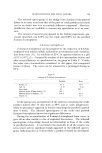
PHOTOCHEMICAL REACTIONS 85 the dye occurs (7). Acriflavin and fluorescein-type dyes undergo photo- reduction in the presence of aqueous solutions of mild reducing agents such as ascorbic acid, but the rate of the reaction is considerably enhanced in presence of PVP (8-11). It has been shown that these dyes bind to the polymer and that the bound dyes are more readily promoted to the reac- tive triplet state upon irradiation (12). The enhancement of photoreduction which Oster and coworkers have demonstrated with polymers such as PVP and PMA can also be accom- plished with surface active agents. Data obtained using one of the sys- tems utilized by Oster for studies with PMA are presented to illustrate the effects of nonionic, anionic, and cationic surface active agents. Solu- tions containing malachite green and ascorbic acid are, under the condi- tions of this study, relatively stable to light in absence of a macromolecule. Malachite green binds to the nonionic surface active agent polysorbate 80 as indicated by the equilibrium dialysis data presented in Fig. 1. The polysorbate 80 causes the malachite green-ascorbic acid system to un- dergo rapid photodecomposition. Figure 2 illustrates the rate of photo- reduction of malachite green in the presence of varying polysorbate 80 concentrations in an anaerobic system. In an aerobic system (Fig. 3), 7 6 TOTAL FREE 5 4 $ 2 I I I i I I 0 i 2 3 4 5 POLYS ORBATE 80 (% W/V) Figure 1. Binding of malachite green to polysorbate 80, pH 5.0 acetate buffer, 25øC. Mala- chite green concentration 1.0 X 10-*M
Purchased for the exclusive use of nofirst nolast (unknown)
From: SCC Media Library & Resource Center (library.scconline.org)