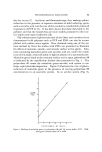
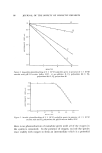
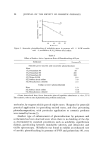
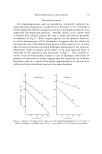
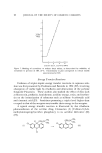
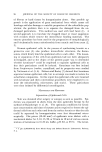
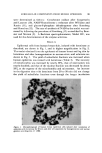
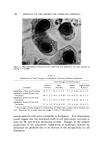
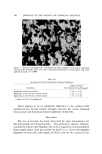
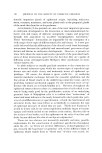
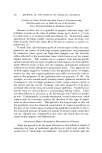
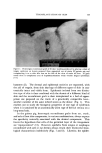
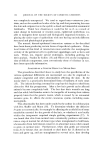
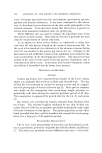
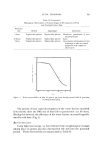
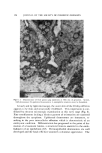
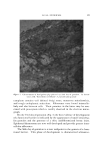
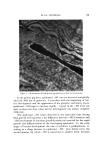
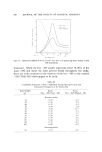
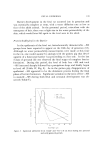
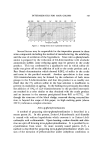
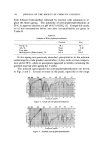
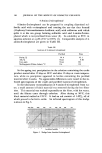
86 JOURNAL OF THE SOCIETY OF COSMETIC CHEMISTS A 0.5 I I I 2 .'.'5 MINUTES Figure 2. Anaerobic photobleaching of 2 X 10-SM malachite green in prcscnce of 1 X 10-•M ascorbic acid, pH 5.0 acetate buffer, 25øC. A, no additive B, 1% polysorbate 80 C, 3% polysorbate 80 D, 5% polysorbate 80 1.0 0.9 = 0.8 o ,,0 0.7 bJ z 0.6 o cn 0.,5 Y o o 0,4 I I i 5 I I I 5 I0 I 20 25 .30 MINUTES Figure 3. Aerobic photobleaching of 2 X 10-*M malacbite green in pre•ncc of 1 X 10-•M ascorbic acid and 5% polysorbate 80, pH 5.0 acetate buffer, 25øC there is no photoreduction of malachite green until all of the oxygen in the system is consumed. In the presence of oxygen, excited dye species react readily with oxygen to form an intermediate which is a powerful

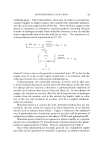
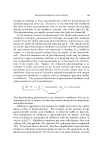
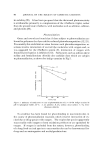
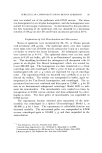
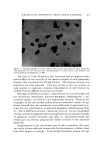
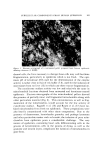
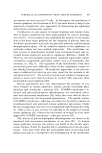
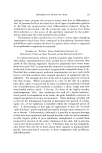
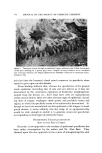
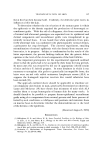
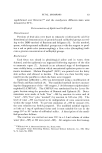
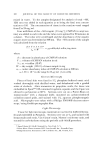
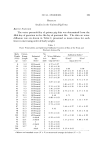
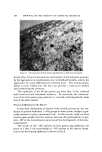
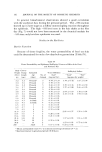
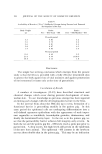
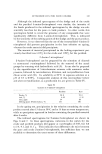
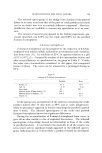
PHOTOCHEMICAL REACTIONS 87 oxidizing agent. This intermediate, which may be either an excited dye- oxygen complex or singlet oxygen, then oxidizes the oxidizable substrate, ascorbic acid, with regeneration of the dye. After all of the oxygen in the system is consumed, an alternative reaction pathway involving electron transfer or hydrogen transfer from oxidizable substrate to the excited dye leads to photoreduction of the dye and loss of color. The alternative re- action pathways may be represented as (12-15): oxidizable h• D* D' substrate D • ,, • • Dred • So x I D'02 ] oxidizable substrate or , D + Sox D + singlet 02 D + 02 where D refers to dye in the ground or unexcited state, D * to dye in the singlet state, D' to dye in the triplet excited state, S to substrate, and the subscripts red and ox to reduced and oxidized species. Unquestionably, the oxidizable substrate, ascorbic acid in this case, is being oxidized during the period when the absorbance of the dye does not change and the reaction is therefore a photosensitized oxidation of ascorbic acid without destruction of the dye (Path A). In the absence of oxygen, the alternative reaction (Path B), involving electron or hydrogen transfer from the ascorbic acid to the excited dye triplet, leads to color loss of the dye and oxidation of ascorbic acid in a coupled oxidation- reduction reaction. Malachite green is a cationic dye and, although binding data are not available, the dye would be expected to bind extensively to an anionic micelle such as sodium decyl sulfate. Figure 4 illustrates the enhanced rate of photoreduction of malachite green by ascorbic acid in presence of sodium decyl sulfate, analogous to the effects of PMA and polysorbate 80. Malachite green would not be expected to bind so readily to a cationic micelle, but nevertheless 5% benzalkonium chloride enhances the photo- reduction approximately 2.3-fold. Data are summarized in Table I. Since these photochemical reactions proceed via a long-lived triplet state they can be quenched or retarded, in presence or absence of macro-
Purchased for the exclusive use of nofirst nolast (unknown)
From: SCC Media Library & Resource Center (library.scconline.org)