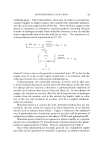
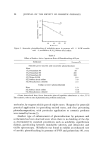
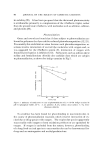
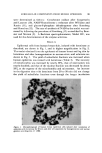
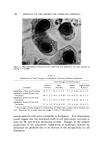
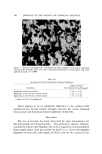
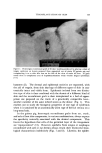
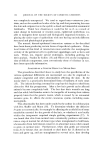
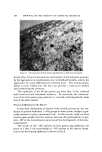
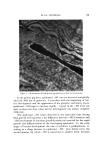
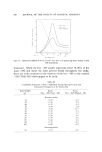
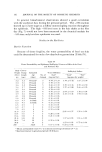
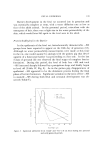
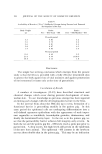
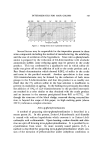
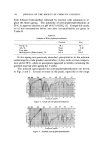
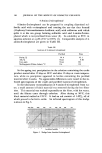
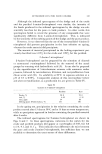
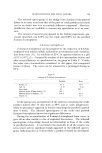
]04 JOURNAL OF THE SOCIETY OF COSMETIC CHEMISTS Figure 6. Electron micrograph of a mitochondrial pellet prepared from human epidermis showing some partially intact and some fragmented mitochondria, keratohyalin, and other particulate matter (X 53,000) Table III Synthesis of NAD by Nuclei from Human Epidermis Condition #Moles of NAD Synthesized/hr/mg Nitrogen" Epidermis, without keratinase Epidermis, treated 20 min with keratinase Epidermis, treated 30 rain with keratinase 1.45 q- 0.23 1.23 q-- 0.19 1.15 q- 0.18 Mean q- S.D. of 4 experiments. There appears to be no significant difference in the •nloles NAD synthesized per hr/mg nuclear nitrogen between the nuclei obtained from normal and keratinase-treated epidermis (Table III). DISCUSSION The use of enzymes has been advocated by some investigators for the preparation of cell particulates. The proteolytic enzyme, Nagarse, was used by Chance and Hagihara (2) in the preparation of mitochondria from muscle tissue, snail gut enzyme by Duell et al. (3) for the enzymic digestion of yeast cells, and trypsin by Weiss (18) for the relnoval of an

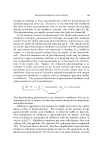
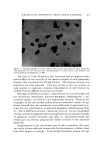
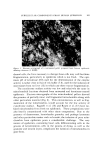
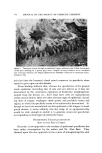
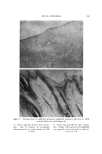
SUBCELLULAR COMPONENTS FROM HUMAN EPIDERMIS 105 extraneous coat from sarcoma 37 cells. In this report, the incubation of human epidermis with keratinase at 25øC has been shown to help in the separation of epidermal cells, apparently by dissociating the epidermal intercellular keratinase-like material. Clarification of some aspects of enzyme histology and enzyme chem- istry of human epidermis has been made possible by various investiga- tors (19-21). Several authors have established the presence in the human skin of the three major pathways for the oxidation of glucose these are the Kreb's tricarboxylic acid cycle, the glycolytic pathway, and the hexose monophosphate shunt. Of the oxidative enzymes in the epidermis, cy- tochrome oxidase has been studied extensively. The cytochrome oxi- dase activity of mitochondria isolated from keratinase-treated and un- treated human epidermis showed no significant difference (Table II). However, the mitochondrial preparations contained appreciable nonmi- tochondrial, fragmented, particulate matter such as keratohyalin, des- mosomes, etc. (Fig. 6). The separation of the mitochondria from these particulates poses some difficulties unless all the components remain in- tact during homogenization. Of particular importance is the procure- ment of sufficient fresh skin (or any other tissue) for the isolation of the cell particulates (14). The activity of cyt.ochrome oxidase in human epi- dermis is much lower than that found in rat liver (22), and lower than that found in mouse epidermis (23). Recent experiments have also demonstrated the presence of two other enzymes in human epidermis namely, purine nucleoside phos- phorylase and cytochrome c reductase (19). NADPH-cytochrome c re- ductase and glucose-6-phosphate dehydrogenase are exclusively associ- ated with microsomal membranes (24), hence they were used in this re- port as a marker for the microsomal preparations. The specific activity of NADPH-cytochrome c reductase was rather low but fairly constant in keratinase-treated and untreated human epidermal microsomes (Table II) even though these structures were fragmented and ribosome-free (Fig. 4). Only a trace, if any, activity was reported in six samples of normal mouse epidermis (2g), whereas the microsomes of normal rat liver show appreciable NADPH-cytochrome c reductase activity (24). The activity of glucose-6-phosphate dehydrogenase was shown to be associated with microsomal membranes in rat liver (24). In human breast epidermis, however, the activity was found in the soluble super- natant fraction (Table II), possibly due to solubilization from the mem- branes. This may result from the unavoidable delay in securing fresh human skin and, as a consequence, the disintegration of the membranes
Purchased for the exclusive use of nofirst nolast (unknown)
From: SCC Media Library & Resource Center (library.scconline.org)