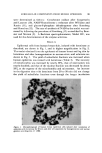
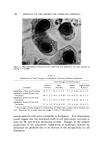
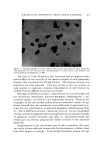
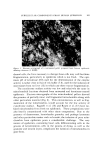
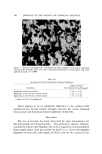
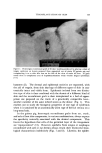
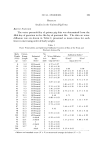
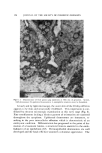
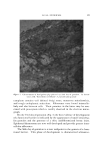
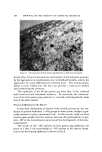
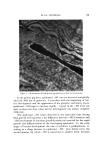
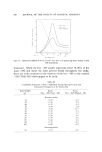
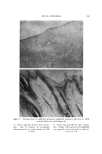
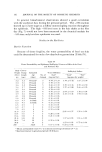
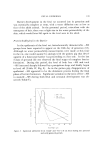
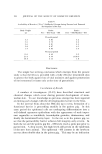
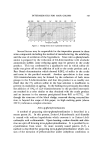
106 .JOURNAL OF THE SOCIETY OF COSMETIC CHEMISTS and the subsequent liberation of this enzyme into the supernatant frac- tion (14). The possibility exists, however, that glucose-6-phosphate de- hydrogenase is not attached to the microsomal membranes of epidermis. In general, the preparation of nuclei from human epidermis was sat- isfactory in that very few whole cells were present (Fig. 3). However, a small amount of particulate matter, probably keratin, could be observed in most nuclear preparations, even after repeated washing by gradient centrifugation. This procedure removed most of the soluble constituents of the cytoplasm. As mentioned above, methods for assessing cytoplasmic contamination of enzymes of one subcellular component by those of another are not generally helpful in a tissue such as epidermis which has low activities of many enzymes. However, cytochrome oxidase activity was determined in the nuclear fraction of epidermis and found to be nil, showing the absence or trace only of mitochondria. The experi- ments with isolated nuclei are rendered more difficult by the paucity of nuclear marker enzymes which have been studied in detail. Two en- zyme activities that are largely concentrated in the nuclear fraction are NAD-pyrophosphorylase and DNA-dependent RNA-polymerase. Re- cent research with mitochondria has shown that even the latter enzyme is not unique to the nucleus. In this report, the results indicate that NAD-pyrophosphorylase activity of keratinase-treated and untreated nuclei showed no consistent differences (Table III). ACKNOWLEDGMENTS The authors are grateful to the Department of Pathology at Buffalo General Hospital and to the Departments of Breast Surgery and Pathol- ogy of Roswell Park Memorial Institute for the human skin samples. They are also indebted to Drs. U. Kim and J. Horoszewicz of this Insti- tute for the electron microscopy. (Received August 10, 1970) REFERENCES (1) Sanadi, D. R., and Fluharty, A. L., On the mechanism of oxidativc phosphorylation. VII. Thc energy-requiring reduction of pyridine nucleotide by succinate and the en- crgy-yielding oxidation of reduced pyridine nucleotide by fuma•'ate, Biochemistry, 2• 523-8 (1963). (2) Chance, B., and Hagihara, B., Direct spectroscopic measuremcnts of interaction of com- ponents of the respiratory chain with ATP, ADP, phosphate, and uncoupling agents, Proc. Int. Congr. Biocbem., 5th, Moscow, 5, 3-37 (1961). (3) Duell, E. A., Inoue, S., and Utter, M. F., Isolation and properties of intact mitochondria from spheroplasts of yeast, J. Bacteriol., 88, 1762-73 (1964).

SUBCELLULAR COMPONENTS FROM HUMAN EPIDERMIS 107 (4) Van Scott, E. J., and Ekel, T. M., Kinetics of hyperplasia in psoriasis, Arch. Dermatol., 88, 373-81 (1963). (5) Nickerson, W. J., Noval, J. J., and Robison, R. S., Keratinase. I. Properties of the enzyme conjugate elaborated by Streptomyces Fradiae, Biochim. Biophys. Acta, 77, 73-86 (1963). (6) Nickerson, W. J., and Durand, S.C., Keratinase. II. Properties of the crystalline en- zyme, Ibid., 77, 87-99 (1963). (7) Dobson, R. L., and Bosley, L., The effect of keratinase on human epidermis, ]. Invest. Dermatol., 41, 131-3 (1963). (8) Baumberger, ]. P., Suntzeff, V., and Cowdry, E. V., Methods for the separation of epi- dermis from dermis and some physiologic and chemical properties of isolated epi- derntis, J. Nat. Cancer Inst., 2, 413-23 (1942). (9) Branster, M. V., and Morton, R. K., Comparative rates of synthesis of diphosphopyridine nucleotide by normal and turnour tissue from mouse mammary gland: studies with isolated nuclei, Biochem. J., 6•, 640-6 (1956). (10) Cooperstein, S. J., and Lazarow, A., A microspectrophotometric method for the deter- ruination of cytochrome oxidase, J. Biol, Chem., 180, 665-70 (1951). (11) Williams, C. H., Jr., and Kamin, H., Microsomal triphosphopyridine nucleotide-cyto- chrome c reductase of liver, Ibid., 2•7, 587-95 (1962). (12) Kornherg, A., and Horecker, B. L., in Colowick, S. P., and Kaplan, N. O., Methods in Enzymology, I, Academic Press, New York, 1955, pp. 323-7. (13) Kornberg, A., Reversible enzymatic synthesis of diphosphopyridine nucleotide and inor- ganic pyrophosphate, J. Biol. Chem., 182, 779-93 (1950). (14) Pease, D.C., Tissue Exposure, in Histological Techniques for Electron Microscopy, Academic Press, New York and London, 1964, p. 15. (15) Bloemendal, H., Bont, W. S., DeVries, M., and Bcnedetti, E. L., Isolation and properties of polyribosomes and fragments of the endoplasmic reticulum of rat liver, Blochem..1., 10•, 177-82 (1967). (16) Bagatell, F. K., Dimitrov, K., and Dugan, K., An epidermal particulate fraction rich in mitochondria capable of independent respiration, J. Invest. Dermatol., 48, 174-80 (1967). (17) Rosett, T., Ohkido, M., Smith, J. G., Jr., and Yardley, H., Studies on the biochemistry of skin. IV. Some properties of mitochondria isolated from the epidermis of the adult rat, J. Invest. Dermatol., 48, 67-78 (1967). (18) Weiss, L., The effects of trypsin on the size, viability and dry mass of sarcoma 37 cells, Exp. Cell Res., 14, 80-3 (1958). (19) Hershey, F. B., Lewis, C., Jr., Murphy, ]., and Schiff, T., Quantitative histochemistry of human skin, J. Histochem. Cytochem., 8, 41-9 (1960). (20) Hershey, F. B., and Mendle, B. J., Quantitative histochemistry of burned and normal skin, $urg. Forum, 5, 745-9 (1954). (21) l'Vcber, G., Enzymes in the human skin, Aust. ]. Dermatol., 6, 141-55 (1962). (22) Reynafarje, B., and Potter, V. R., Comparison of transhydrogenase and pyridine nucleo- tide-cytochrome c reductasc activities in rat liver and Novikoff hepatoma, Cancer Res., 17, 1112-9 (1957). (23) Carruthers, C., Woernley, D. L., Baumler, A., and Davis, B., The activity of pyridine nudeotide-cytochrome c reductases, cyt,ochrome oxidase, and diaphorase in epidermis in various stages of malignant transformation, Ibid., 19, 330-3 (1959). (24) Tara, J. R., Preparation and Properties of Microsomal and Submicrosomal Fractions from Animal Cells, in Birnie, G. D., and Fox, S. M., Subcellular Components, Plenum Press, New York, 1969, pp. 83-107.
Purchased for the exclusive use of nofirst nolast (unknown)
From: SCC Media Library & Resource Center (library.scconline.org)