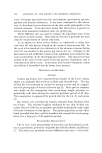
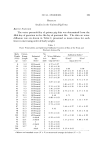
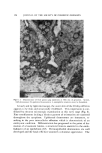
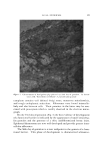
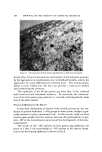
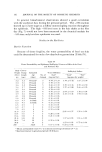
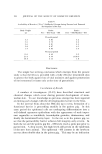
124 JOURNAL OF THE SOCIETY OF COSMETIC CHEMISTS Table 1I Histological Observations at Various Stages of Development of Fetal and Neonatal Guinea Pigs Fetal Age Dermis Appendages Epidermis 30 days Undifferentiated No evidence of One to two layers of epidermal collagen under- follicles basal cells with outer film- developed like coating numerous fibroblasts 40 days Numerous derreal Follicles begin to Malpighian layer comprised of cells concentrated appear two layers at the epidermal border 43 days Little change Greater concentration Malpighian layer consists of of buds of follicles and sebaceous glands 52 days Prominently stained Piloscbaceous duct yellow bodies in development apposition to further advanced pilosebaceous duct hair follicles may be erector pili abundant. Hair and vascular tissue shaft development precursors. readily apparent Collagen fibers appear 55 days Collagen fibrous bed Sebaceous glands much denser obvious. Full numerous fibro- length hair shafts blasts many cells seen hair in massing under anagen phase epidermis striated musculature observed 57 days Little change Sebaceous glands appear fully developed. Hair in anagen phase 60 days Little change Little change 61 days to Little change Little change parturition ordered columnar epithelial cells, and of cells with flattened nuclei migrating into outermost aspect of tissue. Flattened cells appear Keratinization process becomes evident on basis of appearance of streams or pockets of granules usually in the immediate area of flattened nuclei. Also cytoplasmic breakdown is apparent (vacuoles) Granular layer becoming more apparent but still present in pockets. Corncure or horny layer taking on typical appearance Disjunctum beginning to appear, associated with overall advanced development of corneum. Granulation widespread but layer still not complete Much of stratum granulosum at mature stage occasional pockets poor in granulation Has general appearance of mature epidermis prominent granulosum

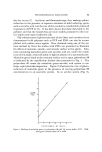
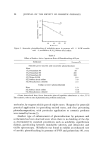
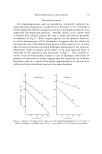
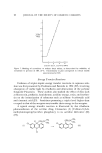
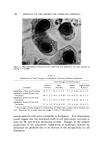
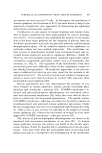
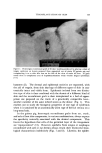
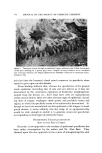
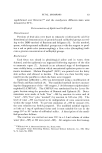
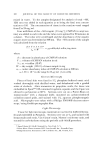
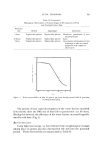
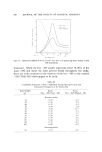
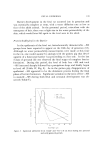
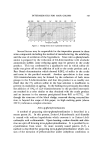
FETAL EPIDERMIS 125 Table II (Continued) Histological Observations at Various Stages of Development of Fetal and Neonatal Guinea Pigs Postnatal Age Dermis Appendages Epidermis 1 hour Typical skin picture Typical skin picture 12 hours Typical skin picture Typical skin picture 4 days Typical skin picture Typical skin picture Prominent granulosum is out- standing feature Same Granulosum still prominent, but beginning to take on normal proportion with respect to other layers 10.0. 40 ' s% 6'0 [erin Days Figure 1. $Vater permeability of skin of guinca pig fetus during second half of gestation (semilogarithmic plot) The period of most rapid development of the water barrier extended from shortly after the 50th day of fetal life to parturition (ca. 63 days). During this interval, the efficiency of the water barrier increased logarith- mically with time (Fig. 1). Barrier Structure Using light microscopy, we have followed the morphological changes taking place in guinea pig skin during fetal life and into the postnatal period. These observations are summarized in Table II.
Purchased for the exclusive use of nofirst nolast (unknown)
From: SCC Media Library & Resource Center (library.scconline.org)