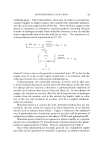
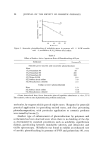
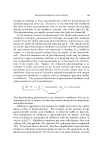
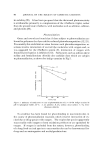
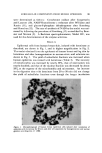
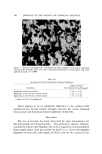
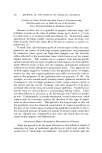
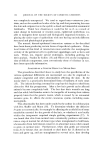
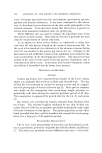
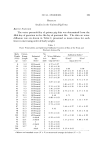
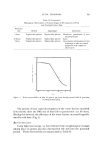
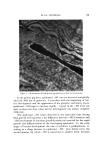
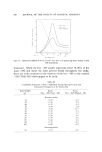
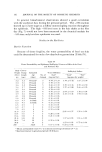
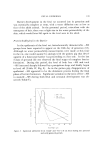
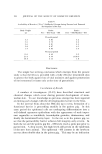
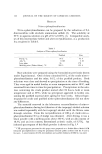
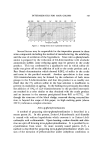
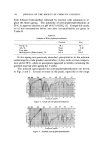
130 JOURNAL OF THE SOCIETY OF COSMETIC CHEMISTS 2 I o Days 40 Figure 6. Epider•nal sulfhydryl levels ("to,tal" and "free") of guinea pig fetus during second half of gestation dominant. While the free --SH usually represents about 70-80% of the total --SH, and shows the same general trends throughout the study, there are wide variations in the relation of the free --SH to the masked --SH (Table III) which appear to be cyclic. Table III Availability of Reactive ("Free") Sulfhydryl Groups During Prenatal and Postnatal Development of the Guinea Pig Body Weight Ratio: Ratio: (g) Free --SH/Total --SH Free --SH/Masked --SH Prenatal period 14 0.69 2.2 25 0.76 3.2 28 0.71 2.5 32 0.54 1.8 41 0.92 11.7 41 0.76 3.1 45 0.79 3.7 55 0.51 1.0 69 0.79 3.6 87 0.62 1.6 98 0.70 2.3 102 0.82 4.5 Neonatal period 95 0.75 3.0

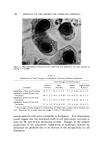
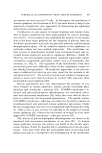
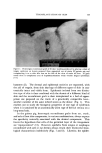
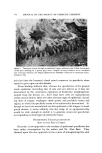
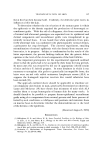
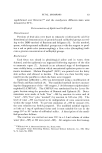
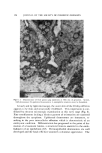
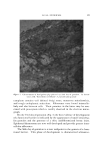
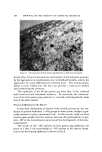
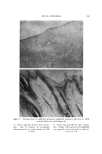
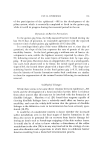
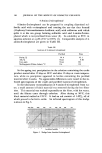
FET.\L EPIDERhlIS 131 ':"'"'i.•"":"'" ' ,: .... :i]• & '• ............ ½.•½ '• ',,½: ':'."•-,.'• ' •,. ½•Y.,• :,•.•-.-,....•.-•,•,,,.•..,.,•75. •: •:S& ,.•...•2 • Figure 7. Demonstration of sulfhydryl groups in epidermis of guinea pig fetus by DDD methyl of Barrnett and Seligman (6) A. Guinea pig skin 40 days after concep- B. Guinea pig skin 60 days after concep- tion. Lack of contrast in micrograph tion. Strong --SH reaction in the epidermis demonstrates the very weak reaction of --SH and especially in the hair shaft is easily ob- (x 312) scrvcd (X 312)
Purchased for the exclusive use of nofirst nolast (unknown)
From: SCC Media Library & Resource Center (library.scconline.org)