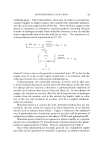
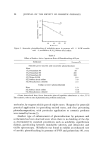
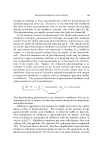
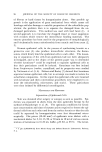
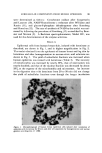
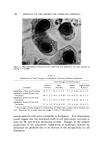
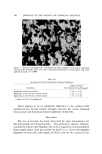
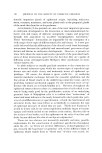
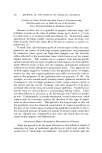
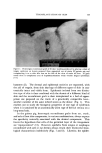
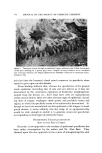
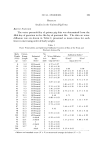
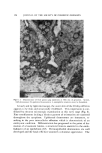
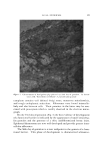
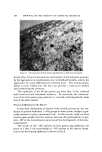
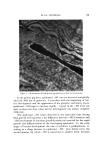
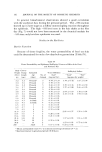
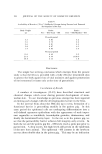
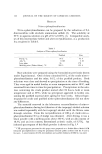
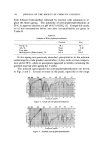
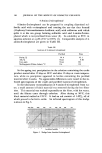
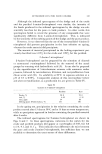
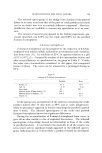
132 JOURNAL OF THE SOCIETY OF COSMETIC CHEMISTS In general, histochemical observations showed a good correlation with the analytical data during the prenatal period. The --SH reaction showed up in later stages as a diffuse monocoupling reaction throughout the epidermis. The high --SH level seen in the hair shafts at the 61st day (Fig. 7) would not have been measured in the chemical analysis for --SH since only hair-free epidermis was used. Studies in the Rat Fetus Barrier Function Because of tissue fragility, the water permeability of fetal rat skin could be determined for only a few days before parturition (Table IV). Table IV Water Permeability and Epidermal Sulfhydryl Content of Skin of the Fetal and Newborn Rat Body Crown- Weight Rump (Wet) Length (g) (cm) Estimated Water Diffusion Sulfhydryl Sulfur a Age No. of Rate a "Total .... Free" (days) Animals (mg/cm2/hr) (mg/gm dry weight) 32 34 36 36 37 38 39 41 56 6.0 6.2 6.5 6.9 7.9 11.0 13.4 13.6 21.0 26.9 34.8 2O0 3.2 3.6 3.4 3.7 3.6 3.9 3.6 3.8 4.2 4.3 4.5 4.5 4.7 4.9 5.2 56 58 58 74 Prenataff 5 0.94 Prenatal 2 0.78 Prenatal 5 0.66 Prenatal 4 0.48 Prenatal 3 0.78 Prenatal 4 0.70 Prenatal 4 0.38 Prenatal 3 0.35 Prenatal 5 0.16 At birth 5 0.11 At birth 4 0.13 1 3 0.11 1 4 0.17 4 3 0.19 5 2 7 3 0.28 9 4 0.21 12 2 14 3 0.32 16 2 Adult 5 0.17 4- 0.24 -4- 0.15 +0.10 4- 0.06 4-0 02 4-013 4-0 05 4-0 06 4-001 4-OOl -bO 02 4-OOl 4-0 02 4- 0.04 4- 0.06 4- 0.02 1.94 4- 0.42 1.67 4- 0.08 3.59 4- 0.36 2.59 4- 0.30 3.27 4- 0.88 2.66 4- 0.25 2.04 4- 0.69 1.78 4- 0.54 2.33 q- 0.41 1.94 4- 0.26 2.01 4- 0.37 1.39 4- 0.29 1.17 4- 0.18 1.16 4- 0.25 q- 0.04 1.13 4- 0.05 0.73 4- 0.06 4- 0.02 0.23 4- 0.02 ... Means and standard errors (N 2) or means and average deviations (N -- 2). Skin from fetus late in gestational period (18-20 days).

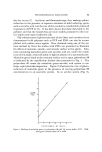
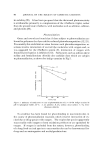
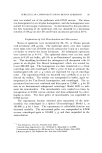
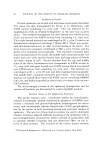
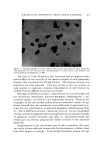
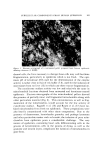
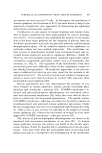
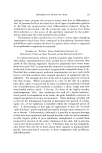
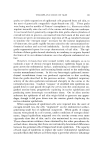
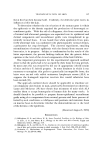
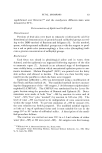
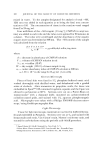
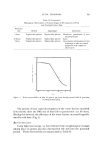
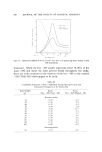
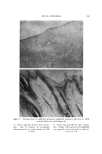
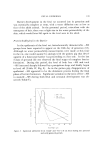
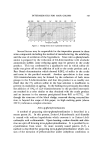
FETAL EPIDERMIS 133 Barrier development in the fetal rat occurred late in gestation and was essentially complete at term, with a water diffusion rate as low as that of the adult animal. In the postnatal period, coincident with the emergence of hair, there was a slight rise in the water permeability of the skin, which would later fall again to the level seen in the adult. Protein-Sulfhydryl in the Barrier In the epidermis of the fetal rat, histochemically demonstrable --SH groups have been reported to appear on the 16th day of gestation (13). Although no water permeability measurements were made at this time in the rat, one would assume by analogy with the guinea pig that devel- opment of a functional barrier was proceeding at a fast rate. In the last 3 days of prenatal life one observed the final stages of complete barrier formation. During this period, the level of both free --SH and total --SH increased sharply followed by a precipitous drop, and finally began to level off (Table IV, Fig. 8). As in the guinea pig, disappearance of epidermal --SH appeared to be the dominant process during the final phase of barrier formation. Significant variation in the ratio of free --SH to masked --SH during both fetal and neonatal development was ob- served (Table V). ½' "total" • "free" --SH ...... water permeablhty x .2• .... x F-T--- 0 2'0 Term Body Weight (gin.) •'0 •0 Figure 8. Epidermal sulfhydryl levcls ("total" and "free") of rat fetus during late prenatal and early postnatal periods
Purchased for the exclusive use of nofirst nolast (unknown)
From: SCC Media Library & Resource Center (library.scconline.org)