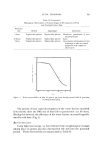
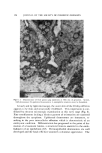
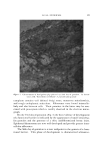
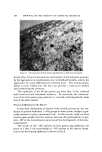
136 JOURNAL OF THE SOCIETY OF COSMETIC CHEMISTS SUMMARY The ultrastructure, sulfhydryl content, and water permeability of the epidermis were studied in the fetal rat and guinea pig. The results indi- cated: 1. Barrier development occurred during the final quarter of gestation and was essentially complete at term. The kinetics of barrier formation in the fetal guinea pig were similar to those reported for cell renewal in adult guinea pigs and for the final phase of barrier regeneration following tape-stripping of human skin. 2. The outstanding structural changes associated with barrier devel- opment in the fetus involved increasing intercellular cohesion, the ag- gregation of tonofilaments into well-defined bundles, and the appear- ance and subsequent differentiation of the granulosum giving rise to the stratum corneum. Thus the barrier, fully matured as determined in water permeability studies, is associated only with fetal skin showing a completely keratinized horny layer. 3. In the earlier stages of barrier development, there is a marked in- crease in the levels of sulfhydryl-rich protein in the epidermis. A peak sul•hydryl level which represented approximately 20 times the amount normally present in adult epidermis was found just before parturition. The sulfhydryl level then fell as rapidly as it had increased. While some of the sulfhydryl undoubtedly was oxidized to form interchain disulfide bonds, it is suspected that sulfhydryl participates in some other way in the formation of the skin barrier. At term, a relatively large amount of sulfhydryl still was in the reduced state. (Received June 18, 1970) REFERENCES (1) Vinson, L. J., Singer, E. J., Koehler, W. R., Lehman, M.D., and Masurat, T., The nature of the epidermal barrier and some factors influencing skin permeability, Toxicol. Appl. Pharmacol., 7, suppl. 2, 7 (1965). (2) Manual [or Laboratory Animal Care, Sect. I: Introduction to Laboratory Animals, Ralston Purina Co., St. Louis, Mo., 1961. (3) Altman, P. L., and Dittmer, D. S., Growth, Including Reproduction and Morphological Development, Fed. Amer. Soc. Exp. Biol., Washington, D.C., 1962. (4) Gruneberg, H., The development of some external features in •nouse embryos, ]. Hered., 34, 88-92 (1943). (5) Burch, G. E., and ¾¾insor, T., Diffusion of water through dead plantar, pahnar and torsal human skin and through toe nails, Arch. Dermatol. Syphilol., 53, 39 (1946). (6) Barrnett, R. J., and Seligman, A.M., Histochemical demonstration of protein-bound sulfhydryl groups, Science, 1115, 323 (1952).

FETAL EPIDERMIS 137 (7) Singer, E. J., Signi/ica•ce of Shin Sul/hydryl Analyaes, in Marzulli, F. N., and Mershon, M. M., CRDL Spec. Pnb. S-56, Conference of Contractors for Skin Research, 9 and 10 October, 1962, p. 112 (1964). (8) Flesch, P., and Kun, E., A colorimetric method for determination of sulfhydryl groups in tissue homogenates by 1-(4-chloromercuriphenylazo)-naphthol-2, Proc, Soc. Exp. Biol. Med., 74, 249 (1950). (9) Bennett, S. H., and Yphantis, D. A., 1-(4-Chloromercuriphenylazo)-naphthol-2, J. Arner. Chern. Soc., 70, 3522 (1948). (10) Ognra, R., Knox, J. M., and Griffin, A. C., The application of an ultramicro method for determining snlfhydryl compounds in the epidermis, J. Invest. Dermatol., •5, 319 (1960). (11) Stark, G. R., Stein, W. H., and Moore, S., Reactions of the cyanate present in aqueous urea with amino acids and proteins, J. Biol. Chern., 2•5, 3177 (1960). (12) Mercer, E. H., Keratin and Keratinization, Pergamon Press, New York, 1961, p. 86. (13) Katchburian, E., and Glerian, A., Histochemical study of sulfhydryl and disnlfide groups in histogenesis of Rattus norvegicus albinus epidermis, Rev. Fac. Farrn. Bioquirn. Univ. Sao Paulo, 2, 1 (1964). (14) Serri, F., Montagna, W., and Huber, W. M., Studies of skin of fetus and the child, Arch. DerrnatoI., 87, 144 (1963). (15) Novel, M., Changes of the incorporation of radioactive S between the 13th and 18th day of development in normal and irradiated mouse embryos, Cornpt. Rend., Set. D, 262 (26), 2760 (1966). (16) Chakrabarti, S. G., and Bernstein, I. A., Sulfur in epidermal chemical differentiation, Fed. Proc., 26, 369 (1967). (17) Serri, F., and Huber, W. M., The Development o/ Sebaceous Glands in the Fetus, in Advances in Biology o/Shin, Vol. IV, The Sebaceous Glands, Pergamon Press, New York, 1963. (18) Ri•nmer, D. M., Morphological and bioche•nical studies on the development of foetal mouse skin, Brit. J. Dermatol., 81), 657 (1968). (19) Mercer, E. H., Keratin and Keratinization, Pergamon Press, New York, 1961, Chap. III. (20) Song, C. W., and Tabachnick, J., Epide•nal cell population kinetics in albino guinea pig skin, Nature, 217, 650 (1968). (21) Matoltsy, A. G., Schragger, A., and Matoltsy, M. N., Observations on regeneration of the skin barrier, J. Invest. Derrnatol., $8, 251 (1962). (22) Spruit, D., and Malten, D. E., Epidermal water barrier formation after stripping of nor- real skin, Ibid., 45, 6 (1965). (23) Monash, S., and Blank, H., Location and reformation of the epithelial barrier to water vapor, Arch. Derrnatol., 78, 710 (1958). (24) Matoltsy, A. G., Downes, A.M., and Sweeney, T. M., Studies of the epidermal water barrier. Part II. Investigation of the chemical nature of the water barrier, J. Invest. Dermatol., 50, 1• (1968). (25) Crounse, R. G., Alhali-Soluble Human Epiderrnal Proteins, in Montagna, W., and Lobitz, W. C., Jr., The Epidermis, Academic Press, New York, 1964, p. 365. (26) Roe, D. A., Snlphur metabolism in relation to cutaneous disease, Brit. J. Derrnatol., 81, Suppl. 2, 49 (1969).
Purchased for the exclusive use of nofirst nolast (unknown)
From: SCC Media Library & Resource Center (library.scconline.org)