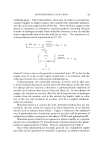
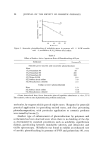
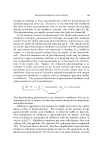
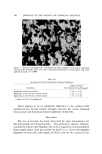
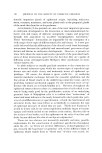
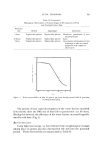
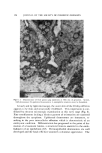
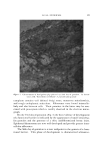
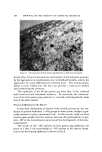
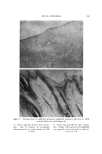
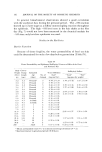
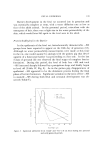
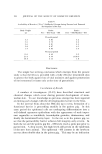
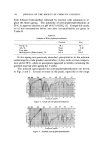
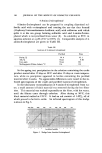
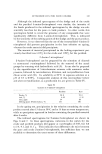
134 JOURNAL OF THE SOCIETY OF COSMETIC CHEMISTS Table V Availability of Reactive ("Free") Sulfhydryl Groups during Prenatal and Postnatal Development of the Rat Body Weight Ratio: Ratio: (g) Frec •--SH/Total --SH Free --SH/Masked --SH Prenatal period 3.2 0.86 6.2 3.6 0.72 2.6 3.6 0.81 4.4 3.8 0.87 6.9 3.9 0.83 5.0 Neonatal period l1.0 0.69 2.2 21.0 0.99 100.0 34.8 0.65 1.8 DISCUSSION The simple but striking conclusion which emerges from the present study is that the fetus is provided with a fully effective keratinized skin to protect the body against loss of vital moisture and against penetration of environmental irritants only at the time of parturition. Correlation of Results A number of investigators (13-19) have described structural and chemical changes which occur during prenatal development of mam- •nalian skin. To our knowledge no previous attempt has been reported on linking such changes with the developing skin barrier in the fetus. In the interval from about the 50th day up to term, formation of a functional barrier is proceeding steadily in the guinea pig. In this same period the epidermal cells are undergoing differentiation into a well-defined squamous epithelium with the appearance of such impor- tant organelles as tonofibrils, keratohyalin gxanules, desmosomes, and finally the keratinized horny layer. In the rat, as in the guinea pig, we see that the permeability barrier achieves full integrity only at term. In both the rat and the guinea pig the --SH levels reach a peak just prior to parturition. A drop occurs, but high levels still persist in the epidermis of the new born animal. The epidermal --SH content in the newborn rat was about double that in the guinea pig. This may be an indication

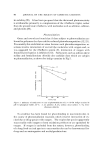
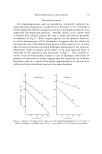
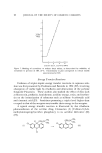
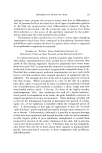
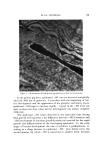
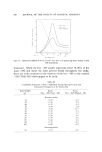
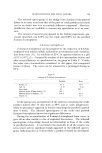
FETAL EPIDERMIS 135 of the participation of the epidermal --SH in the development of the pilary system, which is essentially completed at birth in the guinea pig, while it is still in progress during the neonatal period in the rat. Dynamics of Barrier Formation In the guinea pig fetus, the fully-matured barrier formed during the last 10-11 days of gestation, in reasonable agreement with the reported turnover time of adult guinea pig epidermis of 8.5 days (20). In a semilogarithmic plot of the water diffusion rate vs. time (day of gestation), the slope of the line expresses the rate of genesis of the per- meability barrier. In the fetal guinea pig a uniform rate of barrier de- velopment is seen, unlike the biphasic recovery reported by others (21- 23) following removal of the outer layers of human skin by tape strip- ping. If one plots Matoltsy's data on stripped skin (21) on a semilogarith- mic scale, both phases tend to be linear, the initial rapid period with a slope of 0.3, the second slower phase with a slope of 0.1. The slope char- acterizing barrier formation in the fetal guinea pig is 0.11, indicating that the kinetics of barrier formation under fetal conditions are similar to those for regeneration of the normal barrier following its mechanical removal. Sulfhy dry l C hanges While there seems to be some direct relation between epidermal levels and the development of a functional skin barrier, there is evidence from other sources that this may not be involved with the formation of disulfide linkages. Matoltsy et al. (24) found that reagents capable of cleaving disulfide tinkages have a relatively small effect on barrier per- meability, and even the widely-held notion that the genesis of disulfide linkages is the definitive event in keratinization has been seriously ques- tioned (16, 25). It would be of considerable interest to know whether the increased sulfur metabolism seen in the final stages of barrier formation in the fetus also occurs in postnatal life on recovery from barrier damage fol- lowing an insult such as Scotch-tape stripping of the skin surface layers. It would also be of value to know whether a disturbance of the sulfur metabolism in the skin (26) is in any way involved in the etiology of com- mon skin disorders such as psoriasis in which there is a deficient barrier function resulting from a disturbed keratinization process.
Purchased for the exclusive use of nofirst nolast (unknown)
From: SCC Media Library & Resource Center (library.scconline.org)