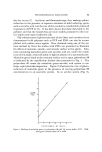
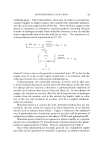
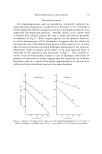
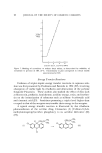
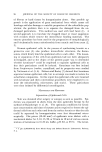
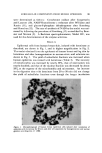
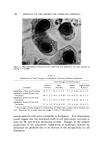
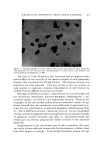
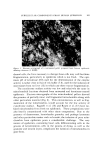
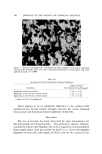
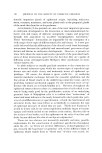
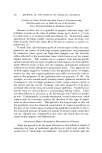
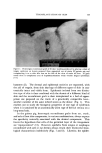
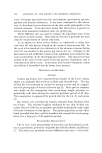
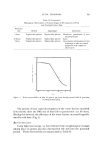
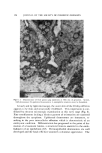
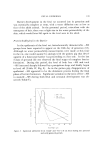
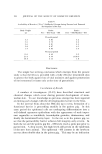
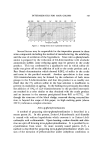
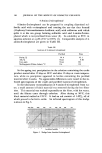
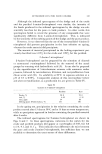
146 JOURNAL OF THE SOCIETY OF COSMETIC CHEMISTS 4-,4 mino-2-nitrophenol 4-Amino-2-nitrophenol can be prepared by coupling diazotized sul- fanilic acid with o-nitrophenol and treating the azo dye thus formed (4-hydroxy-3-nitroazobenzene-4-sulfonic acid) with sulfurous acid which splits it at the azo group forming sulfanilic acid and 4-amino-2-nitro- phenol which is recrystallized from water (8). Its solubility at 25øC in aqueous solution at a pH of 9.7 is 2.97% (1). Comparable analyses of 4- amino-2-nitrophenol are given in Table III. Table III Analyses of 4-Amino-2-nitrophenol Purified Raw Purity, % 99.4 95.1 Ash, % Trace 0.82 Iron, ppm Trace 382 Melting point (Fisher-Johns), øC 136 130 In the ageing test, precipitation in the solution containing the crude product started after 13 days at 50øC and after 15 days at room tempera- ture, while no precipitate appeared in bottles containing the purified material after 4 weeks. No appreciable differences were noted in the in- frared spectrograms of the crude and purified 4-amino-2-nitrophenols. In the laboratory recrystallization of 4-amino-2-nitrophenol from wa- ter, a small amount of black material was removed during the hot filtra- tion. This material was washed repeatedly on the filter, with hot water, until the flitrate came through colorless. After drying at 50øC, this black material melted at 135øC. It had an ash content of 1.42%, all of which proved to be ferric oxide. An infrared spectrogram of this sludge is shown in Fig. 5. 4000 3(•00 2000 I$00 CM 4 10043 900 800 700 10C 100 8C 80 •6C 60 •4C 40 • 2C 3 4 .5 6 7 8 9 10 11 12 13 14 150 WAVELENGTH (MICRONS) Figure 5. Sludge from 4-mnino-2-nitrophenol

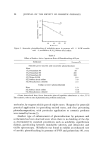
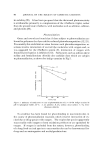
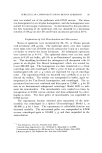
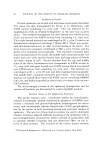
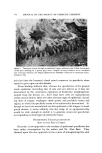
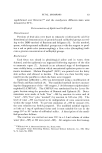
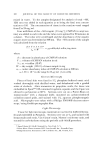
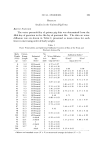
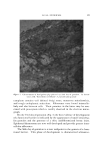
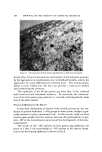
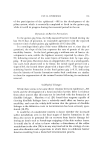
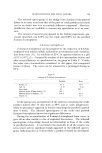
INTERMEDIATES FOR HAIR COLORS 147 Although the infrared spectrograms of the sludge and of the crude and the purified 4-amino-2-nitrophenol were similar, the intensity of the bands produced in the infrared spectrogram by the sludge was sub- stantially less than for the pure or crude product. In other words, this spectrogram failed to reveal the presence of any compounds that were significantly different from 4-amino-2-nitrophenol. This is indicated by the similarity of the melting points of the sludge and the pure product. However, it was observed that the use of the recrystallized 4-amino-2- nitrophenoI did prevent precipitation in the base solution on ageing, whereas the crude material did precipitate. The amount of material precipitated in the boiling experiment pre- viously described was 1.10% for the crude and 1.29% fo•: the purified. 2-A mino-5-nitrophenol 2-Amino-5-nitrophenol can be prepared by the nitration of diacetyl or monoacetyl o-aminophenol folio,wed by the removal of the acetyl groups by warming with hydrochloric acid (9). It can also be prepared by the saponification of 5-nitrobenzene oxazone with ammonia under pressure, followed by neutralization, filtration, and recrystallization from dilute acetic acid (10). Its solubility at 25øC in aqueous solution at a pH of 9.7 is 0.99%. Comparable analyses of this intermediate before and after recrystallization, as a production lot, are given in Table IV. Table IV Analyses of 2-Amino-5-nitrophenol Purified Raw Purity, % 98.8 95.0 Ash, % 0.02 0.39 Iron, ppm 34 28 Melting point (Fisher-Johns), øC 201 186 In the ageing test, precipitation in the solution containing the crude product started after 13 days at 50øC and at 14 days at room temperature, while no precipitate appeared in bottles containing the purified material after 4 weeks. The infrared spectrograms for 2-amino-5-nitrophenol are shown in Figs. 6 and 7. In these spectrograms, variations in the curves for the crude and purified products did appear at wavelengths of 5.95, 6.2, 6.3 to 7.4, 9.1, and 11.1 v. This indicates that differences do exist between the pure and crude 2-amino-5-nitrophenols, but sufficient data are not available to determine the exact nature of these differences.
Purchased for the exclusive use of nofirst nolast (unknown)
From: SCC Media Library & Resource Center (library.scconline.org)