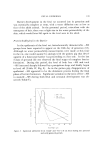
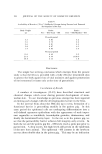
150 .JOURNAL OF THE SOCIETY OF COSMETIC CHEMISTS tion. This sludge melted at 137øC. It had an ash content of 1.42% and contained 0.58% iron determined and reported as ferric oxide. The amount of material precipitated in the boiling experiment pre- viously described was 0.60% for the crude 2-amino-4-nitrophenol and 0.30% for the purified. Effect of Iron Content on Precipitation Since the iron content of the raw products was, in most cases, sub- stantially higher than that of the recrystallized materials, it seemed possi- ble that this might be a factor in the precipitation. Because of the fact that, in the tests described, precipitation occurred more rapidly from a solution of crude nitro-o-phenylenediamine than from the other crude products, purified nitro-o-phenylenediamine was selected for this experi- ment. One liter each of six base solutions containing 1 g of purified nitro-o-phenylenediamine was prepared with a portion of the water re- placed with a solution containing ferrous sulfate. The iron content of each base solution was: Sample 1 2 3 4 5 6 Iron added, ppm 0 200 400 1000 4000 10,000 No precipitation was obtained with any sample after ageing for 4 weeks, indicating that iron is probably not responsible for precipitation on ageing. CONCLUSION Even though the so-called crude nitro-o-phenylenediamine, nitro-p- phenylenediamine, 4-amino-2-nitrophenol, 2-amino-5-nitrophenol, and 2-amino-4-nitrophenols considered in this paper are relatively pure, they all cause precipitation in oxidation hair dye base solutions on ageing. Since in all cases the base solutions are clear at the time of preparation, and since the time required for precipitation varies from 1 to 15 days, depending on which of these compounds is used, the problem cannot be solved by a simple filtration following the preparation of the base solu- tions. It has been determined that, in all cases, a recrystallization process was effective in removing the materials present in the crude products that were responsible for this precipitation. In fact, base solutions prepared in this laboratory, using purified dyes, showed no precipitation on ageing at reom temperature for 30 months.

INTERMEDIATES FOR HAIR COLORS 151 It has been shown that the formation of a precipitate in a base solu- tion may be caused by impurities, other than iron, present in the nitro intermediates being used. The impurities which are responsible for the formation o[ the precipitate can be effectively removed by a recrystalliza- tion of the nitro intermediate. (Received June 18, 1970) REFERENCES (1) Tucker, H. H., Hair dycing with oxidation dye intermediates, J. Soc. Cosmet. Chem., 18, 609 (1967). (2) Goldemberg, R. L., and Tucker, H. H., Effect of base components on the properties of oxidation hair dyes, Ibid., 19, 423 (1968). (3) Griffin, K. P., and Peyerson, W. D., Org. Syn., 21, 20 (1941). (4) Burgdorf, K., U.S. Patent 3,187,048 (1965). (5) Clairol Incorporated, British Patent 1,187,534 (1970) (6) Bil, Milos $., Canadian Patent 839,716 (1970). (7) Bil, Milos S., Canadian Patent 839,717 (1970). (8) Heinrich, B., German Patent 258,059 (1913). (9) Aktiengesellschaft fur Anilin-Fabrikation, German Patent 165,650 (1906). (10) Fiat Final Rept., No. 1313, Office of military government (U.S.) for Ge•Tnany, German Dyestuffs and Dyestuff Intermediates, 1,203 (1948). (11) Hartsman, W. W., and Silloway, H. L., Org. Syn., 25, 5 (1945).
Purchased for the exclusive use of nofirst nolast (unknown)
From: SCC Media Library & Resource Center (library.scconline.org)