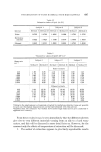
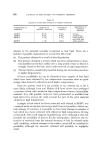
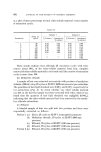
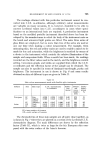
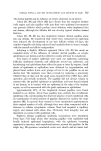
690 JOURNAL OF THE SOCIETY OF COSMETIC CHEMISTS Table VI Quantity of hair lipid obtained by ethanol extraction Temperature of extraction 32-35øC 45-50øC 56-62øC 68-78øC Quantity of material obtained S.0% 0.8% 1.a% 1.1% Cumulative quantity S.0% s.s% 7.1% S.2% Appearance of extracted material oil/wax powder/wax white powder and little wax white powder relation to the material normally recognized as hair lipid. There are a number of possible explanations to account for this result: (a) The product obtained is a result of hair degradation. (b) The product obtained is sebum which has been polymerized or other- wise modified on the hair surface over a long period of time so that it is strongly bound to the hair, and is only removed at high temperatures. (c) The hair lipid is considerably modified during the extraction procedure at higher temperatures. Of these possibilities (c) can be eliminated since samples of hair lipid which have been obtained by low temperature extraction show no great change when heated in ethanol to much higher temperatures. From the present work it is not possible to say whether (a) or (b) is more likely although Ireon and Holmes (14) have shown that prolonged extraction of hair with alcohol at high temperatures removes intracellular material. It is still possible, however, that polymerized or modified hair lipid derived by process (b) could account for part of the extra material obtained at high temperatures. A sample of hair which had been extracted with ethanol at 32-35øC was examined under an electron microscope and it was not possible to detect any hair damage. In contrast, it is possible to detect hair damage in samples of hair which have been extracted with ethanol at high temperatures for long periods (13). This result supports hypothesis (a) above although it does not preclude the possibility of process (b) also taking place. However, the ex- traction of materials from the internal structure of hair by ethanol under mild conditions, without damage to the surface, must still be considered a possibility although the amounts obtained will probably be negligibly small.

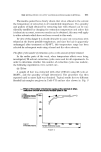
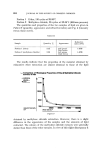
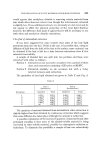
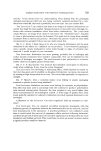
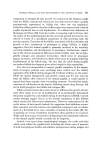
TI-IE EXTRACTION OF FATTY MATERIALS FROM HAIR CLIPPINGS The results quoted have clearly shown that when ethanol is the solvent the temperature of extraction is of considerable importance. The qunatity and quality of lipid obtained by extracting hair with ethanol can be con- siderably modified by changing the extraction temperature and unless this is taken into account, erroneous results can be obtained this may well apply to other solvents which have not been covered in this work. In view of this danger it is clearly desirable to carry out extractions with ethanol at the lowest possible temperature, and since the hair is apparently undamaged after treatment at 32-35øC, this temperature range has been selected for subsequent work using ethanol and the other solvents. The effect of the number of extraction cycles on the amount of lipid removed In the earlier parts of the work, when temperature effects were being investigated, 25 solvent extraction cycles were used for all experiments. In order to determine whether this number of extraction cycles was realistic, the following experiments were carried out:- (a) Ether A sample of hair was extracted with ether (150 ml) using 25 cycles at 32-35øC, and the quantity of lipid determined. The procedure was then repeated until no more lipid was obtained. Typical results for two different blended hair samples are given in Table VII and are also shown in Fig. $ Effect of the number of extraction cycles on the removal of ether, methylene chloride and alcohol-solu'ble lipids of hair. o ether • methylene chloride [] ethanol yoage of extractable material 75 50 25 25 50 75 100 125 Number of extraction cycles Figure
Purchased for the exclusive use of nofirst nolast (unknown)
From: SCC Media Library & Resource Center (library.scconline.org)