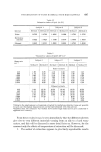
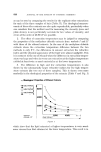
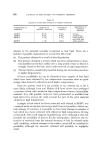
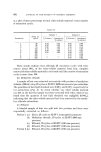
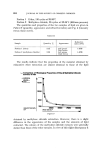
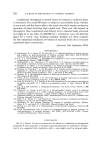
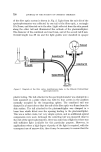
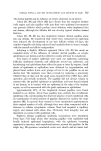
688 JOURNAL OF THE SOCIETY OF COS3IETIC CItEMISTS as can be seen by comparing the results for the replicate ether extractions for each of the three samples of hair (Table II). The rheological measure- ments of these ether extracts are also quite reproducible, particularly when one considers that the method used for measuring the viscosity (cone and plate device), is not particularly accurate for low values of viscosity, and errors of the order of 40-50 cP are possible. 2. The effect of extraction temperature may be judged by comparing the properties of the methylene chloride extracts from methods I and II with those of the ethanol extracts. In the case of the methylene chloride extracts where the extraction temperature difference between the two methods is only 5øC, the differences in amount extracted, the refractive index and the physical appearance of the lipid were almost negligible. This is in contrast to the use of ethanol when the difference in extraction temper- ature was large and when in every case extraction at the higher temperature yielded at least twice as much material as at the lower temperature. 3. The difference in high and low extraction temperatures is also shown by the substantially larger refractive indices for the high temper- ature extracts (for two out of three samples). This is shown even more markedly in the rheological properties of the extracts (Table V and Fig. 1) F,91. Rheological Properties of Ethanol Extracts - -•--subj. 1. method ]• • "11 ---C- subj.'.2, methodI -o- subj. 3.me•od[ -•- . apparent viscosity c.P. 400O 2O0O shear rate sec-1 j Figure l which show that the lipid extracted at higher temperatures is very much more viscous than that obtained at the lower temperature. This result is in

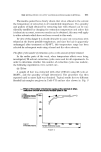
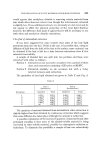
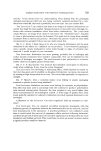
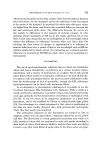
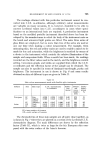
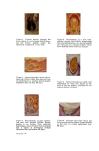
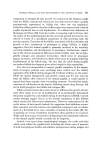
THE EXTRACTION OF FATTY MATERIALS FROM HAIR CLIPPINGS (•89 accord with the physical appearance of the lipid the material extracted at the higher temperature is found to be much harder. The effect of ethanol extraction In view of the large differences found between extraction with ethanol at low and high te•nperatures, a further experiment was carried out with a sample of hair which was sequentially extracted as follows:- (a) 25 cycles ethanol at 32-35øC (b) 25 cycles ethanol at 45-50øC (c) 25 cycles ethanol at 56-62øC (d) 25 cycles ethanol at 68-78øC A fresh sample of ethanol xvas used for each extraction. The results are shown in Table VI and Fig. 2, in which it can be seen that the quantity of material obtained was found to increase linearly with temperature. The differences in the physical appearance of the various samples of The Effect of Temperature on Ethanol Extractable Material. extract mean extraction temp.'• Figure 2 extracted lipid are also shown in Table VI, and these clearly show the transition from a waxy to powdery material. Although considerably more matehal is being removed from hair at higher temperatures using ethanol, it is obvious that this material bears no
Purchased for the exclusive use of nofirst nolast (unknown)
From: SCC Media Library & Resource Center (library.scconline.org)