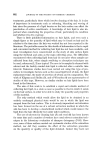
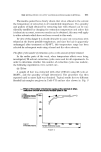
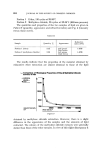
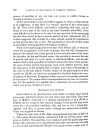
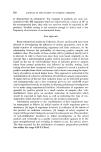
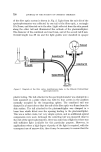
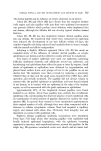
696 JOURNAL OF THE SOCIETY OF COSMETIC CHEMISTS ,, •. Comp. arison of the effect of interrnitent and successive extraction of h•ir with ether. interrr•tent extraction successive extraction ø•ether-soluble lipid 6 4 2 25 50 7• 100 1'•5 1•0 I number of extraction cycles Figure extracted with ether and this was followed by extractions with methylene chloride and ethanol until no further lipid materials were obtained. The hair sample was then stored in a desiccator for one week and then re-extracted with ether, when a further 0.1% by weight of fatty material was obtained. The hair sample was stored for a further week and again re-extracted, when a further 0.08% of fatty material was obtained. These results indicated that the extra lipid could not have been obtained by conversion of the ethanol- soluble matehal and it would appear that the diffusion suggestion may be valid. However, an alternative explanation to that of diffusion of fatty matedhals from inside the hair can be put forward to account for these additional small quantities of extractable material. The surface of hair contains a number of free acid groups and these can react with calcium or magnesium ions present in tap water which comes into contact with the hair. Both these ions are di-valent and can act as bridging atoms to bind free fatty acids present in hair lipid to the surface of the hair. If this is so, then we can explain the additional matedhals obtained as being due to the hydrolysis of some of these tightly bound fatty acids. To investigate this idea further, the following experiment was carried out. A sample of hair was exhaustively extracted with ethel, methylene chloride and ethanol and then the hair was placed in cold 0.1 N hydro- chloric acid (150 ml) for 2 h. The sample was then washed thoroughly

THE EXTRACTION OF FATTY MATERIALS FROM HAIR CLIPPINGS 697 with distilled water to remove any trace of acid, dried in an oven at approx- imately 35øC, and then extracted with ether (25 cycles at 32-35øC). A further 1.5% of fatty material was obtained which was shown by ir analysis to be almost pure stearic acid. The calcium contents of the washings were also determined and when the calcium level was related to the weight of the hair sample taken, it was found that the calcium level (0.25% by weight) corresponded to that quoted (15) for hair as a whole (0.34%). This provides strong evidence for the calcium ion bridging mechanism. DISCUSSION AND CONCLUSIONS The purpose of this work has been to establish a method of extracting hair lipid under such conditions that the material obtained can be defined as the total fatty material present on the surface of the hair. For this reason a range of solvents of varying polarities was chosen and the effects of temperature and time of extraction were studied. A method for exhaustively extracting hair without damaging the structure has been established based on the sequential extraction with ether, methylene chloride and ethanol. Apart from the advantages to be gained in terms of total extraction time and convenience, the sequential extraction technique allows examination of the contribution of the different lipid fractions to the properties of the total combined lipid extract. This would be useful in distinguishing between hair lipids obtained from hair of different types or hair which had been subjected to different treatments. It is hoped to report such differences in subsequent papers. It is interesting to note that this study has also shown that the rate of extraction of ether- and alcohol-soluble material from hair is rather low (taking about 100 soxhlet cycles) which perhaps suggests that skin swabbing techniques also need to be examined carefully in terms of efficiency of extraction. The effect of extraction temperature on the material extracted from hair, particularly with ethanol, has also been shown to be extremely im- portant and the possibility exists that the same phenomena may occur with other solvents such as, for example, acetone. This work has also established the probable existence of a strongly ad- sorbed layer of material on the hair surface, consisting of high melting fatty acid possibly linked to the hair by calcium atom bridges. It is interesting to speculate on the effects of such material in the estimation of detergency
Purchased for the exclusive use of nofirst nolast (unknown)
From: SCC Media Library & Resource Center (library.scconline.org)