682 JOURNAL OF THE SOCIETY OF COSMETIC CHEMISTS treatments, particularly those which involve cleaning of the hair. It is also of importance in treatments such as colouring, bleaching and waving of hair since the presence of a lipid barrier on the hair surface can affect the penetration of active constituents. A knowledge of hair lipid is also im- portant when considering the properties of hair, particularly its condition and whether it is dry or greasy. There is little published information on hair lipids, and even such a simple figure as the quantity of lipid which may be found on hair and its relation to the time since the hair was washed has not been reported in the literature. The probable reason for this dearth of information is that a rapid and convenient method for collecting hair lipid has not been available, and most investigators have concentrated on the study of skin surface lipids using the forehead and arms as the main collecting areas. The difficulties encountered when collecting lipid from hair do not arise when samples are collected from skin, where simple swabbing or absorption techniques can be used references (1, 2) are typical. The area to be sampled is cleansed with solvent and the freshly exuded skin lipid is collected after a suitable time interval. Numerous studies have been carried out using this type of pro- cedure to investigate factors such as the casual lipid level of skin, the lipid replacement time, the mode of secretion of sebum and its composition. The work of Kligman and Shelley (3), and of Wheatley (4) are representative of studies of this type. However, no similar studies on hair lipids have been found in the literature. The aim of this work is to establish a rapid and reliable method of collecting hair lipid, in a state as near as possible to that in which it exists on the hair surface, in order to be able to study the quantity and properties of this matehal. The only method which would allow the lipid to be obtained in an entirely unchanged physical state would be one in which the lipid was scraped from the hair surface. This is obviously impractical and attention has been focused on the use of a solvent extraction method, in which the aim has been to develop a standardized method which would remove the lipid from the hair efficiently but under mild conditions. The use of solvents for cleaning hair (5) and wool (6) has been known for some time and a number of workers have used solvent extraction tech- niques in the laboratory evaluation of shampoo detergency (7-10). How- ever, none of these authors carried out systematic studies of the extraction method, nor did they examine the effect of the extraction procedure on the quantity or quality of the lipid obtained. Indeed they have not

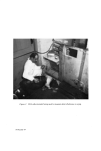
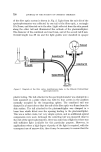
THE EXTRACTION OF FATTY MATERIALS FROM HAIR CLIPPINGS {383 clearly proven whether the material obtained is hair lipid or a mixture of hair lipid and hair decomposition products produced by damaging the hair in the extraction process. In addition, since no precautions were taken to control the extraction temperature, considerable changes in the compo- sition and/or quantity of lipid could be brought about by the extraction method. This work attempts to clarify the effect of solvent type, extraction temperature, and time of extraction, on the amount and type of hair lipid extracted. EXPERIMENTAL The solvent extraction method A Soxhlet extraction method was selected as it would meet most of the requirements discussed previously. The apparatus consisted of a standard Soxhlet extractor (Quickfit EX$/133/100), which was attached to a round bottom flask (250 ml) and fitted with a suitable reflux condenser. The condenser was modified at its open end in such a way that it could be connected to a vacuum line, if required. A sample of hair (5-10 g) was weighed into an extraction thimble (t30 ml) and then extracted with the appropriate solvent (150 ml in each case) for the specified number of cycles. After extraction for the specified number of cycles the hair was removed and the solvent distilled off under vacuum using a rotary evaporator. The residual solvent and washings (about 10 ml) were transferred to a weighed Petri dish and the sample of hair lipid dried to constant weight in a vacuum oven. Care was taken to ensure that the temperature of the sample did not rise above 35 øC at any stage. The hair lipid level is reported as per cent by weight based on the original weight of hair (i.e. hair soiled with hair lipid). Samples of hair The samples were obtained from a women's hairdressing salon as hair clippings, usually one week after it had been shampooed. Immediately after cutting, the hair from each •voman was sealed in a clean plastic bag to ensure that no contamination or mixing of hair samples could occur. In the initial stages of the work the assumption was made that hair clippings would be representative of the whole head of hair. This assumption was based on the known habits of most women who tend to brush or comb
Purchased for the exclusive use of nofirst nolast (unknown)
From: SCC Media Library & Resource Center (library.scconline.org)