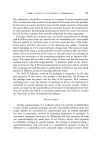
684 JOURNAL OF THE SOCIETY OF COSMETIC CHEMISTS their hair on numerous occasions throughout the week. This would tend to spread the hair lipid in an even layer along the whole length of the hair. Once the method of extraction had been developed sufficiently an experiment was carried out to verify this assumption. An unwashed switch of hair (some 14 in. long) which had been cut off at about two inches from the scalp was obtained. The switch was cut into two inch lengths and the hair lipid content of each length was determined. The values obtained were identical within experimental error in all cases indicating that it did not matter whether hair samples were collected near the root or the tip of the hair. The selection of the solvents It is common practice when extracting lipids, to employ a sequence of solvents of varying polarity, generally starting with the least polar solvent that will usually extract the bulk of the solvent soluble material. The most commonly used solvents for such extractions are pentane (petroleum ether), diethyl ether, ethanol and chlorinated hydrocarbons. In the present case, however, sufficient is known about the composition of the lipid matehal to be extracted (11, 12) to eliminate pentane because it is unlikely to give a complete extraction, and diethyl ether, methylene chloride and alcohol, which have polarities of 1.1, 1.5 and 1.8 Debye, were chosen as a range of likely solvents. Diethyl ether was selected as the first and principal solvent partly because of its previous use in extracting skin lipids and its very low boiling point. Methylene chloride was chosen as the second solvent, again because of its low boiling point and also since it was intermediate in polarity between ether and alcohol. Ethanol was selected as a final solvent based on the expectancy that it would remove more polar matehals from the hair. In addition these solvents also give a range of boiling points from 35-78øC, so they would enable the effect of temperature to be examined. Effect of temperature In a Soxhlet extraction the temperature range experienced by a sample depends on a number of interdependent factors including the boiling point and latent heat of the solvent, the quantity of the solvent to be heated and the heating capacity of the apparatus used. Table I gives the boiling points of the solvents used and the effective extraction temperatures attained in our apparatus. As can be seen the extraction temperatures are close to the boiling points of the respective solvents. The extraction temperatures for ether and methylene chloride are very

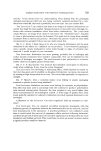
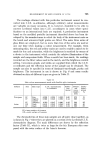
THE EXTRACTION OF FATTY MATERIALS FROM HAIR CLIPPINGS Table I Solvent extraction temperatures (Atmospheric pressure) Solvent Boiling point øC Ether ' 35.0 Methylene chloride i 40.5 Ethanol 78.0 Soxhlet extraction temperature øC 32.0-35.0 38.5-40.5 68.0-78.0 near to physiological temperatures, whereas that for ethanol is considerably higher. The use of temperatures above 35 øC is inadvisable for the following reasons: (1) The hair lipid is extracted under temperature conditions which differ considerably from those existing on the scalp. This could lead to thermal modification of the hair lipid so that it no longer bears any relation to the material existing on the hair surface. (2) The use of high temperatures may lead to degradation of the hair. This is particularly likely in the case of ethanol which has been shown to extract intercellular material from hair on prolonged extraction (13). To examine the effect of extraction temperature on the lipid obtained, samples of hair collected from an individual were blended and split into two equal parts. The two halves of the sample were sequentially extracted as follows: Method 1 (a) (b) 25 cycles of ether at 32-35øC (atmospheric pressure) 25 cycles of methylene chloride at 32-35øC (600 mm pressure) (c) 25 cycles of ethanol at 32-35øC (100 mm pressure) Method 2 (a) 25 cycles of ether at 32-35øC (atmospheric pressure) (b) 25 cycles of methylene chloride at 38.5-40.5øC (atmos- pheric pressure) (c) 25 cycles of ethanol at 68-78øC (atmospheric pressure) It was felt that it would not be satisfactory to use time as the criterion for the duration of the extraction since different solvents would give differ- ent numbers of extraction cycles in a given time, due to their different heat capacities (i.e. the effective extraction volume would be very different for each solvent). The method selected was to count the number of extraction cycles so as to ensure that the extraction volume was the same in all cases. The reduced pressures were selected so as to ensure the same temperature extraction range for each solvent. After each stage of the extraction, the
Purchased for the exclusive use of nofirst nolast (unknown)
From: SCC Media Library & Resource Center (library.scconline.org)