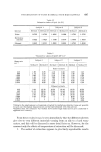
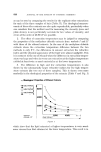
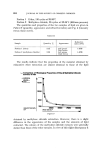
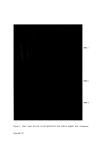
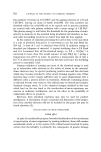
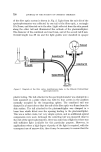
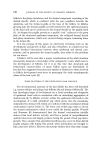
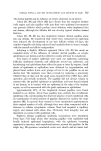
704 JOURNAL OF THE SOCIETY OF COSMETIC CHEMISTS RESULTS The measurements can be used to produce several kinds of information. Firs fly it is possible to calculate the mean daily rate of growth for hairs over the whole period of the observations. Secondly, counting the number of autoradiographic images along the length of each hair, it is possible to calculate the duration of anagen for each hair type. Thirdly, since all the hairs from a complete area of skin were autoradiographed, the relative number of hairs starting to grow each day can be ascertained. The rate of growth The period of investigation was sufficient only to produce complete hairs of type 2. Fig. $ shows the mean growth rate curve of such hairs, based 0.6 RATE OF GROWTH 0.5 0.2 6 12 18 24 30 NMBER OF OAY$ OF ANAGE. Figure $. Mean growth rate curve of the type 2 hairs (n:6).

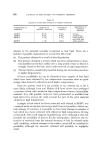
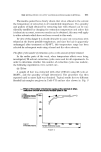
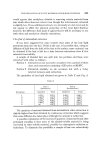
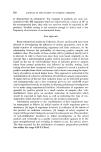
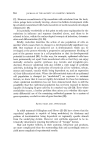
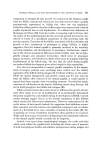
GUINEA-PIG HAIR FOLLICLE FOR EXPERIMENTAL OBSERVATION 705 on 20 complete hairs from each of six intact guinea-pigs. It is evident that the daily growth rate is not constant. The hairs begin to grow at 0.22 + 0.01 mm day- •, gradually increase their growth rate to 0.61 + 0.01 mm day- • by day 22 and maintain this maximal rate for about five or six days. Towards the end of fibre growth the rate gradually falls. Duration of anagen The mean duration of anagen of the type 2 hairs, compiled from the individual mean growth periods of the guinea-pigs was 33.47 + 0.79 days. The mean definitive length of the hairs used to calculate the mean growth rate curve was also calculated. It was 15.51 +0.20 mm. Initiation of follicular activity In Fig. 4 are shown the percentages of hairs of each type commencing and finishing anagen in the dorsal region during each day of the period. HAIRS FIN. 20 ANAGEN {ø/0) 10 0 HAIRS COM, ANAGEN (ø/ø) o FIN. lO o COM. lo Figure 4. o FIN, I I I j - Type 1 hairs _ __ Typ, 3 hairs _ I,,l • I I I I I I I, ,I I 8 16 24 32 40 48 56 t AGE (days) Hairs Plucked Percentage of hairs commencing and finishing ariagert during the first 48 days of life. hairs __
Purchased for the exclusive use of nofirst nolast (unknown)
From: SCC Media Library & Resource Center (library.scconline.org)