GAMMA RADIATION FOR PRODUCT STERILIZATION 717 EFFECT ON MATERIALS Packaging Experience with medical products has shown that a wide range of packaging materials are suitable. These include polyethylene, polyvinyl- chloride (PVC), Cellophane, nylon, laminates, coated papers and metal foils. PVC tends to decompose with the release of hydrochloric acid but this is not significant up to a dose of 2.5 Mrad. Rubbers vary in sensitivity depending on compounding butyl and chlorinated rubbers are unsuitable. Glass, while not affected mechanically, darkens in colour according to com- position. This is caused by displacement of electrons out of their normal lattice position leaving ions which absorb light the darkening can be removed by heating. A radiation resistant glass, based on the incorporation of cerium, has been formulated but it is very expensive and its use would only be warranted in special circumstances. Polystyrene has a high radia- tion resistance owing to its highly aromatic character whereas polypropylene may be degraded, becoming brittle particularly after post-irradiation stor- age. A guide to the radiation stability of materials is available (11). Products The vast bulk of materials currently being radiation sterilized is made up of objects such as disposable plastic hypodermic syringes, needles, catheters and rubber gloves. Only a few irradiated pharmaceutical prepara- tions are marketed and these are mainly antibiotic preparations, particu- larly ophthalmic creams. The sterilization of talc is a distinct possibility but it appears that costs have limited this application. Experience of the effects of irradiation on cosmetic preparations is limited and results that do exist are in the hands of individual manufac- turers. However, many creams and other types of preparation would be expected to be undamaged after the comparatively low radiation doses which are probably required for adequate microbiological control. Glycerol esters for example are stable at the ester links although the fatty acid chains might suffer radiation induced oxidation. The unsaturated acids oxidize most readily but even so, only about 0.1% breakdown would be expected after 1 Mrad. Oxidation is more rapid in emulsions but emulsion breakdown is unlikely although the nature of the emulsifier used might be important. Proteins are generally very resistant to change. Essential oils have been

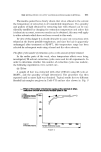
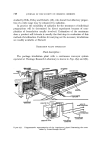
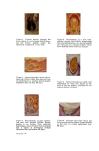
718 JOURNAL OF THE SOCIETY OF COSMETIC CHEMISTS studied by Hills, Petley and Roberts (12), who found that olfactory proper- ties of a wide range may be enhanced by radiation. In practice the suitability of radiation for the treatment of individual preparations will be determined by direct experiment because of com- plexities of formulation usually involved. Estimation of the maximum dose a product will tolerate is usually the first step in evaluation of this method of sterilization. Facilities for carrying out the necessary irradiations are readily available at Harwell. RADIATION PLANT OPERATION Plant description- The package irradiation plant with a continuous conveyor system operated at Wantage Research Laboratory is shown in Figs. 2(a) and 2(b). I,'2 Figure 2(b). Diagrammatic representation of the 'continuous' plant illustrating the route taken by boxes through the cell.
Purchased for the exclusive use of nofirst nolast (unknown)
From: SCC Media Library & Resource Center (library.scconline.org)