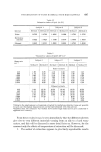
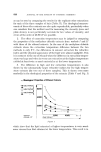
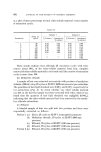
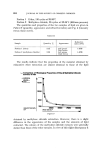
MEASUREMENT OF SKIN COLOUR IN VIVO 737 Increased skin pigmentation causes little change in dominant wavelength but the presence of erythema produces a marked shift towards the red region of the spectrum (from 583-590 nm-Fig. 7). Purity (saturation) also shows a marked difference between European and Asian skin. Experiments on small areas of erythema induced on the inner surface of the forearm by contact with detergent solutions indicate that changes in reflection relative to control sites are shown mainly by the red primary. Thus the time course of the development of erythema, and recovery, can be readily expressed by plotting red values against time. As with all visual instruments the Tintometer is no more sensitive than the human eye (unlike some photoelectric devices), but registers quantita- tively visually discernible differences in colour and brightness. VISUAL STANDARDS Many colour atlases have been prepared for a wide variety of purposes. The main disadvantages possessed by colour atlases are the enormous number of standard specimens required to match all noticeably different colours, and the fact that there is often a difference in texture between the standards and the surface being matched. Another disadvantage is that the colours of the standards may suffer from fading or discoloration. In the limited area of skin colours, which cover only a small range of hues, tl•e idea of a colour atlas becomes attractive, especially for field work because of its simplicity in operation and portability. The best known colour atlas is the Munsell system, in which colours are represented in a three dimensional solid. A central vertical scale represents neutral colours with black at the bottom and white at the top. Distance from the central axis represents the saturation of a colour. Differences of hue are represented by the different planes around the central axis, the whole solid being divided into 100 hues. The Munsell system is presented as a book, called the Munsell Book of Colour, with pages representing in- dividual hues. Each page carries a set of chips for the particular hue arranged in a series of columns covering a range of saturations and each column consists of a series of chips of a particular saturation covering a range of lightnesses. A full description of the Munsell and other similar systems, is given by Judd and Wyszecki (1t3). A selection of pages from the Munsell book is published for judging skin colours, but an examination of the book by this author has shown that the colour chips are not close enough together to match many of the large

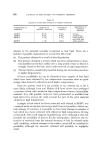
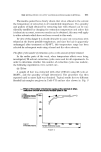
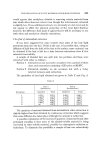
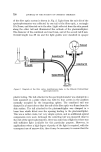
738 JOURNAL OF THE SOCIETY OF COSMETIC CHEMISTS numbers of small variations in skin colour that commonly occur, at least among Europeans. A more useful atlas, which is based on the Munsell system, is the Medical Colour Standard for Skin, (produced by the Japan Colour Research Institute, Tokyo). This consists of a set of over 500 colour chips mounted on strips of transparent plastic, covering a limited range of hues and having the chips more closely spaced for saturation and lightness than in the Munsell system. The disadvantages of differences in surface texture of the chips compared •vith skin, and possible deterioration with age, still remain. An alternative method of using colour standards is to prepare a set of neutral grey standards and to view the skin and standards together through goggles fitted with colour filters so as to eliminate any colour differences between the skin and the grey scale. The reflectances of the standards forming the grey scale can be easily measured by a densitometer. Pfleiderer (17) used a red glass filter in his goggles when measuring changes in skin pigmentation and a narro•v band green filter to determine the amount of erythema present. A similar system was set up independently by the author except that an Ilford monochromatic vision filter {MV 812) was used in the goggles. This filter eliminates colour differences between objects, leaving only differences in brightness, and is particularly useful when measuring changes in skin pigmentation, where no colour change occurs. The instru- ment in use is shown in Fig. 8. The standards are prepared photographically and several sets with small differences between adjacent patches can be easily constructed. The advantages of this device are the absence of pressure on the skin, ease of use, portability, and the fact that the angle of viewing can be altered to eliminate any specular reflection. It is not particularly durable, but can be readily replaced. This device is also free from un- detected errors in positioning on the skin which are liable to affect the accuracy of readings made with photoelectric instruments. Because the filters have low transmission, the level of illumination must be sufficiently high to enable the observer to distinguish the grey patches easily. Apart from this, the nature and level of illumination is not critical. PHOTOGRAPHY Photography appears to have great potential as a means of recording and measuring changes in skin colour, but so far this potential does not seem to have been fulfilled. The main problems that arise in setting up
Purchased for the exclusive use of nofirst nolast (unknown)
From: SCC Media Library & Resource Center (library.scconline.org)