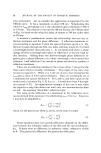
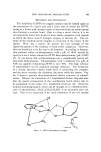
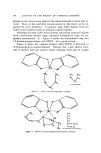
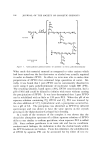
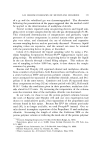
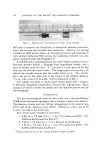
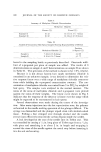
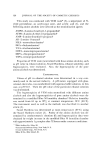
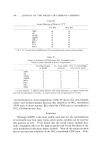
118 JOURNAL OF THE SOCIETY OF COSMETIC CHEMISTS Figure 1. Exploded view of nondestructive transfer needle assembly did little to improve the Propellant 1 l-methylene chloride resolution, but it did increase the retention time drastically. However, by placing a Carbowax 20M section before the Porapak Q section and following it with another Carbowax 20M section, the methylene chloride was com- pletely separated from the Propellant 11. A nondestructive sampling system was quite simply prepared from a Precision transfer button, a 22-gauge Luer hypodermic needle, and a piece of aerosol valve dip tube. A 1/2-in. and a 8/82-in. piece of the dip tube was cut off with a razor blade. The longer piece was put into one side of the transfer button and the needle fitted on it. The smaller piece was put in the other side of the button if the smaller diameter (882 in.) valve stem is to be fitted. This is illustrated in Fig. 1. The sample was taken in 10-ml serum bottles fitted with a stopper. A Precision Sampling Corporation Pressure-Flo high-pressure liquid syringe was used to transfer the sample into the injection port of the gas chromatograph. EXPERIMENTAL The gas chromatograph used for this work was a Hewlett-Packard 5750B series instrument equipped with a thermal conductivity detector. The detector current used was 150 ma temperature of the detector was 255øC and of the injection ports, 2g0øC. Helium at a flow rate of .gO cc/min was used as the carrier gas. The column used consisted of g portions: 1. 0.935 m X 3.2 mm (3 ft X 1/8 in.) 15% Carbowax 20M -{- 4% KOH on 60-80 mesh Gas Pack F,* 2. 2.45 m X 3.2 mm (8 ft X 1/8 in.) Porapak Q, 50-80 mesh, 3. 1.23 m X 3.2 mm (4 ft X 1/s in.) 15% Carbowax 20M -{- 4% KOH on 60-80 mesh Gas Pack F. * Chemical Research Services, Inc., 14 Industrial Road, Addison, Ill. 60101.

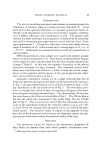
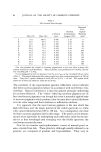
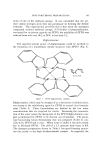
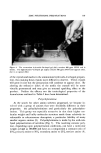
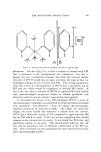
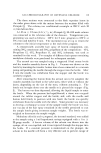
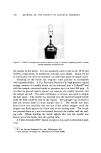
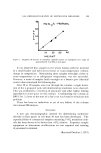
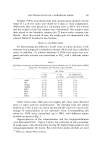
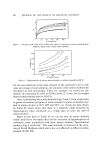
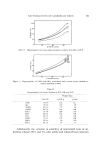
GAS CHROMATOGRAPHY OF METHYLENE CHLORIDE 119 The three sections were connected to the flash vaporizer insert in the order given above with the unions between the sections filled with Porapak Q. The column was conditioned overnight at 200øC with 30 cc/min helium flow. A 1.85 m X 3.2 mm (6 ft X 1/s in.) Porapak Q, 80-100 mesh column was connected to the reference side of the detector. Temperature pro- gramming was used as follows: 160øC for 2 min program to 180øC at 6øC/min and hold for 2 min. The instrument was set up to return the columns to the initial temperature at the end of the program. A commercially available hair spray of known composition, con- taining 50% concentrate and 50% propellant of the composition: 45% Propellant 12, 45% Propellant 11, and 10% isobutane, was used as standard for this work. Two samples of different hair sprays containing methylene chloride were purchased for subsequent analysis. The aerosol can was sampled using a stoppered 10-ml serum bottle and the transfer assembly shown in Fig. 1. Vacuum was drawn on the bottle by inserting the transfer button into a hose connected to a vacuum pump and pushing the needle through the stopper into the bottle. After 2 min the needle was withdrawn from the stopper and the bottle wa• carefully weighed. After removing the button from the aerosol can to be sampled, the transfer assembly was fitted to the valve stem, either with or without the insert, depending on the size of the stem, without actuating it. The bottle was brought down over the needle so it pierced the stopper (Fig. 2). The button was then depressed, allowing the liquid sample to enter the bottle. When the pressure had equilibrated, a tissue was wrapped around the rubber stopper and the bottle, and, with the needle and button held firmly in position with one hand, the bottle was quickly withdrawn from the needle with the other. Some practice was necessary to develop a technique so none of the sample inside the bottle was lost, nor was any of the hair spray contained in the needle permitted to coat the sample bottle giving erroneous sample weights. The bottle was re- weighed to determine the sample weight. Methylene chloride and n-propanol, the internal standard, were added to the sample using a 1-ml hypodermic syringe equipped with a 1-in. X 22-gauge needle. A known volume of the solvent was drawn into the syringe, all air was expelled, and it was injected through the stopper into the bottle. If a constant pressure is maintained on the plunger, the solvent in the needle will form a very effective seal to prevent escape of
Purchased for the exclusive use of nofirst nolast (unknown)
From: SCC Media Library & Resource Center (library.scconline.org)