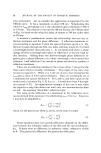
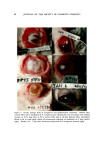
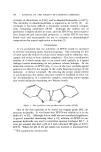
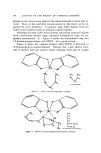
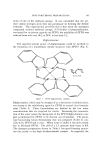
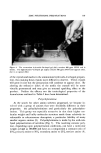
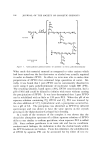
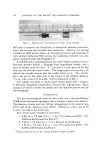
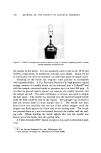
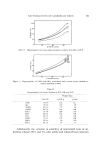
120 JOURNAL OF THE SOCIETY OF COSMETIC CHEMISTS Figure 2. Detail of sampling procedure showing (top to bottom) sampling bottle, transfer needle assembly, and aerosol can the sample in the bottle. For the standards used in this work, 10.12 and 10.32%, respectively, of methylene chloride were added. About 0.1-ml of n-propanol, the internal standard, was added per gram of sample taken. Sampling of the bottle also requires some practice to accomplish with reproducibility. A 2-•1 Precision Pressure-Flo high-pressure liquid syringe consists of a needle which can be retracted into a Teflon©* seal with the sample contained inside at pressures up to at least 500 psig. It can then be pressed tightly against agc septurn, the needle inserted, and the sample ejected. The same technique, in reverse, was used to sample the hair spray. The needle was inserted into the inverted sample bottle until the hole could be seen in the liquid. The plunger was worked in and out several times to draw sample into it. The needle was then drawn back very carefully, but not out of the rubber stopper, until the stopper was flush against the blunt end of the sealing tube. The bottle was pressed down so a seal was formed between the rubber and the seal- ing tube. While holding the bottle tightly this way the needle was drawn out of the bottle into the sealing tube. A Vidar-Autolabs 6221* digital integrator was used to determine peak areas. * E. I. du Pont de Nemours & Co., Inc., Wilmington, Del. t Vidar Autolab, 77 Ortega Ave., Mountain View, Calif. 94040.

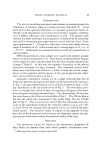
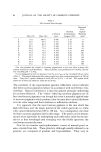
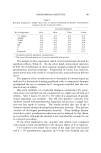
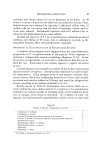
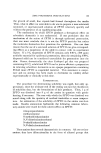
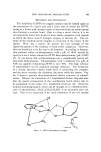
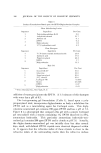
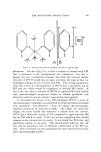
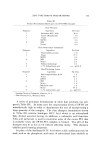
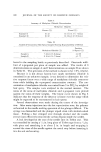
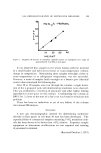
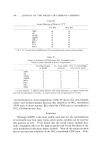
GAS CHROMATOGRAPHY OF METHYLENE CHLORIDE 121 'TIME l, igure 3. Gas chromatographic curve of liquid hair spray sample. Peaks are: 1, Propellant 12 2, isobutane 3, n-butane 4, ethanol 5, Propellant 11 6, methylene chloride and 7, n- propanol RESULTS AND DISCUSSION Figure $ is the chromatogram of a hair spray to which methylene chloride and n-propanol have been added as described above. The re- tenti(•n times of the peaks are: Propellant 12, 116 sec isobutane, 171 sec ethanol, 241 sec Propellant 11, 296 sec methylene chloride, 349 sec and n-propanol, 430 sec. The reproducibility of sampling was calculated from the area count of the Propellant 12 peak when analyzed repeatedly. On two samples, the reproducibility was shown to be --+5%. Two samples of hair spray containing known amounts of methylene chloride were analyzed in replicate to determine the accuracy of the procedure. These results are shown in Table I. From these standards under the instrumental conditions used, the relative response of the methylene chloride compared to n-propanol was found to be 0.810. The two commercial hair sprays containing methylene chloride were analyzed repeatedly. Approximately 2 to 5 g of hair spray was trans-
Purchased for the exclusive use of nofirst nolast (unknown)
From: SCC Media Library & Resource Center (library.scconline.org)