316 JOURNAL OF THE SOCIETY OF COSMETIC CHEMISTS Standard Solutions Separate standard solutions, 10 mg/ml, of methyl ricinoleate and di(2-ethylhexyl) phthal.ate • were prepared by accurately weighing 0.5 g of compound into a tared 50-ml volumetric flask and diluting to volume with benzene. Transesterification o[ the Sample A lipstick sample (200-300 mg) was accurately weighed into a tared 100-ml round-bottom boiling flask. Twenty milliliters off transesterifica- tion mix and three glass beads were added. The flask was connected to a water-jacketed reflux condenser with a 3r 24/40 male joint and the voltage on the power source attached to the heating mantle was set so that the solution in the flask woul.d boil gently. After the solution began to boil, refluxing was continued for 21/2 hours. The condenser was cooled, then rinsed with 10 ml of water. The transesterified sample plus water rinse were trans[ferred to a 125-ml separatory funnel. The condenser and boiling flask were rinsed with an additional 10 ml ot5 water which was then added to the separatory funnel. Both condenser and flask were rinsed with 25 ml ot5 ethyl ether (anhydrous) the rinsing was transferred to the [funnel, and shaken well. The lower aqueous layer was drawn off into a second 125-ml separatory funnel and extracted with 20 ml of the ether. The water layer was discarded. The two ether ex- tracts were then combined with a small amount of the ethyl ether used to rinse the extra separator. The combined extracts were washed with three 5-ml portions of water, and the aqueous wash discarded each time. The ether extracts were filtered through an ether-washed cotton plug into a 125-ml Erlenmeyer flask (or other suitable glassware). Next, the separa- tor was rinsed with two 5-ml portions of the ether and the rinsings were filtered through the cotton plug, which was then washed with 20 ml of an- hydrous ethyl ether. The ether was evaporated on the steam bath under a jet of air. (An air jet must be used when evaporating from an Erlen- meyer flask to prevent bumping and loss of sample.) The residue was reserved for gas chromatographic determination. Glc Determination of Methyl Ricinoleate The reserved ether-extractable residue was dissolved in 10 ml of ben- zene. One milliliter off di(2-ethylhexyl) phthalate internal standard solu- tion was added to the sample flask. Under the specified glc conditions, * "Flexol" DOP, Carbide & Carbon Chemicals Co., $0 E. 42nd St., New York, N.Y.

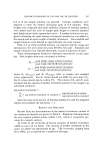
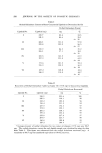
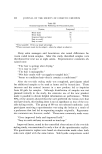
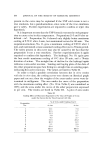
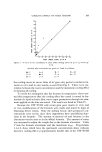
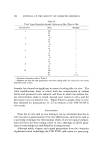
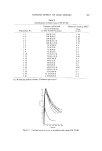
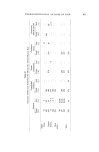
CHROMATOGRAPHY OF CASTOR OIL IN LIPSTICK 317 2-5 V1 of the sample solution was injected. Column conditions were adjusted to elute the methyl ricinoleate peak in 6-8 minutes. Peak heights were compared and whole milliliter aliquots of internal standard were added until the ratio of sample peak height to internal standard peak height most closely approached unity. A standard solution was pre- pared containing the same amount of internal standard as was added to the sample and an equal weight of methyl ricinoleate. The standard and sample solutions were diluted to approximately the same volume. Next, 2-5 tA of the standard solution was injected and the range and attenuation were set to keep the peaks 60-95% full scale. Standard and sample solutions were injected alternately, at least 2 injections of each. These chromatograms should be obtained consecutively on the same day. Peak height ratio.s were calculated as follows: R,, = peak height sample methyl ricinoleate peak height di(2-ethylhexyl) phthalate peak height standard methyl ricinoleate R• = peak height di(2-ethylhexyl)phthalate where Ru (Ru•k•ow•) and R• (Rsta•aara) refer to sample and standard ratios, respectively. The R• values should not differ by more than 5% the R• values should also be within 5%. The values of Ru and R• were averaged and the amount of methyl ricinoleate present in the sample was calculated ,as follows: mg methyl ricinoleate -- R• X mg methyl ricinoleate in standard X mg in,ternal std in sample mg internal std in standard Since the same total amount of internal standard is used for prepared sample and standard, the last factor = 1. RESULTS AND DISCUSSION Results from the determination of the methyl ricinoleate content of six commercial lipsticks are given in Table I. Replicate determinations for each lipstick yielded results within 1.5%, which is acceptable pre- cision for cosmetic analysis. In Table II the recoveries of known amounts of methyl ricinoleate added as castor oil are listed. The amount of methyl ricinoleate in the castor oil added was determined by glc. The recoveries, ranging from 94 to 100%, are acceptable for a method of this type.
Purchased for the exclusive use of nofirst nolast (unknown)
From: SCC Media Library & Resource Center (library.scconline.org)