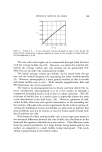
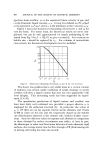
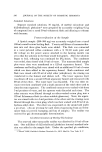
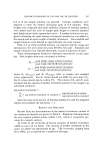
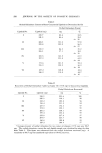
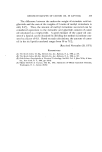
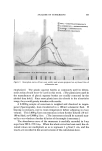
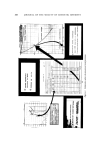
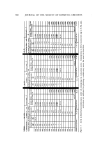
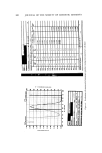
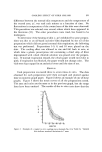
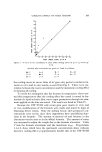
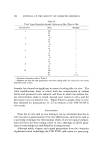
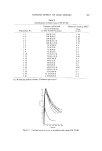
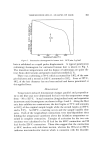
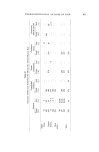
COOLING EFFECT OF COLD CREAMS 355 100 - 8C ß ,-. 60 '40 • •o • IO i i [ I I I I I i i I0 20 50 40 50 60 70 80 90 I 0 0 AREA UNDER CURVE At' IN % Figure 5. In vitro-in vivo correlation of areas under cooling curves of At in % versus At • in % Symbols refer to formula nos. given in Table I as follows: •--1 A--4 V--7 • --10 O•2 •--5 V--8 • --11 ,•--3 C--6 X--9 the cooling curves at versus those of at' gave only partial correlation be- tween in vitro and in vivo results, as seen from Fig. 5. There is no cor- relation between the water concentration and the maximum cooling effect or duration of cooling. To verify the assumption that the increase in temperature above nor- mal skin temperature after the cooling effect has ceased is caused by for- mation of a ]ipid occlusive film, water vapor permeation through the oint- ment applied on the skin was tested. The results are listed in Table IV. Because the USP XVIII cold cream gave poor results in vitro and in vivo, modifications of the formula were made and tested in hope of obtaining better results. Only the sodium borate and spermaceti con- centrations were varied, since these ingredients have emulsifying func- tions in the formula. The amount of mineral oil and beeswax in the alterations was the same as in the official formula. The amount of water was increased to adjust the weight due to the formula alteration. Table V lists the formula alterations and the maximum Atmax. Preparations 1.1-1.5, those which have the spermaceti concentration alone reduced, showed a cooling effect at approximately double that of the USP XVIII

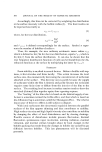
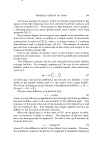
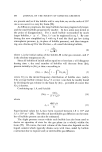
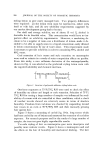
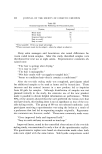
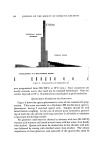
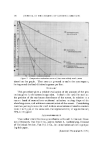
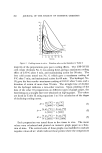
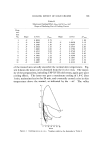
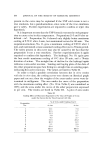
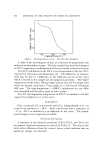
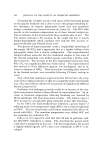
356 JOURNAL OF THE SOCIETY OF COSMETIC CHEMISTS Table IV Water Vapor Permeation through Ointment on Skin (Time in Min) Formula No.• Time Reading I 20 b -- 25 - 30 - 2 5b - 10 - 15 - 3 6• - 11 - 16 - 4 6• -- 11 -- 16 - 5 6• -- 11 - 16 - 8 6• -- 11 - 16 - 10 82o -- 85 90 +++ • Numbers of formulas refer to Table I. b Indicates the time for each preparation when the cooling effect, by means of in vivo curves, had fallen back to zero. formula, but showed no significant increase of cooling effect in vivo. The other modifications, those in which both the concentration o[ sodium borate and spermaceti were reduced, and those in which the sodium bor- ate concentration alone is varied, showed poor results in vitro, and for this reason were not tested in vivo. Figure 6 shows a graph of the in vitro data obtained for preparations 1.1-1.5 in relation to the USP XVIII in vitro result. CONCLUSION From the in vitro and in vivo testing it can be concluded that the in vitro test gives a good measure of in vivo effectiveness, and can be used as a screening technique [or determining which o[ several topical prepara- tions will have the best cooling action in vivo, although no direct quan- titative relationship was established [or all preparations. Although stable, elegant, and a good preparation from the viewpoint of pharmaceutical technology, the USP XVIII cold cream is a poor prep-
Purchased for the exclusive use of nofirst nolast (unknown)
From: SCC Media Library & Resource Center (library.scconline.org)