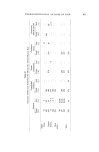
[142 JOURNAL OF THE SOCIETY OF COSMETIC CHEMISTS ß -, o o o o o o 0 o o o

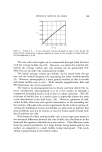
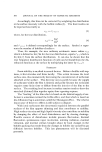
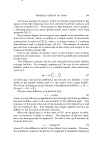
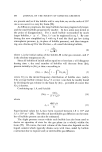
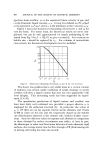
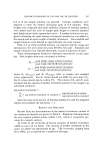
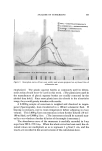
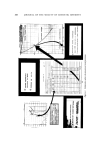
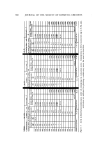
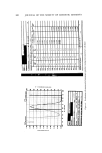
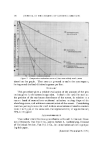
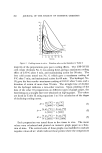
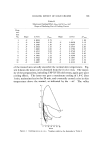
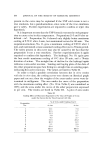
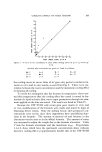
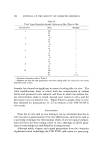
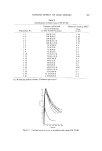
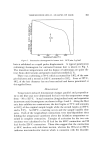
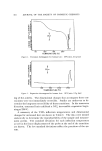
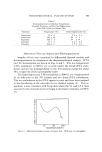
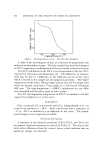
ANALYSIS OF SUNSCREENS 343 "equivalent to so much of" the uv absorber whose standard curve is ac- tually used for the interpretation. Figure 6 is an example chosen from our files, showing evalua- tion of different commercial products using various concentrations of screening agent. For calculation of the transmitted tanning energy, the process is ex- actly the same as described above for plotting the erythemal curve, al- though it should be noted that in the border area of middle to near ultra- violet (320 mt• and 337.5 mt•) this band of radiation causes erythemal as well as tanning effects, so that this particular area has to be evaluated for its dual value as far as human skin is concerned. In other words, to cal- culate "total erythemal ener•o3r transmitted," we temporarily ignore the fact that four 5-mt• bands actually have dual value (contributing both erythemal and tanning effects), and simply calculate as if the effect was totally erythemal. Then, when "total tanning radiation" is calculated, the same 20-mt• portion of the absorbance curve is calculated for its con- tribution to this curve. "Incident Erythemal" values are thereby conveniently grouped into one column, while the values for "Incident Tan" are grouped in another, to avoid any possible confusion (work sheets, Fig. 6, right). The tanning curves are usually less precise and therefore less reliable than transmitted erythemal curves, which are about 95% accurate. It is desirable for the analytical chemist to have available as many "standard" evaluation curves as possible (Fig. 7), not only to see how much of a particular screen is present in the sample, but also to compare its "equivalency" to other screens. Commercial suntan preparations on the market today fall into four groups, insofar as concentration is concerned: For fast tanning For normal skin For sensitive skin For extra sensitive skin transmitting approximately 15% of incident erythemal radiation transmitting from 4-8% of the incident erythemal radiation transmitting from 1-4% of the incident erythemal radiation transmitting under 1% of erythemal radia- tion (sometimes called "Total Block") As a consequence, each tested screen must be carefully diluted until one is sure (by hand scanning) that the lambda maximum is well posi-
Purchased for the exclusive use of nofirst nolast (unknown)
From: SCC Media Library & Resource Center (library.scconline.org)