338 JOURNAL OF THE SOCIETY OF COSMETIC CHEMISTS

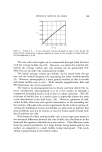
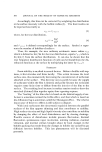
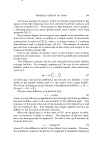
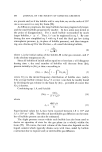
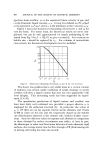
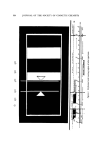
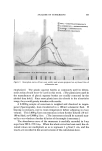
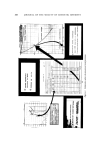
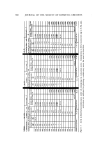
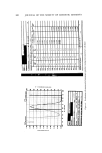
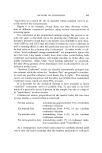
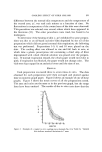
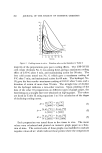
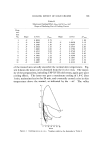
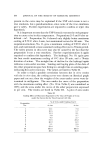
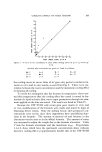
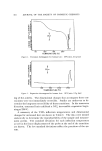
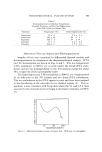
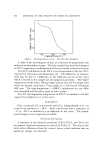
ANALYSIS OF SUNSCREENS $$9 In the next step, absorbance values are converted to transmittance using a conversion table (5) or the converted values are read directly off the instrument. In the following step, each transmittance value is multiplied by its specific "erythemal effectiveness factor" (6). Since the response of nor- mal Caucasian skin to one E-viton is constant for each individual, the total transmitted energy (over the erythemal range) is cumulative, and may be simply totaled to give the value of "transmitted erythemal energy" for that particular sunscreen. This value is divided by the total "incident erythemal energy" to give the percentage of actually transmitted erythemal radiation, which is of course inversely proportional to the "efficiency" of the tested absorber. Thus, the procedure is now complete if the etficiency percentage is all we desire to know about a commercial screen preparation. To establish the actual concentration of screening agent in a product, the evaluation curve (to the right of Fig. 4) must be consulted. Un- fortunately, there is no single "universal" evaluation curve which can be used for all absorbers. Therefore, formulations containing various screening agents must each be plotted against their own pure standard. The actual plotting of evaluation curves follows the same principles already described. Once again, it is necessary to emphasize the need for the highest possible care and accuracy in weighing, diluting, and reading of the results. Several determinations are recommended in order to cal- culate mean values. Procedure/or Plotting Evaluation Curves For convenience, an exact weight of 0.5000 g of pure (100%) com- pound is taken, quantitatively transferred into a 100-ml volumetric flask at room temperature and diluted to the mark • •th isopropanol (Spectro- grade). (It is a good analytical habit to scan any solvents to be used via a routine check of the 400-200 mv range on the instrument). This concentration represents: 5 g of standard (100% concentration) per liter, or 500 g of a 1% concentration per liter. To dilute the above solution to 0.5000 g (of 1% concentration) per liter, it must be diluted one thousand times. It is recommended that this be done by diluting 10 ml to 100 ml in four steps for greater accuracy. Provided all four dilution steps have been done in clo•e succession using the same solvent at the same temperature, we can be reasonably sure that the final concentration contains exactly 0.5000 g (of 1% solution) per liter, without adhering religiously to 20 o C as customary elsewhere.
Purchased for the exclusive use of nofirst nolast (unknown)
From: SCC Media Library & Resource Center (library.scconline.org)