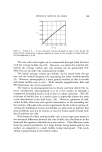
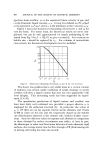
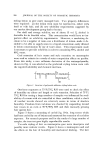
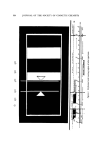
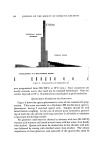
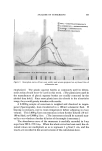
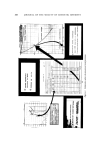
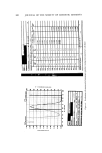
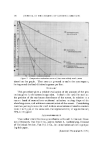
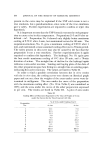
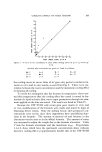
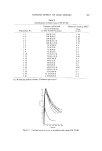
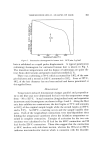
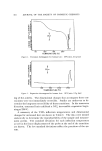
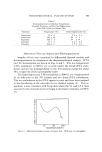
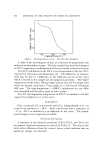
•44 JOURNAL OF THE SOCIETY OF COSMETIC CHEMISTS (•) H OMOME•ITHyI. SALICYLATE I"- AMINOBENZOATE Figure 7. Comparative evaluation curves of four most widely used screens tioned on the graph. Then one can proceed to make the spectrogram, having noted the final dilution in grams per liter. SUMMARY This procedure gives a reliable evaluation of the amount of the pro- tection given by the screen in question. It deals with variables such as: the position of the maximum absorbance of the screen, in relation to a narrow band of nonuniform erythemal radiation, varying shape of the absorbing curve, and unknown concentration of the screen. Considering that the spectrophotometric work is done on solutions diluted to contain from 4 to 5 ppm of the sunscreen, the reproducibility of approximately 95% is very good. ACKNOWLEDGMENT The author would like to express thanks to Donald E. Conner, Direc- tor of Research, Van Dyk g: Co., and to Robert L. Goldemberg, Director of Technical Services, Van Dyk • Co., for consultation advice in prepar- ing this paper. (Received November 7, 1971)

ANALYSIS OF SUNSCREENS 345 REFERENCES (1) Bruhn, Wolfgang, Solar radiation sunburn and sunscreen,s, Dragoco Rep., 1969• pp. 6, 29. (2) Luckiesh, M., Applications o[ Germicidal, Erythemal and In[fared Energy, D. Van Nostrand Co., New York, 1946, p. 71, 103. (3) Kreps, S. I., The structure, function and formulation of topical sunscreens. I. Theoreti- cal considerations, J. Soc. Cosmet. Chem., 14, 626 (1963). (4) Luckiesh, M., and Holladay, L. L., Fundamental units and terms for biologically effective radiation, J. opt. Soc. Amer. (1933). (5) Handbook o[ Chemistry and Physics, Transparency to Optical Density Conversion Table, The Chemical Rubber Co., Ohio, 1968-9, p. E-251. (6) Kreps, S. I., Spectrophotometric evaluation of sunscreens, Proc. Sci. Sect. Toilet Goods Ass, 23, 13, (1955).
Purchased for the exclusive use of nofirst nolast (unknown)
From: SCC Media Library & Resource Center (library.scconline.org)