]. Soc. Cosmet. Chem., 23, 359-370 (May 23, 1972' The Thermomechanical Analysis of Natural and Chemically Modified Human Hair W. T. HUMPHRIES, M.S., D. L. MILLER, Ph.D., and R. H. WILDNAUER, Ph.D.* Prese•ted February 7, 1972, North American Thermal Analysis Society, Waco, Texas Synopsis--THERMOMECHANICAL ANALYSIS (TMA) measures the VISCOELASTIC and DIMENSIONAL PROPERTIES of HAIR and can be utilized as a technique to monitor damage and CHEMICAL MODIFICATION. The thermally induced viscoclastic and dimen- sional changes are presented for hair from --50 to 325øC. The results for untreated hair differ significantly from samples which have been crosslinked, oxidized, reduced, supercon- tracted, and cxposed to various organic solven[s. The TMA data are complemented by DIF- FERENTIAL THERMAL ANALYSES and THERMOGRAVIMETRY to identify heat and weight changes associated with these dimensional and viscoelastic changes. INTRODUCTION It is widely accepted that the mechanical properties of hair, which are important in its acceptable cosmetic performance, are strongly influ- enced by their immediate physical and chemical environment. Much ex- perimental evidence has accrued suggesting the role that the morphologi- cal and macromolecular organization plays in the unique mechanical properties of hair and wool (1). These data have been of both fundamen- tal interest and practical value in providing a basis for the present ad- vances in hair care which allow selective alteration of many hair proper- ties as well as an improved understanding of the mechanism by which Department of Skin Biology, Johnson & Johnson Research, New Brunswick, N.J. 08903. 359

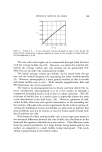
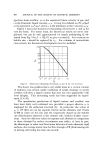
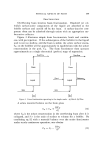
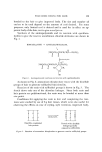
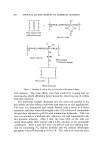
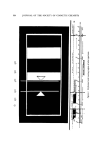
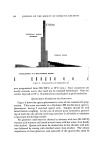
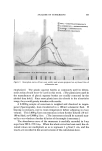
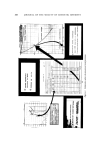
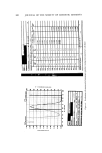
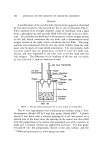
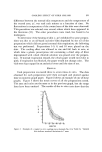
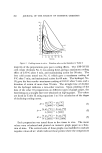
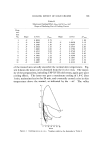
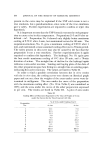
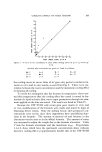
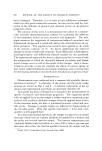
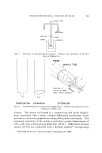
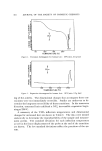
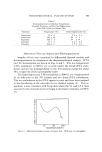
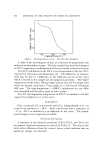
360 JOURNAL OF THE SOCIETY OF COSMETIC CHEMISTS hair is damaged. Therefore, it is of value to have additional techniques which not only probe molecular structure, but also can be used for eval- uation of the influence of physical and chemical factors on the physical properties of hair. The purpose of this work is to demonstrate the utility of a commer- cially available thermomechanical analyzer for evaluating the influence of environmental factors on hair structure and properties. The tech- nique measures the magnitude of temperature-induced viscoelastic and dimensional changes and is commonly used in the characterization of syn- thetic polymers. This approach has recently been applied to the study of the stratum corneum (2, 3). To better understand the observed changes in terms of molecular structure, X-ray diffraction, birefringence, thermogravimetry, and differential thermal analysis are also presented. The experimental approach has been to characterize hair in terms of both the temperature at which the thermally induced viscoelastic and dimen- sional changes occur as well as the extent of the changes. Such a charac- terization provides a basis for studying the effects of various agents on hair, better understanding the mechanism of damage, and a rational basis for developing methods to selectively alter the physical properties of hair. EXPERIMENTAL Measurements were conducted with a commercially available thermo- mechanical analyzer.* A schematic of the system and the probe config- urations are shown in Figs. 1 and 2. A detailed explanation of the ap- paratus and experimental procedures are described elsewhere (2). Each probe has been so designed as to maximize the measurements of specific viscoelastic and dimensional properties. The expansion probe with an applied force on the sample's surface monitors viscoelastic prop- erties as well as reflects thickness changes when the applied stress is zero. In the extension mode, the fiber is positioned between a fixed and mov- able probe. Changes in sample length are reflected by displacement of the movable probe. With this specific instrument, a 2.3-g load corre- sponds to a zero applied force. In actual experimental operation, the sample was placed in an alumi- num pan which rests on a quartz platform surrounded by a furnace and the probe was lowered onto the sample. The furnace compartment was constantly flushed with dry helium at a rate of 50 cc/min to prevent con- densation and reduce the thermal gradient between the sample and the * Model TMS-1, Perkin-Elmer Corp., Norwalk, Conn. 06852.
Purchased for the exclusive use of nofirst nolast (unknown)
From: SCC Media Library & Resource Center (library.scconline.org)