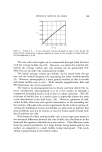
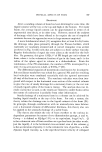
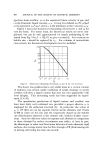
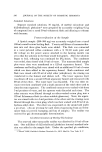
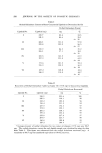
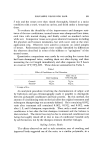
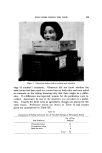
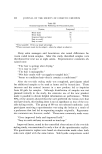
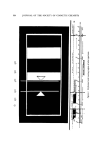
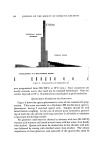
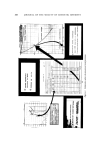
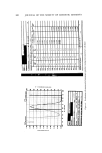
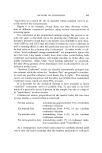
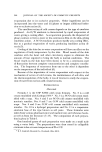
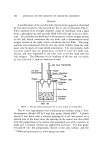
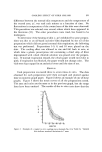
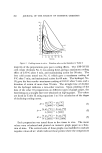
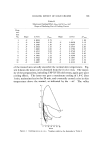
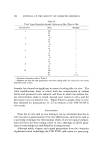
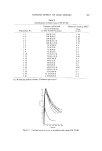
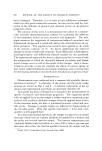
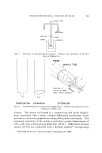
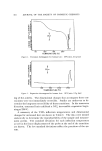
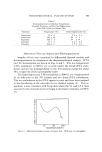
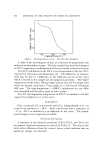
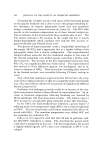
THERMOMECHANICAL ANALYSIS OF HAIR Table I Relationship between Inflection Temperature, Standard Deviation, and Per Cent Displacement of the TMA Probe for Human Hair 365 Transition Temperature (øC) Probe Displacement (%) Penetration 59 zk 6 3.0 4- 0.4 Penetration 242 q- 10 24 4- 4 Expansion 256 4- 3 54 q- 19 Extension 72 4- 6 0.6 4- 0.2 Extension 224 q- 6 2.9 4- 0.4 Differential Thermal Analysis and Thermogravimetry Samples of hair were examined by differential thermal analysis and thermogravimetry to complement the thermomechanical analysis. DTA and TG thermogTams are shown in Figs. 6 and 7. The low-temperature TMA transitions (100øC) are covered under the broad DTA endo- therm and are not distinguishable in the TG analysis except for about 10% weight loss which is presumably water. The high-temperature TMA transitions (200øC) are complemented by an inflection in the TG analysis and two sharp DTA endotherms. The two endotherms in the DTA appear in wool and have been assigned to the disordering of the a-keratin in two distinct regions (4). This as- signment is also consistent with X-ray data where the 5.1 and 1.8 A lines associated with a-keratin structure begin to decrease in intensity at 210øC (5). o x i i I 50 150 :50 TEMPERATURE (øC) Figure 6. Differen. tial thermal analysis of human hair: 20øC/min, Ns atmosphere

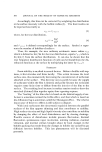
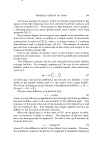
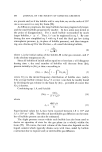
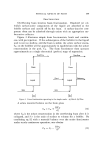
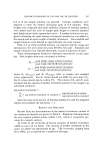
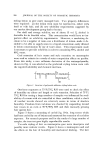
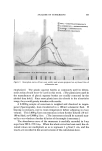
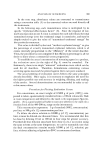
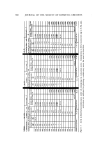
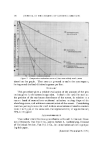
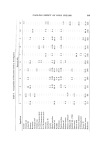
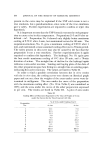
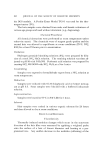
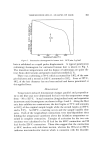
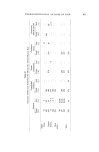
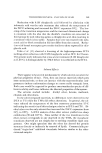
366 JOURNAL OF THE SOCIETY OF COSMETIC CHEMISTS EO.6 •0.2 I I I I00 :500 500 TEMPERATURE (øC) Figure 7. Thermogravimetry of hair: 20øC/min, He atmosphere A study of the birefringence of hair as a function of temperature also indicates an orientation change. The hair samples lost their birefringence at 239øC suggesting a randomization of the previously oriented a-keratin. The 80øC endotherm in the DTA is not in agreement with the 116øC reported by Schwenker and Dusenbury (6). The difference in tempera- tures may be due to a difference in the diffusion process of the water which is related to the sample size and apparatus geometry. The higher temperature result used a 150-rag sample packed into a DTA sample tube while the present study had a 7-rag sample in a well-vented aluminum DSC pan. The high-temperature (•200øC) endotherms are not diffu- sion-controlled and therefore agree in both studies. The TG decomposition temperature of 25•øC is consistent with that reported by Crighton et al. (7) for wool. Subambient Hair contracted 3% transversely and 0.2% longitudinally as it was cooled from ambient to --50øC. Both contractions had a transition at --17 to --20øC as indicated by an inflection in the curve. The dimen- sional changes were completely reversible. Chemical A Iterations A summary of the thermal transitions (TMA, DTA, and TGA) for the general chemical treatments are shown in Table II. The data in the table reflect differences from the control, hence a dash indicates that no significant change was observed.
Purchased for the exclusive use of nofirst nolast (unknown)
From: SCC Media Library & Resource Center (library.scconline.org)