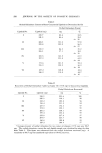
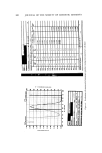
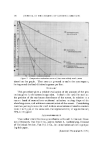
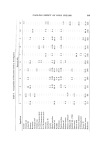
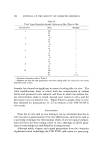
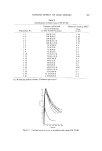
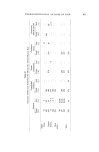
348 JOURNAL OF THE SOCIETY OF COSMETIC CHEMISTS evaporation due to its occlusive properties. Other ingredients can be incorporated into the water and oil phases to impart additional hydra- tion or occlusive action (4). The emollient action of cold creams depends on the type of emulsion produced. An O/W emulsion is characterized by rapid evaporation of water, giving a cooling effect. As evaporation proceeds, the dispersed oil phase coalesces to form a more or less continuous film on the skin, giving emollient action. A W/O emulsion produces hardly any cooling effect, due to a gradual evaporation of water, producing emollient action di- rectly (5). Cooling of the skin due to water evaporation will have an effect on the regulation of body temperature by the skin. Blood vessels of the skin combine with the heart and other circulatory organs to eliminate the amount of heat required to bring the body to normal conditions. The blood vessels in the skin have been shown to be in a continuous state of fluctuation between complete vasoconstriction and complete vasodila- tion. The frequency of recurrence from one to the other is dependent on the temperature of the individual (6). Because of the importance of water evaporation with respect to the mechanism of action of cold creams, the maintainence of soft skin, and the thermoregulation of the body, it was of interest to study the evapora- tion of water from various cold cream formulas. EXPERIMENTAL Materials Formula 1 is the USP XVIII cold cream formula. No. 2 is a cold cream emulsified with Carbopol 934.* No. 3 is a W/O cold cream emul- sified with a soap. Nos. 4 and 5 are W/O cold creams emulsified with nonionic tensides Nos. 6 and 7 are O/W cold creams emulsified with soaps. Nos. 8 and 9 are O/W cold creams emulsified with nonionic tensides. No. 10 is a hydrogel preparation and No. 11 is a suspension- emulsion base of the type known as soft paste. These formulas were taken from various pharmaceutical and medical text and reference books, as well as from the literature (7-13). The composition of each prepara- tion is given in Table I. One hundred grams of each preparation were made on a small scale using a water bath. The preparations were then stored in collapsible ointment tubes at room temperature of 25----- 1 øC. * B. F. Goodrich Chemical Co., Cleveland, Ohio 44115.

COOLING EFFECT OF COLD CREAMS 349 •v
Purchased for the exclusive use of nofirst nolast (unknown)
From: SCC Media Library & Resource Center (library.scconline.org)