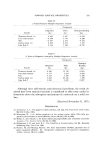
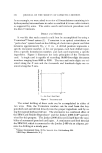
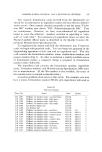
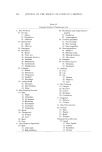
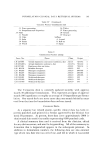
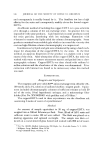
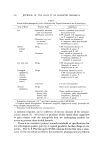
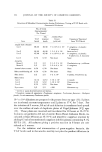
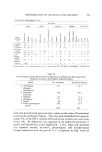
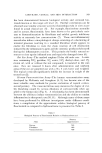
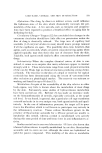
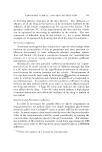
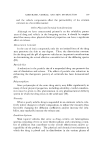
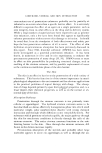
FORMULATION-CLINICAL DATA RETRIEVAL SYSTEMS 'Fable IV (Continued) Cosmetic Product Classification List .15 Foam promoting ß 16 Suspensions and dispersions .30 Solid ß 31 Powder .32 Cake .33 Salts .34 Sticks .35 Pencil .36 Tablet .37 Foam promoting .38 Cremes .39 Clear gel Suffixes A Aerosol R Roll on S Spray 541 Table V Classification Number Listing Formß No. Name Class. Project LH 229-005 Aerosol depilatory concentrate/underarm, face A21.15 720-142 LH 229-005A Aerosol depilatory/underarm, face A21.15A 720-142 LH 227-001 Depilatory after use lotion A22.12 720-132 A LH 80-158 Betadine shampoo A30.10 503 .\ LH 80-206 Shampoo component A30.10 600-003 LH 80-207 Shampoo component A30.10 600-003 LH 80-208 Shampoo component A30.10 600-003 LH 155-001 Medicated shampoo A30.10 503 A LH 155-002 Medicated shampoo A30.10 503 A LH 155-003 Medicated shampoo A30.10 503 A The Termatrex deck is currently updated monthly with approxi- mately 30 additional formulations. This represents an input of approxi- mately 300 ingredients or roughly an average of 10 ingredients per formu- lation. Our search decks are never more than one month behind as meas- ured from the time the formulation data cards are issued. CLINICAL DATA As a separate but related system, specific clinical data has been re- ported, punched, and printed in a format approved by the Clinical Cos- metic Depamnent. At present, these data cover approxi•nately 2000 ir- ritation and skin sensitivity studies representing 8100 punched cards. A clinical sum•nary data card is received fißom the clinicJan, edited for an/obvious errors, and sent for keypunching. All of the summary in- formation that is keypunched appears in the subsequent printout. In addition to formulation number, the following data are also entered: type of test run, date test was carried out, and lab in which it was tested

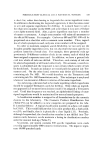
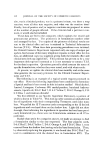
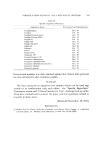
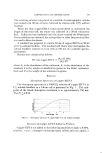
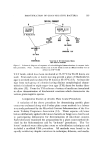
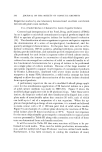
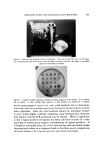
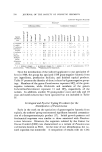
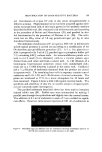
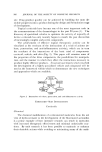
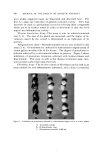
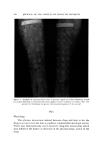
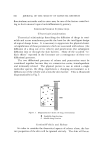
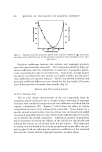
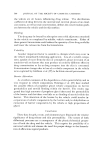
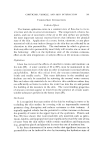
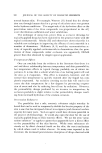
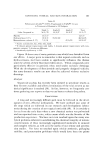
542 JOURNAL OF THE SOCIETY OF COSMETIC CHEMISTS also, was it a finished product, was it a primary irritant, was there a soap reaction, were all skin tests negative, and what was the reaction time? Finally, lists of positive and/or negative reactions are prepared in terms of the number of people affected. If the clinician had a pertinent com- inent, it would also be included. These data are fed to the computer, which updates the record and generates our printout. The printout is in formulation number order and arranged by date. Two copies of the printout of clinical results are sent to the clinical office and one is retained in Technical Information Services (T.I.S.). When these data processing procedures were initiated, the Clinical Cosmetic Department requested only one copy of output per update, but because of the many telephone requests to their office for this data, an additional copy was supplied, giving both the research office and clinical area look-up capabilities. This printout has proven to be a very important desk-top tool inasmuch as it is not necessary to contact T.I.S. for the .data in question. Questions generally asked concern the status of specific formulations, whether they were tested, and with what results. At present, we update the clinical data base monthly and at the same time generate the necessary printouts for the Clinical Cosmetic Depart- ment and T.I.S. The following is an example of a typical search request processed in our office: Have the following ingredients been combined to formulate a lipstick and has it been tested in skin irritation studies? Oleyl alcohol, Lantrol, Lanogene, Carbowax 400, methylparaben, butylated hydroxy- anisole, lipstick oil, D & C Red 7, D g• C Yellow 7, D & C Orange 8, F D g: C Blue 1 and titanium dioxide? We first referred to our Specific Ingredient Dictionary, a portion of which is shown in Table VI. This look-up table contains an alphabetized list of ingredients with their corresponding Termatrex card color num- bers. We pulled the 12 Termatrex cards corresponding to the 12 desired ingredients and overlayed them on the shadow box. Light did not show through, thus indicating the ingredients in question had not been previ- ously formulated (i.e., there were no formulations common to all 12 in- gredients). Rather than settle for a negative answer, we made an attempt to find a lornrelation similar to the one requested. The four pigment cards, D gc C Red 7, D g: C Yellow 7, D & C Orange 8, and F D g: C Blue 1, were removed from the shadow box leaving only the base formulation. Then, by alternately replacing the pigments, it was found that D 8c C Red 7 ex- isted in combination with the desired base in formulation 6321. The
Purchased for the exclusive use of nofirst nolast (unknown)
From: SCC Media Library & Resource Center (library.scconline.org)