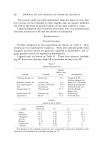
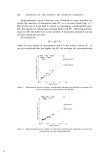
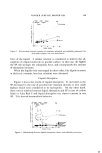
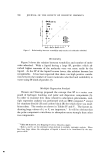
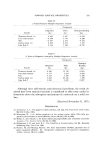
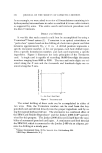
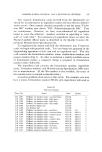
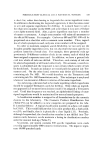
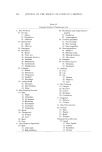
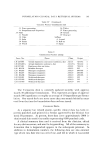
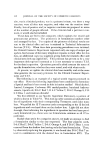
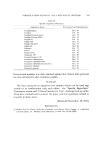
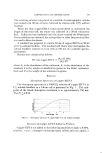
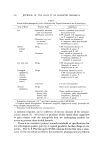
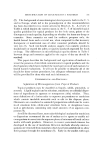
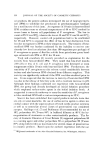
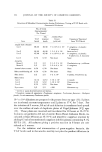
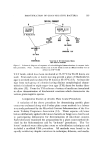
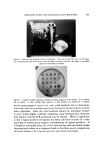
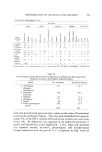
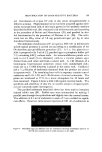
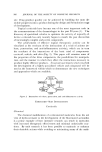
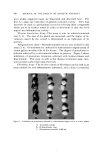
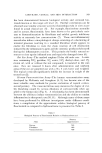
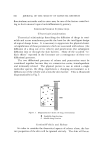
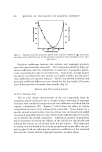
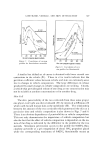
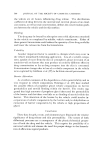
556 JOURNAL OF THE SOCIETY OF COSMETIC CHEMISTS Repetitive studies by one laboratory demonstrated excellent correlation between all plate count methods. Use of Solid Media to Characterize Gram-Negative Isolates Current legal interpretation of the Food, Drug, and Cosmetic (FDgcC) Act as it applies to microbial contaminants in topical products impels the FDA to speciate all gram-negative isolates for health hazard evaluation (15). The classification of microorganisms to genera and species requires the determination of a series of morphological, biochemical, and fre- quently serological characteristics. In the past, basic tests such as carbo- hydrate utilization, IMViC patterns, gelating hydrolysis, protein de•a- dation, gTowth inhibitions, and optimum growth temperatures were usu- ally performed for each isolate in separate tubes of broth culture media. More recently, the interest in automation of microbial diagnostic pro- cedures has encouraged an evaluation of solid or semisolid media to al- low biochemical determinations for a group of isolates to be performed on a single plate of culture medium. Because of the large number of speciations required to support recall requests of contaminated products by District Laboratories, combined with severe limits on the technical manpower in many FDA laboratories, a solid media concept has been adapted to allow the rapid characterization of the many isolates obtained from topical products. A preliminary report on the use of a modified Lidwell phage appli- cator for the simultaneous application of 26 bacterial isolates to a plate of solid culture medium was made in 1969 (16). Figure 2 shows the modified phage applicator with its 26 platinum loops. After flame steril- ization, the loops are cooled and then simultaneously dipped into a tem- plate made of autoclavable nylon that contains 26 wells, each of which can hold up to 1 ml of a suspension of a test organism. When the ap- plicator has picked up a charge of test organisms, it is rotated and allowed to make contact with a 15 X 100 mm petri dish of solid culture media. Figure 3 is an example of a culture plate showing the reactions of 26 bac- terial isolates after 24 hours incubation at 32øC. Typical test responses for the most objectionable gram-negative contaminants in topical prod- ucts are presented in Table III along with a notation as to which of these tests are determined from solid media reactions. It will be noted in Table III that some reactions still have to be per- formed in broth media. Thus, tests for indole production, nitrate reduc- tion, and the methyl red-Voges Proskauer reactions utilize broth media. Furthermore, it has been necessary to catalog the reactions of many

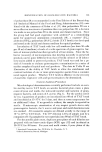
IDENTIFICATION OF GRAM-NEGATIVE BACTERIA 557 Figure 2. Side view of modificd Lidwcll applicator. The arm on the left with the 26 loops can be lowered into the wells of thc nylon template and then rotated to the right to inoculate a plate of solid culture medium • • •. . -* . .•. • .•-..• . -.. ...•- i%•....... •'- .- ...• . ,... ,: •,.:.•::•.•.' .... Figure 3. A plate of solid diagnostic medium showing response of 26 isolates. Two isolates did not •ow. A color change (dye response to pH change) was noted for 4 isolates known gram-negative species for each solid medium test to determine similarity with test responses previously known for broth cultures of these same organisms. Since the solid medium allows the microbial isolates to grow under highly oxidized conditions, some fermentation reactions that require reduced O-R potentials can be altered. What is significant is that a typical pattern of response has been achieved for each o.• a wide spectrum of known gram-negative contaminants of topical products. It is hoped to eventually place all of the reactions for each microbial isolate characterized to date in a computer bank to facilitate easier comparisons of future isolates with response patterns previously developed.
Purchased for the exclusive use of nofirst nolast (unknown)
From: SCC Media Library & Resource Center (library.scconline.org)