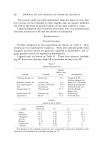
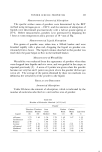
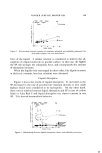
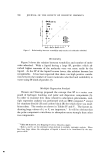
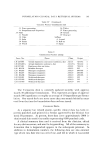
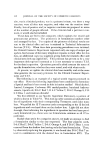
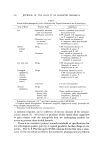
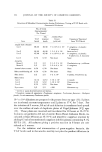
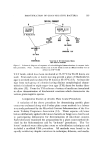
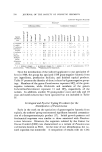
558 JOURNAL OF THE SOCIETY OF COSMETIC CHEMISTS Table HI--Diagnostic Reactions Reactions a Differential Media Carbohydrate Utilization Species Identifica- tion P. aeruginosa q- q- P. stutzeri -- q- P. multivorans q- q- -- Enterobacter aerogenes -- q- S. marcescens (--) q- E. coil -- q- (--) Klebsiella -- q- Alcaligenes f aecalis q- q- q- Adnetobacter anitratus -- q- (--) ( q- ) ( q- ) K/-- -- ( q- ) -- q- -- - - K/-- -- -- (-) -- - - K/- + + + (+)(-) + + -- -- A/A (+) + + q- -- q- q- q- + q- -- -- K/-- (+) + + -- + + + + (+) + -- -- -- A/A (q-) q- q- q- + q- q- 4-, (+) -- -- A/A (q-) + q- q- -- q- 4- q- q- q- (q-) - K/-- -- -- + + + (+) (+) + a q- = indicator change -- = no indicator change K = alkaline A =actd P----peptonization (+)= plated medium. e NOs reduction. al Optimum growth temperature. Since the introduction of the Lidwell applicator to our speciation ef- forts in 1968, the group has speciated 1550 gram-negative bacteria from raw ingredients, production facilities, and finished topical products. Table IV presents the identity of these isolates by 6 gram-negative group- ings. Members of the genus Pseudomonas represent 50% of the gram- negative isolations, while Klebsiella and members of the genera Escherichia-Enterobacter represent 11 and 10%, respectively, of_ the isolates. In addition, another 88 gram-positive cocci and rods and 10 yeast and mold cultures have been speciated but not included in Table IV. Serological and Pyocine Typing Procedures for the Identification of Pseudomonas Early in the work on the speciation of gram-negative bacteria from topicals, the authors' group encountered significant bacterial contamina- tion of a detergent-antiseptic product (17). Initial growth patterns and biochemical responses were similar to those associated with Flavobac- terium lutescens. However, the organism isolated by the Center for Disease Control (CDC) was characterized as a variant of. Pseudomonas multivorans known as EO-1. At the time of. our identification the iso- lated organism was nonmotile. A comparison of results with the CDC

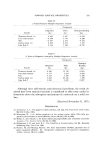
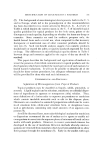
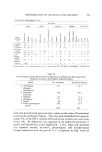
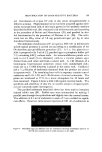
IDENTIFICATION OF GRAM-NEGATIVE BACTERIA 559 Used to Speciate Gram-Negative Isolates Reactions a Other I MVic Enzymes NOaRd c Op-Tempd P. aeruginosa --R + q- -- -- -- + q- q- p q- -- -- q- -- q- + P. stutzeri --R q- q- -- -- -- + -- -- K q- -- -- + -- + + P. multivorans -- R (+) Enterobacter aerogenes -- R + S. raarcescens --R (+) (+) -- -- E. coli --R (+) -- (+) Klebsiella -- R -- A lcaligenes f aecaloes -- R q- + -- -- -- + -- -- K q- (q-) Adnetobacter anitratus -- Cob ..... + + + + + + + + (+) + + + + + + + + (+) + + - usually positive (--) ---- usually negative (A) = usually acid R = rod Cob = ½occobacillus. b Reactions on Table IV Gram-Negative Groups Detected During Speciation of Isolates from Raw Ingredients, Production Facilities, and Finished Topical Products Group No. of Isolates % of Total Isolates 161 10.3 1. Achromobacter Alcaligenes Flavobacterium 2. Enterobacter Escherichia 3. Klebsiella 4. Pseudomonas 5. Serratia 6. Other gram-negative genera 158 10.2 175 11.3 771 49.8 84 5.4 201 13.0 1550 100 indicated that they had speciated their isolate on the basis of biochemical patterns plus serological typing. They also had established that approxi- mately 5% of the EO-1 variants of Pseudomonas multivorans were non- motile (18). By definition, any organism in the genus Pseudomonas is motile and should have polar flagellation. Later, Adair and associates (19) reported unusual metabolic, physiological, and ultrastructural changes associated with the growth of P. aeruginosa in high levels of
Purchased for the exclusive use of nofirst nolast (unknown)
From: SCC Media Library & Resource Center (library.scconline.org)