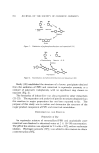
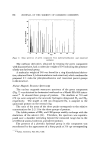
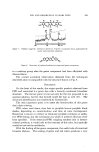
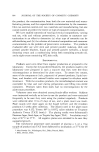
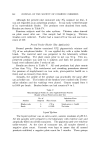
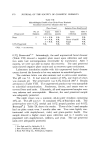
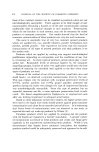
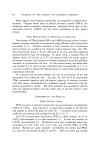
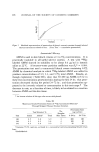
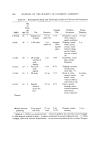
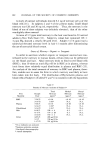
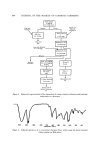
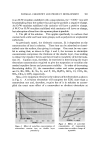
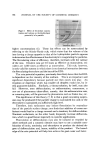
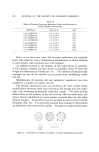
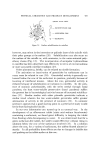
854 JOURNAL OF THE SOCIETY OF COSMETIC CHEMISTS Figure 7. NH 2 p - Phenylenedi- Resorcinol amine H2N_•..N •O Indophenol Oxazine Oxidation ofp-phenylenediamine and resorcinol (19) Figure 2. NH2 OH NH2 p- Phenylenediamine Resorcinol ( 1:1 ) .•, 1 øxidatiøn Polyindophenol Cooxidation ofp-phenylenediamine and resorcinol (20) Brody (20) established the structure of a brown precipitate obtained from the oxidation of PPD and resorcinol in equimolar amounts, as a mixture of polymeric indophenols, with no significant ring closure to oxazines (Fig. 2). The formation of indoaniline was also proposed by other researchers (21-23). The separation and analysis of specific structures obtained from this reaction in major proportions has not been reported so far. The purpose of this study was to isolate and determine the structure of the major product component of PPD and resorcinol cooxidation. EXPERIMENTAt, AND RES[?LTS Preparation of Dye An equimolar mixture of recrystallized PPD and analytically pure resorcinol was dissolved in deionized water at 2 X 10-"M concentration. The pH of the solution was adjusted to 9.5 with a 20% sodiron carbonate solution. Hydrogen peroxide (30%) was added to this mixture to obtain a concentration of 3%.

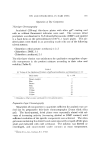
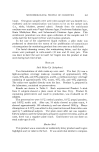
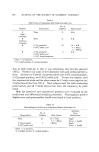
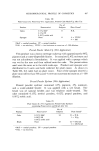
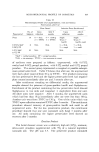
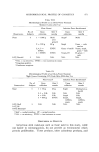
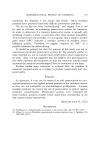
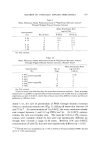
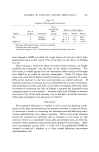
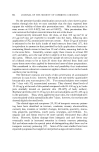
PPD AND RESORCINOL IN HAIR DYES 855 Separation of Dye Components Thin-layer Chromatography Analytical (250-m/•) thin-layer plates with silica gel* coating and with or without fluorescent indicator were used. The vacuum dried precipitate was dissolved in N,N-dimethylformamide (DMF) and spotted in a band form on the preconditioned (100øC, 1 hour) plates. The air- dried plates were eluted in an ascending mode with one of the following solvent systems. Chloroform: ethyl acetate: methanol, 6: 2: 2 Chloroform: DMF, 3: 1 Chloroform: methanol, 2: 1 The thin-layer elution was satisfactory for qualitative recognition of spe- cific components in the product mixture according to their color and mobility (Table I). Table I Values of the Oxidation Products ofp-Phenylenediamine and Resorcinol (1:1)• Band Color R/ , 100 Brown (origin) 0 Blue 9 Brown 17 Pink 22 Green 29 Yellow 33 Yellow 45 Yellow 50 '• Chloroform: ethyl acetate: methanol (6: 2: 2) solvent system. Preparative Layer Chromatography Separation of components in quantities sufficient for analysis was car- ried out by preparative thin-layer chromatography (2-mm thick silica gel). The band-spotted, dried plates were repeatedly eluted with sol- vents of increasing activity (increasing alcohol or DMF content) until sufficient resolution of the specific components was achieved. The silica gel zones containing the eluted bands were separately scraped off the glass plate and extracted with cold methanol. The solution was filtered or centrifuged, and concentrated under vacuum at room temperature. * Merck & Co., Inc., Rahway, N.J. 07065.
Purchased for the exclusive use of nofirst nolast (unknown)
From: SCC Media Library & Resource Center (library.scconline.org)