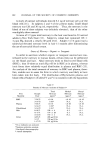
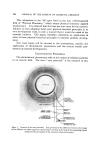
876 JOURNAL OF THE SOCIETY OF COSMETIC CHEMISTS Both organic and inorganic mercurials are employed in topical prep- arations. Organic forms such as phenyl mercuric acetate (PMA) are sometimes used as cosmetic preservatives inorganic forms such as am- moniated mercury (AMM) are the active ingredients in skin bleach creams. SKIN PENETRATION OF MERCURIAL COMPOUNDS Penetration of •'øaHg-labeled PMA and AMM through excised human forearm stratum corneum was measured using diffusion cells as described previously (1-3). Stratum corneum is best removed as a continuous sheet of tissue by swabbing the clipped ventral forearm skin with 70% ethyl alcohol for about 5-10 sec, allowing to air dry, and then applying pressure-sensitive tape for stripping. In prior work, a constant flow of isotonic saline (10 ml/hr) at 37øC was used to bathe the under surface of stratum corneum and sweep the labeled compound out of the diffusion chamber as it penetrated the skin. In the present study, the saline flow was limited to 1 hr prior to each collection time (sequentially at 1, 3, 5, 7, 24 hr) in order to reduce the dilution factor, in view of the small amount of penetrant collected. In contrast with previous studies, the rate of penetration of the test compound was extremely low. As such, the low level of measurable 2ø3Hg, measured together with the known capacity of mercury to react with skin tissue, compounded the problems usually associated with ob- taining quantitative results. The data therefore are considered valid to only one significant figure and are useful only to provide relative rates of penetration. EXPERIMENTAL AND RESULTS Pherzyl zklercuric Acetate PMA is used as a cosmetic preservative at concentrations ranging from 0.0006 to 0.05%. This substance is appreciably soluble in fat solvents and soluble in about 600 parts of water (4). A benzene-water partition coefficient was determined and found to be Kfi 5 = 15.2. At 0.1% concentration and above, PMA is a skin irritant at 0.1 to 0.05% concentration, it is a skin sensitizer (5). It does not sensitize at 0.001% concentration (5). Penetration tests were conducted using con- centrations of 1.00, 0.50, 0.25, 0.13, 0.06, and 0.001% PMA in 95% alcohol. Results are quite variable nevertheless they show that PMA is a poor skin penetrant (Tables I and II). After an initial lag, lasting

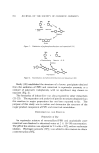
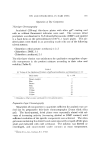
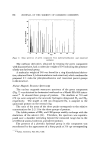
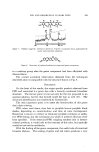
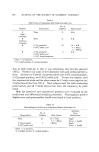
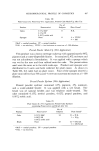
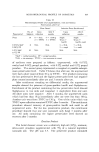
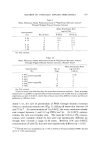
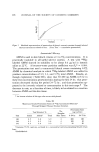
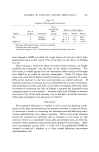
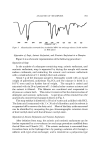
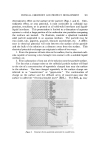
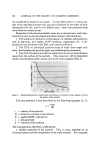
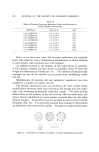
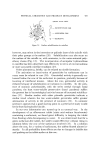
HAZARDS OF TOPICALLY APPLIED MERCURIALS Table I Mean Maximum Steady Penetration Rates of 2øaHg Phenyl Mercuric Acetate a Through Stripped Human Stratum Corneum 877 Mean Penetration Rate Concentration (ng/cm2/hr) (%) No. of Tests 0-24 hr 24-72 hr 0.06 4 0.2 0.1 0.13 4 0.3 0.1 8 4 O.2 0.25 8 2 0.3 0.50 12 3 1 1.00 12 2 1 a In 95% alcohol. Table II Mean Maximum Steady Penetration Rates of 2øgrig Phenyl Mercuric Acetate • Through Stripped Human Stratum Corneum (Parallel Tests) b Mean Penetration Rate Concentration No. of (ng/cm•/hr) (%) Tests 0-24 hr 0.001) 5 0 03 0631 tested in parallel ' 0 5 2 0.063) 11 .125/ d 7 2 0.250• teste inparallel 0 8 5 0.500J 10 2 • In 95% alcohol. b Tested at same time with discs from the same sheet of stratum corneum. Error is thereby reduced and it is possible to separate effects of concentration more readily than in a nonparallel experiment, as done in Table I, where discs of tissue come from different sources and tests are performed at different times. about 1 hr, the rate of penetration of PMA through stratum corneum rises to a maximum steady rate (Fig. 1), falling off somewhat between 24 and 72 hr.* At concentrations of 1 to 0.06%, the mean maximum steady rate ranged between 5 and 0.2 ng PMA/cm2/hr. At 0.001% concen- tration, the rate was virtually zero. The rates for 0.06 to 1.0% concen- tration were variable (Table I), but were not significantly different al- though they covered a range of 20 times. Between 0.06 and 0.001% concentration (Table II), the rates were significantly different (p 0.02). * The fall off in rate is significant (p 0.05) at 0.25% or less concentration of PMA but not .at 0.5 or 1.0% concentration.
Purchased for the exclusive use of nofirst nolast (unknown)
From: SCC Media Library & Resource Center (library.scconline.org)