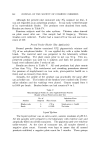
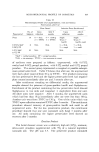
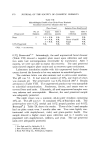
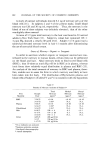
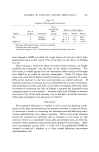
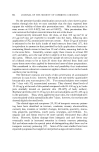
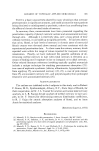
MICROBIOLOGICAL PROFILE OF COSMETICS 873 sterilizing, the situation is not always this simple. Other emulsion products have presented extremely difficult preservation problems. We do not like the term "self-sterilizing" and suggest that it not be used in reference to evaluating preservative systems for cosmetics. In order to determine if a cosmetic preservative system is actually self- sterilizing requires a study of microbes other than aerobic mesophiles. At the present state of knowledge, it is our opinion that a negative aerobic plate count (APC) indicates a cosmetic product of excellent micro- biological quality. Therefore, we suggest "negative by APC" as a possible substitute for self-sterilizing. It should be pointed out that the purpose of this study was not to recommend particular preservative systems for the products similar to those reported on, nor to endorse those preservatives which happened to be used. Also, it is not suggested that the subjects who participated in this study represent all consumers, or that the consumer inocula found represent the potential microbiological flora of consumers in the large. Further studies seem warranted to evaluate fully the problem of consumer contamination as it relates to product preservation and con- sumer safety. SUMMARY In summary, it may not be essential to add preservatives to non- aqueous products or dry applied pressed products of low moisture content as they are not susceptible to microbiological proliferation. Aqueous emulsion products do require the use of preservatives to protect against consumer contamination. Preservative systems were evaluated for those emulsion products studied which made them microbicidal to the user contamination encountered. (Received June 15, 1972) REFERENCES (1) Tenenbaum, S., Pseudomonads in cosmetics, •1. Soc. Cosmet. Chern., 18, 797-807 (1967). (2) Wilson, L. A., et al., Microbial contamination in ocular cosmetics, Arner. J. Opthalrnol., 71, 1298-1302 (1971).

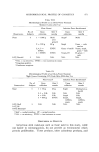
J. $oc. Cosmet. Chem., 23• 875-886 (December 6, 1972) Potential Topically Systemic Hazards of Applied Mercurials F. N. MARZULLI, Ph.D., and DANIEL W. C. BROWN, M.S.* Presented May 26, 1972, Seminar, Los Angeles, Calif. Synopsis--Measurements of the SKIN-PENETRATING CAPACITY of one organic (phenyl mercuric acetate) and one inorganic type (ammoniated mercury) MERCURIAL COM- POUND at close to use levels are presented as background for a retrospective study of six female chronic users of skin bleach creams containing ammoniated mercury who show elevated mercury levels in tissues and symptoms suggestive of ACCUMULATION of mercury. INTRODUCTION The present investigation was begun in 1968 following the receipt of a letter from a physician who suspected that a toxic trigonitis which she sustained was precipitated by the use of a marketed mercurial skin bleach cream. Although the literature is replete with information on the toxic hazards of mercury, only a small portion is devoted to topically applied mercurials. None of it is concerned with the quantitative aspects of percutaneous absorption. It was therefore deemed desirable to find out more about systemic intoxication as related to skin application of mercurial com- pounds. This report is divided into two parts, the first of which is concerned with the amounts of mercury likely to be absorbed following skin applica- tion of mercurial compounds. The second part involves a retrospective study of 6 female chronic users of commercial bleach creams, with symp- toms and objective findings suggesting topically applied mercurials as the causative agents. * Food and Drug Administration, Department of Health, Education and Welfare, Wash- ington, D.C. 20204. 875
Purchased for the exclusive use of nofirst nolast (unknown)
From: SCC Media Library & Resource Center (library.scconline.org)