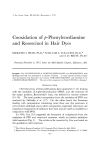
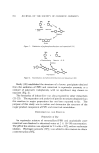
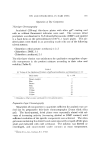
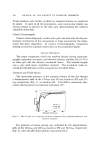
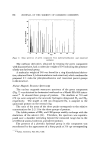
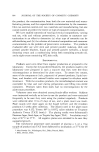
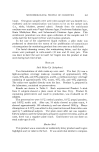
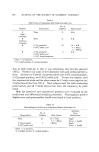
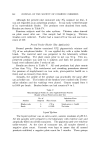
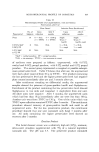
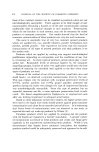
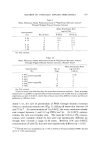
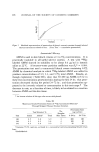
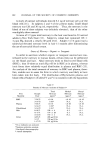
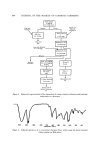
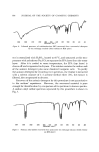
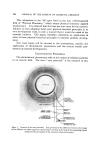
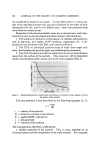
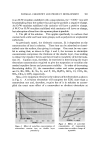
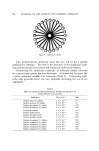
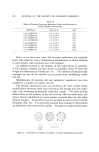
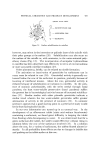
908 JOURNAL OF THE SOCIETY OF COSMETIC CHEMISTS Table II Effect of Nonionic Surfactant Molecular Weight and Structure on Critical Micelie Concentration Surfactant Cmc (m/1.) Ref. n C•= O(5EO) H 8.7 X 10-• (16) n C•= O(7EO) H 8.0 X 10 -5 (16) n C•= O(9EO) H 1.0 X 10 -4 (16) n C•2 O(12EO) H 1.4 X 10 -4 (16) n Ca O(6EO) H 9.8 X 10 -• (17) n C•00(6EO) H 9.2 X 10 -4 (18) n C•20(6EO) H 8.7 X 10 -5 (18) n C•40(6EO) H 1.0 X 10-0 (18) Since, as we have seen, cmc's for nonionic surfactants are markedly lower than those for ionics, hydrocarbon solubilization in dilute solutions is much greater with nonionics than with anionics. An additional factor is the polarity of the hydrocarbon in question. A 1 øfo nonionic solution has been shown to solubilize about 10 times the weight of n-dodecanol as n-dodecane (19). The addition of salts generally increases the size of the micelles and increases their solubilizing power (20-22). Solubilization of essential oils and perfumery ingredients has been studied by a number of workers (23-27). The general conclusions that can be drawn are that, within limits, solubilization decreases both with increasing EO groups and, less mark- edly, with increasing hydrophobe molecular weight. The most striking effects relate to the polarity of the oil involved with the more polar oils (clove, thyme) solubilized in much greater amounts than the less polar (fennel, orange). These effects may be ascribed in part to mixed micelle formation (Fig. 12). It is generally assumed that nonpolar hydrocarbons are dissolved in the center of the micelie. Semipolar or polar solubilizates, SURFACE SOLUBILIZATE ACTIVE AGENT Figure 12. Orientation of nonpolar, semipolar, and polar solubilizates in micelies

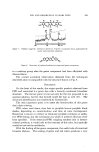
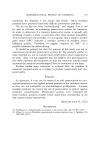
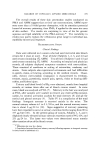
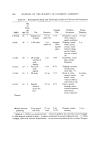
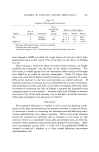
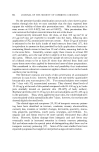
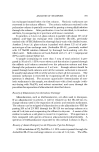
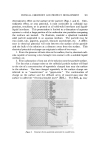
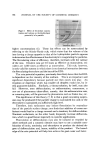
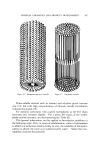
PHYSICAL CHEMISTRY AND PRODUCT DEVELOPMENT SURFACE ACTIVE AGENT • POLYOXCHAINCHAIN • HYDROCARBON • SOLUBILIZATE Figure 13. Surface solubilization in micelles 909 however, may orient in the interstices or palisade layer of the micelie with their polar groups at the surface (28). Solubilization may also occur on the surface of the micelle or, with nonionics, in the water-oriented poly- ethoxy chains (Fig. 13). The incorporation of semipolar hydrocarbons in micelles has been described most effectively in terms of microemulsions or more accurately micellar emulsions (29). Other phenomena, briefly, can be related to micelie formation. The activation or inactivation of germicides by surfactants can in many cases be related to cmc (30). Germicidal activity is generally en- hanced below the cmc of the surfactant in question, probably because of lowering of interfacial tension. Above the cmc, germicidal activity is reduced because of solubilization or inclusion in micelies. In the pres- ence of nonionic polyethoxides, with the series methyl through butyl parabens, the least water-soluble preservative (butyl parabens) suffers the greatest loss in bacteriological activity because of increased solubiliza- tion (31). Similar studies with other phenolic germicides indicate a similar trend wherein the less water-soluble germicides suffer greater attenuation of activity in the presence of nonionics (32). In nonionic systems it appears that a good starting point in a presevative study would be the least hydrophobic biocide. In our own laboratories cmc turned up in an unusual way. In the development of an effervescent tablet (citric acid-sodium bicarbonate) containing a surfactant, we found great difficulty in keeping the tablet from floating while decomposing in water. It was determined that for a given surfactant-free tablet, the tablet would effervesce without rising in solutions below the cmc of the surfactant involved (33). In a solution above the cmc, for a variety of surfactants, the tablets floated almost in- stantly. In all probability these effects are due to changes in bubble size and packing on the tablet surface at the cmc.
Purchased for the exclusive use of nofirst nolast (unknown)
From: SCC Media Library & Resource Center (library.scconline.org)