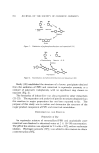
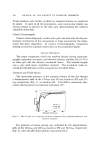
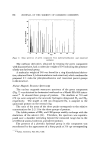
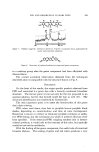
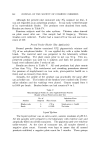
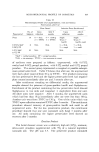
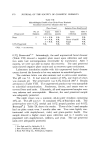
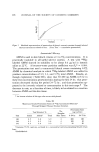
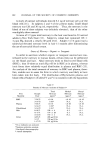
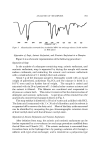
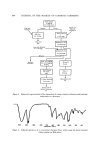
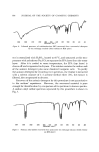
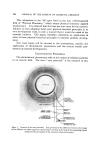
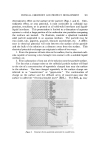
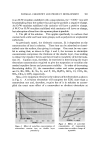
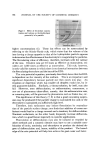
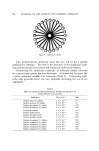
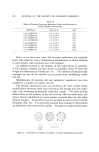
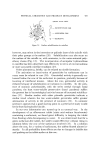
858 JOURNAL OF THE SOCIETY OF COSMETIC CHEMISTS . 40 80 120 160 •0 320 200 ,•/, 2•o Figure 6. Mass spectrum of green component from p-phenylenediamine and resorcinol oxidation The methoxy derivative, obtained by treating the green component with diazomethane, had a molecular weight of 334 indicating the presence of only one hydroxyl group. A molecular weight of 348 was found for a ring dimethylated deriva- tive, obtained from 2,5-diaminotoluene and resorcinol, which confirms the proposed 2:1 ratio for phenylenediamine and resorcinol parent groups in the structure. Nuclear Magnetic Resonance Spectroscopy The nuclear magnetic resonance spectrum of the green component (Fig. 7) was obtained in deuterated methanol on a Model HA-100 instru- ment.* It showed three groups of protons. The doublets at 710 and 670 cps were assigned to the aromatic hydrogens designated HA and HB, respectively. The singlet at 608 cps designated He is assigned to the quinonoid protons on the central ring. The ratio of the areas of the three peaks corresponds to the relative concentrations for 2:2:1 for the three groups of protons. The labile protons of NH,. and OH groups readily exchange with the deuterium of the solvent (26). Therefore, the spectrum was superim- posed over a shoulder extending beyond the measured range due to the net effect of amino, hydroxyl, and solvent protons. The presence of a phenolic hydroxyl group in this component was reconfirmed by the appearance of a sharp peak at 316 cps corresponding * Varian Associates, Palo Alto, Calif.

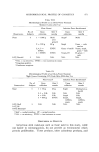
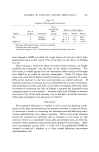
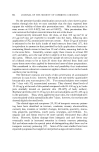
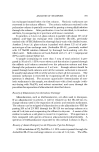
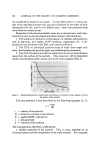
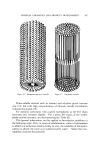
PPD AND RESORCINOL IN HAIR DYES 859 H•, Hc H He .,--,r•. o,"y•o . '.•. ,. HA H Hc HA •,ol I•o I 800 700 600 cps H Figure 8. Structure ofp-phenylenediamine-resorcinol green component to a methoxy group after the green component had been alkylated with diazomethane. The overall analytical information obtained from the techniques described above is compatible with the structure shown in Fig. 8. DISCUSSION On the basis of the results, the major specific product obtained from PPD and resorcinol is a green dye with a linearly condensed trinuclear structure. The former point is true not only for the dye prepared in an aqueous solution, but for that formed inside the hair as well (27). The structural identification was confirmed by Corbett (28). The next important point is to assess the functionality of this green dye in hair coloring. PPD, when used alone, dyes hair to purplish brown-purplish black shades, depending on concentrations and time of color development. Resorcinol is known to reduce or eliminate purplish overtones in oxida- tive PPD dyeing, but the mechanism by which it achieves this has never been specified. If the resorcinol-PPD coupling resulted only in brown- colored products, it would add to the intensity of the color, but optically would not cut out the red shades. With the finding of the green component, the useful role of resorcinol becomes obvious. The mixing of green and red colors produces a very
Purchased for the exclusive use of nofirst nolast (unknown)
From: SCC Media Library & Resource Center (library.scconline.org)