69.4 JOURNAL OF THE SOCIETY OF COSMETIC CHEMISTS Previous work on the relationship between aerosol emulsions and foams was carried out on emulsions of the first type where only propellant was dis- persed in the aqueous phase (1). The surfactant was triethanolamine my- ristate. Aerosol emulsions with the smallest propellant droplets gave the most stable emulsions and foams. These emulsions also produced foams with a smaller range of bubble sizes. Emulsification of the propellant was obtained by hand shaking. The most important factor in this anionic system was the ability of the surfactant to emulsify the propellant with a minimum of agita- tion and stabilize the resulting propellant droplets. This work demonstrated that a relationship existed between the properties of these specific anionie aerosol emulsions and those of the corresponding foams. The present study was conducted with anionic aerosol emulsions of the second type, i.e., those in which the initial concentrate is an oil-in-water emulsion. This type of system can be varied to a much greater extent than that where the propellant is the only dispersed phase. Since the emulsion con- centrates are not under pressure, a variety of procedures can be used to pre- pare the concentrates. Emulsion concentrates are particularly important because of the possibili- ties they offer for the development of new aerosol foam products. A number of commercial cosmetic and pharmaceutical products are formulated as oil- in-water emulsions and thus provide potential concentrates for aerosol emul- sions and foams. Cosmetic products in this class include moisturizing lotions, body lotions, vanishing creams, cleansing creams, moisturizing creams, eye pomades, and depilatories. Pharmaceutical emulsions include medicated creams and lotions containing analgesics, steroids and antihistamines, nutri- tional substitutes, Vitamin A preparations, and bed sore rubs. Mineral oil emulsions are common in both the cosmetic and pharmaceutical industries. In the latter, they are used primarily as laxatives. It was hoped that the present investigation would reveal that the relation- ships between the concenh'ate, aerosol emulsion, and foam were such that the characteristics of the foam product could be predicted to a significant ex- tent from the properties of the concentrate. This should be of considerable help in the development of aerosol cosmetic and pharmaceutical foams. Attention could be focused more upon determining the procedure giving the best emulsion concentrate. This should not only result in superior products, but also reduce development time. EXPERI1VIENTAL Emulsion Concentrates Aqueous mineral oil emulsions were chosen to simulate typical cosmetic aerosol concentrates. The emulsions were prepared from two aqueous tri- ethanolamine myristate systems known to produce emulsions with consider-

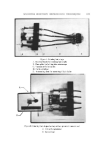
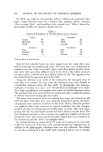
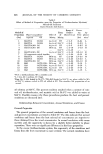
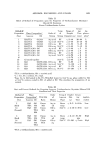
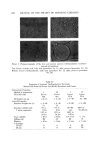
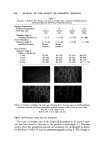
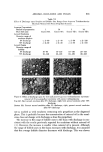
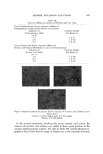
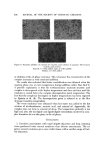
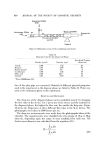
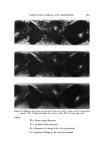
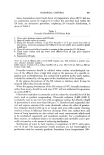
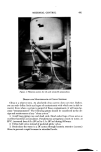
AEROSOL EMULSIONS AND FOAMS 625 ably different stabilities. One had a 50% excess of myristic acid, the other, a 50% excess of triethanolamine. Previous work had shown that aerosol emul- sions with the excess of myristic acid were far more stable than those with an excess of triethanolamine (1). The stoichiometric concentration of tri- ethanolamine myristate in the aqueous phase was 0.20M. The total weight per cent concentration of the surfactant portion, including the excess acid or base, was about 10%. The final emulsion had a composition of 90% aqueous phase and 10% mineral off. Each of the two concentrates was prepared by 14 procedures. The different methods of preparation involved such variations as the distribution of tri- ethanolamine and myristic acid between the oil and aqueous phases, the temperature of the aqueous phase, and the order of addition of the two phases, i.e., oil to aqueous or aqueous to oil. When the mineral oil and myris- tic acid were combined, the mixture was kept at 54.4øC to keep the myristic acid in solution. Details of the variations in the methods of preparation are given later in Tables I and II. The oil and aqueous phases were added slowly to each other with stirring. After addition was complete, the emulsions were stirred for an additional 25 min at room temperature. In preparations where the aqueous phase was heated, the emulsions were cooled to room temperature after mixing and the emulsions then stirred an additional 25 min. The emulsions were poured into screw-capped bottles and shaken 20 times. Samples were placed on slides for photomicrographs and the bottles set aside for creaming measurements ( phase separation determinations ). Aerosol Emulsions Aerosol emulsions for stability studies were prepared by loading the con- centrate into a 4-oz glass bottle, purging, and capping with a standard valve. The propellant was pressure loaded. The aerosols had a composition of 90% aqueous concentrate and 10% Freon© 12/Freon©* 114 (40/60). The aerosols for photomicrographs were prepared by loading the concen- trate into a 4-oz bottle, purging, and capping with a valve drilled to a dia- meter of 0.080 in. One end of a glass pressure cell was attached to the drilled valve and the other end connected to a standard valve. The propellant was pressure loaded through the standard valve. The glass cell and procedure for loading the propellant have been described in detail in a previous publica- tion (1). After the propellant had been loaded, the aerosol was shaken 20 times and allowed to stand 24 hours before further testing. The bottle was then shaken 20 times and 5% of the product was discharged before taking photomicrographs to eliminate residual propellant remaining in the cell and dip tubes after pressure loading. *Registered trademark of E. I. du Pont de Nemours & Co., Inc., Wilmington, Del. 19898.
Purchased for the exclusive use of nofirst nolast (unknown)
From: SCC Media Library & Resource Center (library.scconline.org)