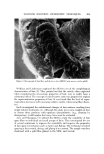
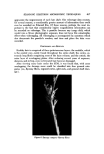
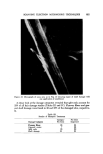
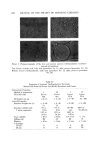
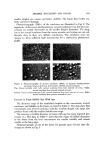
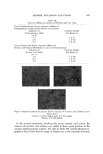
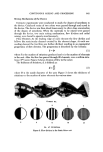
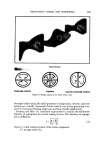
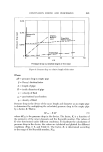
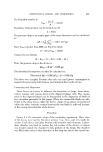
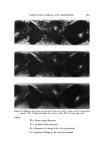
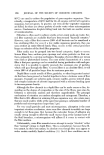
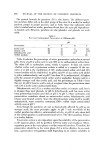
CONTINUOUS MIXING AND PROCESSING 643 Material Rotation ß •. - • •,.• • Clockwise rotation Interface Counter-clockwise rotation Figure 4. Radial mixing in the Static Mixer unit thorough radial mixing, the radial gradients in temperature, velocity, and com- position are virtually eliminated. Precise control over in-line processing is as- sured in numerous blending, dispersion, and heat transfer applications. Hartung and Hiby (8) conducted experiments to measure the Dankwerts intensity of segregation for several mixing devices. The intensity of segrega- tion is defined as: I- (a- •)2 __ - where a ---- local volume fraction of the tracer component -- a = average value of a (3)

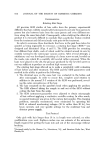
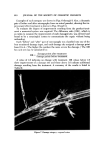
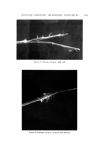
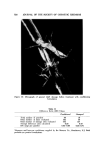
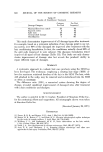
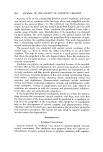
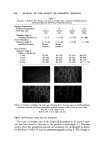
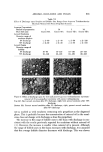
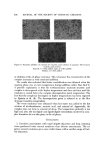
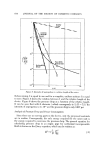
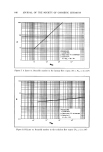
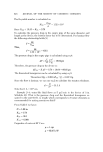
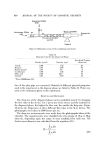
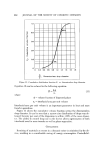
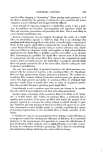
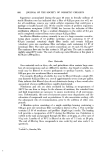
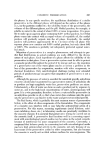
644 JOURNAL OF THE SOCIETY OF COSMETIC CHEMISTS Empty •Pipe With "' ,.•,• d i(fi Inlet o• iO -I 0 5 I0 15 L/d Figure 5. Intensity of segregation vs. relative length of the mixer Before mixing, I is equal to one and for a complete, uniform mixture I is equal to zero. Figure 5 shows the relation between I and the relative length of the device. Figure 6 shows the pressure drop as a function of the relative length. It can be seen that with 6 elements (which corresponds to L/D= 7.5) the intensity of segregation is 2 x 10 -4 and the pressure drop is only 0.037 psi. Analysis of Pressure Drop and Power Consumption Since there are no moving parts in the device, only the processed materials are in motion. Consequently, the only energy required for the mixer unit is the energy required to overcome the pressure drop. The general equation for calculating pressure drop in an empty pipe for isothermal incompressible fluids is known as the Darcy equation, which can be written as: •P=/D P, gc (4)
Purchased for the exclusive use of nofirst nolast (unknown)
From: SCC Media Library & Resource Center (library.scconline.org)