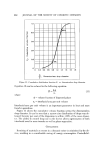
664 JOURNAL OF THE SOCIETY OF COSMETIC CHEMISTS The effect of pH will be considered later in connection with antimicrobial effectiveness of preservatives. In general, bacteria prefer neutral or slightly al- kaline conditions, whereas molds prefer neutral to slightly acidic conditions. Because this generalization has many exceptions, it is prudent to protect cos- roetic products of all pH's against bacteria, yeast, and molds. The presence of other microorganisms is a critical factor. The batfie for growth and survival goes on in a cosmetic just as it does in nature. There is competition for nutrients, including trace elements, and typically one orga- nism outgroxvs the others. One practical consequence of this competition is that a preservative system with antimicrobial activity against only a few types of organisms, i.e., with a limited spectrum of antimicrobial activity, may ren- der a product susceptible to unexpected microbial contamination. Another factor which influences microbial growth is temperature. Typically, molds and yeast grow well at temperatures of 20ø-25øC, whereas bacteria prefer temperatures of 30ø-37øC. A cosmetic held at usual room tempera- tures, therefore, may have a different susceptibility to microbial attack than a product left in a hot car or kept on a sunny beach. VABIABLES WHICH INFLUENCE PBESEBVATIVE EFFECTIVENESS There are several important factors which regulate the effectiveness of preservatives in combating microbial growth. In general, the higher the con- centration of a preservative, the more effeetlve it will be. Often, a preservative has a eidal (killing) effect at high concentrations and stasis (inhibition of growth) at 1oxv concentrations. It is not wise to "over-preserve" since high concentration or high levels of antimicrobial activity can coincide with toxic and irritant properties toward animal tissues. On the other hand, too low a concentration may be ineffective or may even stimulate microbial growth. The longer the contact time at a fixed preservative concentration, the great- er the number of organisms killed. In theory, microorganisms are killed at a logarithmic rate (first-order reaction kinetics). Under a specific set of condi- tions the same percentage of a microbial population is supposed to be killed with each unit of time. For example, if 90% are killed the first 3 hours, 90% of the remaining 10% (i.e., 9%) are killed the second 3 hours, and 90% of the remaining 1% (i.e., 0.9%) are killed the third 3 hours. In cosmetics, the micro- bial death rate from preservative action is generally not a regular logarithmic function. A third factor regulating preservative activity is the number of microorga-- hisres challenging the preservative system. The greater the number of micro- organisms, the longer it takes for the preservative to drop the count to some low arbitrary level, e.g., less than 100 microorganisms per gram. Since there is typically a chemical and/or physical reaction between preservative molecules and microorganisms, a preservative can be exhausted by excessive microbial

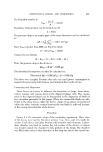
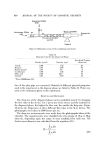
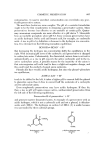
COSMETIC PlqESERVATION 605 contamination. A massive microbial contamination can overwhehn any prac- ticable preservative system. The next three factors are more complex. The pH of a cosmetic oeormulation ought to bc the first consideration in designing a preservative system. Many preservatives become less effective or are unstable at certain pH's. Quater- nary ammonium compounds are more ef[ective at a pH above 7. Mercurials form an insoluble precipitate above pH 8.5. Some common preservatives have an acidic hydrogen. Sorbic acid and benzoie acid, for example, are earboxylic acids. A rise in pH is by definition a decrease in the hydrogen ion concentra- tion. It is obvious oerom the following ionization equilibrium RCOOH • RCOO- + H + that decreasing the hydrogen ion concentration shifts the equilibrium to the right. With increasing pH more of the carboxylic acid preservative is changed to carboxylate anion. Unfortunately, the dissociated, anionic form is not active antimicrobially, so a rise in pH converts the active carboxylic acid to the in- active carboxylate artion. A possible reason for the inactivity of the anion is that microorganism cell walls tend to have a slight net negative charge, and this could repel the similarly charged anion molecules. Phenols also have weakly acidic hydrogens, but since the phenol-phenolate ion equilibrium, ArOH • ArO- + H + tends to be shifted to the left, it takes a higher pH to convert half the phenol to phenolate anion than it does to convert half the molecules of a carboxylic acid to carboxylate anion. Even nonphenolic preservatives may have acidic hydrogens. If they do, then a rise in pH will again remove active, undissociated preservative from the left side of the following equilibrium, Preservative-H • preservative- + H + and generate inactive dissociated anion. An example of a preservative with an acidic hydrogen, which is not a carboxylic acid and not a phenol, is dehydro- acetic acid (DHA). The hydrogen on carbon 3 of DHA (I) is acidic because it is surrounded by three carbonyl groups. OH COCH 3 CH3" •0 / '0 COOR Dehydroacetic acid p-Hydroxybenzoate ester ( D•IA ) ( paraben ) II
Purchased for the exclusive use of nofirst nolast (unknown)
From: SCC Media Library & Resource Center (library.scconline.org)